
India Orders GitHub to Remove Jack Dorsey's Bitchat App, and the Reason Is Not What You'd Expect
Here is the twist most headlines skip. The government did not accuse Bitchat of hosting anything illegal. No banned content, no specific crime, nothing. What India actually objected to was how the app is built, its very architecture. That distinction matters more than it sounds, and it's the whole reason this India orders GitHub Bitchat removal story is bigger than one app getting taken down.
If you're wondering why an offline messaging tool built by Jack Dorsey suddenly became a national security issue in India, stay with me. It gets more interesting the deeper you go.
Why This Actually Matters
This is not really a story about one app. It's a preview of a bigger fight, the one between governments trying to maintain control during unrest and technologies specifically designed to work when governments try to shut communication down. If you use messaging apps, follow protests anywhere in the world, or just care about how much control a government can exert over software it doesn't like, this case sets a template. What happens to Bitchat in India could shape how other countries respond to similar decentralised tools next.
What Bitchat Actually Is, Explained Simply
Let me break this down without the jargon. Bitchat is an open source, Bluetooth based messaging app created by Jack Dorsey, the former Twitter CEO and current Block chief executive. Unlike WhatsApp or Telegram, it does not need the internet, a phone number, or a central server to work. Messages hop directly from phone to phone using Bluetooth mesh networking, relaying through nearby devices up to seven hops away, encrypted along the way. Think of it like a bucket brigade passing water hand to hand instead of running it through a single pipe. No pipe means no single point anyone can shut off.
That is exactly what made it useful for protesters in Delhi, where the Ministry of Home Affairs has suspended mobile internet around demonstration sites roughly five times since early July. When the internet goes dark, apps like Bitchat keep working.
Read More: SBI Funds Management IPO: Why India's Biggest Asset Manager Going Public on July 14 Actually Matters
How This Takedown Order Unfolded, Step by Step
- On July 23, 2026, India's Cyber Crime Coordination Centre, known as I4C, operating under the Ministry of Home Affairs, issued a notice to Microsoft owned GitHub.
- The order demanded GitHub disable access to three repositories tied to the Bitchat project, its Android build, and Android release files, within a strict three hour window.
- I4C invoked Section 79(3)(b) of India's Information Technology Act, along with allegations under Sections 43, 84B, and 84C, threatening GitHub with loss of safe harbor protection and potential criminal liability for noncompliance.
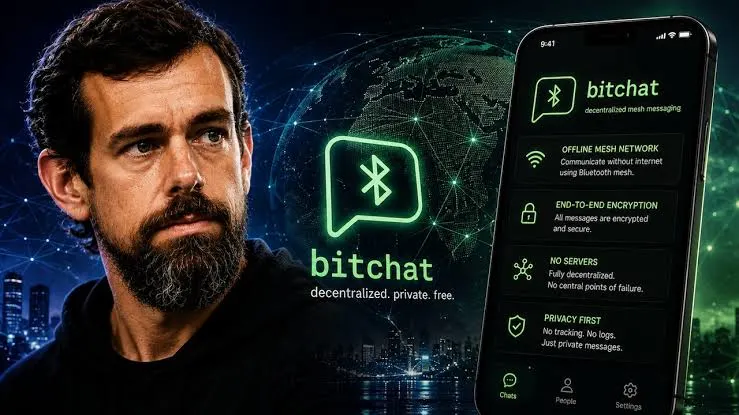
- The notice argued that Bitchat's decentralised, registration free design makes lawful interception, user attribution, and criminal investigation significantly harder for authorities.
- I4C also raised broader concerns, alleging that such platforms could enable unlawful assemblies, misinformation, and misuse by extremist or criminal networks during periods of legally imposed network restriction.
- Jack Dorsey posted the takedown notice publicly on X, stating plainly that the Indian government does not like technologies like Bitchat and wants it removed, a post that drew over 2.3 million views.
- The Internet Freedom Foundation, a digital rights group based in New Delhi, called the order unconstitutional, pointing out that it named no specific unlawful content and bypassed India's standard judicial procedure for content blocking.
- As of Friday, it remained unclear whether GitHub had fully complied, and the app was still downloadable on both Google and Apple's app stores.
Read More: Lawrence Bishnoi Gang Indictment: How a Jailed Gangster Ran a Global Crime Empire From His Cell
Real World Examples of Why This Debate Isn't New
India isn't the first government to move against Bitchat. China's Cyberspace Administration ordered Apple to pull the app from its China App Store back in April, citing rules around services with what it called public opinion or social mobilization capabilities. That echoed Beijing's earlier 2023 ban on Dorsey's other decentralised project, Damus. Beyond China and India, Bitchat and similar Bluetooth mesh tools have reportedly gained users during network disruptions in Nepal, Madagascar, Uganda, and Iran, wherever governments have restricted internet access during unrest.
Mistakes People Keep Making While Following This Story
A common one is assuming a GitHub takedown effectively kills the app. It doesn't, not entirely. Bitchat's code is open source and released into the public domain, meaning it can be mirrored across other hosting platforms or shared directly between users even after the original repositories disappear. Another mistake is treating this purely as a free speech story. It's also a genuine, unresolved policy question, should software be restricted because of how it could be misused, even without any actual illegal content inside it.
Read More: Modi Albanese Meeting: Why This Melbourne Handshake Could Reshape India's Energy Future
Pro Tips for Understanding Where This Goes Next
Watch whether India pursues GitHub for continued noncompliance, since that would signal how seriously the government intends to enforce this beyond a symbolic notice. Also track whether the underlying protest movement, the youth led demonstrations over exam paper leaks that have kept thousands camped at Jantar Mantar since June, shifts toward other decentralised tools if Bitchat access narrows. Suppressing one tool rarely ends the underlying demand for one.
Closing Thoughts
There's something almost poetic about a messaging app built specifically to survive internet shutdowns becoming the target of a takedown order issued during, well, an internet shutdown. Whether this order actually removes Bitchat from circulation or simply becomes a footnote in how governments try and fail to control decentralised technology, it's worth watching. Tools built to resist control tend to be stubborn about disappearing.
FAQs
What is Bitchat and who created it?
Bitchat is an open source, Bluetooth mesh messaging app created by Jack Dorsey, the former Twitter CEO and current Block chief executive, that works without internet, phone numbers, or central servers.
Why did India order GitHub to remove Bitchat?
India's Cyber Crime Coordination Centre argued that Bitchat's decentralised, registration free design obstructs lawful interception and criminal investigation, especially during protests where mobile internet has been suspended.
Did GitHub actually remove the Bitchat repositories?
As of Friday, it remained unclear whether GitHub had fully complied with the three hour deadline, and the app was still available on Google and Apple app stores.
Is this the first time a government has targeted Bitchat?
No, China's Cyberspace Administration ordered Apple to remove Bitchat from its China App Store in April 2026, citing similar concerns about social mobilization capabilities.
Can a GitHub takedown permanently remove open source software like Bitchat?
Not entirely. Since Bitchat's code is open source and in the public domain, it can be mirrored on other platforms or shared directly, even if the original repositories are removed.
How does this relate to the protests happening in Delhi?
Demonstrators protesting over exam paper leaks have been using Bitchat and similar Bluetooth mesh apps to stay coordinated during repeated mobile internet suspensions around the protest site.