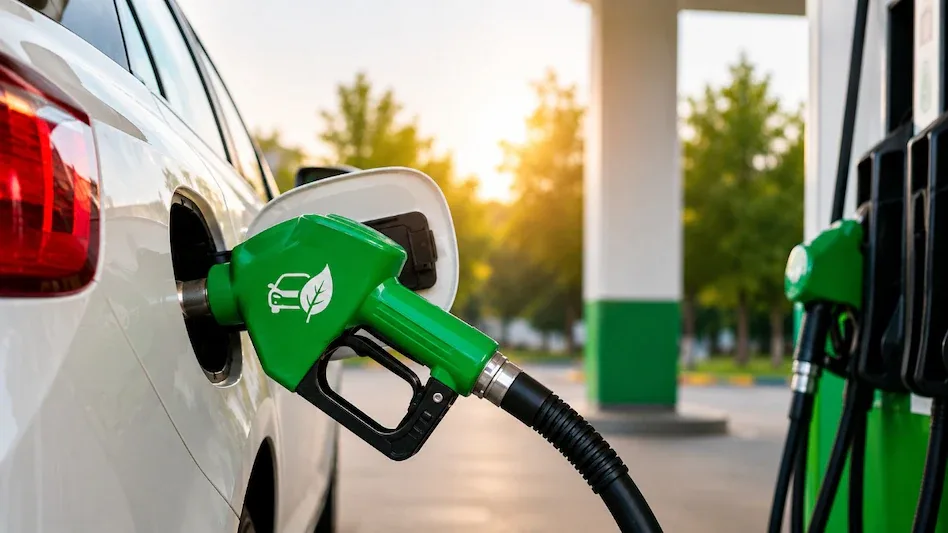
India Scraps Excise Duty on Ethanol-Blended Petrol: What the E20 to E30 Move Really Means for Your Fuel Bills
Something quietly significant just happened at the petrol pump level, and most people scrolled past it.
The Indian government has waived central excise duty on petrol blended with higher concentrations of ethanol specifically blends ranging from 22% to 30% ethanol content. This covers fuel grades now called E22, E25, E27, and E30. The move builds directly on India's earlier E20 ethanol blending policy and signals that the country is pushing this experiment much further than most expected.
So what does that actually mean for the person filling up a tank every week? And why does the government care so much about mixing sugarcane-derived alcohol into your petrol?
Why the Excise Duty Waiver on Ethanol-Blended Petrol Is a Bigger Deal Than It Sounds
Excise duty is a tax the central government charges on manufactured goods, including fuel. For years, petrol has attracted a significant excise component that adds to the pump price. By waiving this duty on higher ethanol-petrol blends, the government is essentially reducing the tax burden on greener fuel grades, making it cheaper for oil marketing companies to sell them at competitive prices.
The quiet urgency here is this: India spends enormous amounts of foreign exchange importing crude oil. Every litre of ethanol blended into petrol is a litre of imported crude that does not need to be purchased. With crude oil prices swinging unpredictably, reducing oil import dependence is not just an environmental choice, it is a financial one.
What Ethanol Blending Actually Is, Explained Simply
Think of petrol as a recipe. Ethanol is an ingredient you can swap in.
Ethanol is alcohol made mostly from sugarcane or maize. It burns cleanly, produces lower emissions than pure petrol, and India grows enormous quantities of sugarcane. Ethanol blending means mixing a percentage of this alcohol into regular petrol before it reaches the pump.
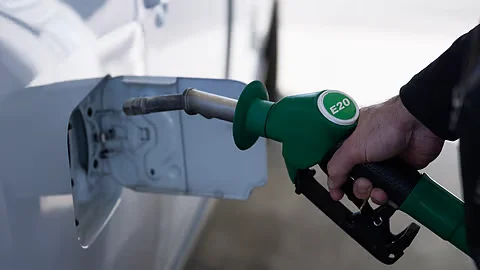
E10 means 10% ethanol, 90% petrol. E20 means 20% ethanol. E30 means 30% ethanol. India already achieved the E20 target ahead of schedule. The government is now clearing the path for E22 through E30 by removing the excise duty barrier that made these higher blends commercially unattractive.
How the Excise Duty Waiver Works in Practice
The earlier framework already exempted E20 petrol from central excise. The new notification extends that exemption to petrol containing between 22% and 30% ethanol. Here is the practical effect.
When excise duty applied, blending higher quantities of ethanol made the final fuel more expensive to produce or resulted in thinner margins for oil companies. Without excise duty on those higher blends, the economics shift. Oil marketing companies have more headroom to price these blends competitively, and ethanol suppliers — primarily sugar companies — gain a guaranteed, growing market for their output.
This is why sugar stocks jumped up to 3.5% on the stock market as soon as the news broke. The market understood immediately that a larger, duty-free ethanol demand had just been created.
Read More: Manoj Bajpayee Calls Ramayana and Varanasi Budget Hype a "PR Tactic" , And He Has a Point
The Real-World Impact on Petrol Prices and Sugar Companies
The honest answer about petrol prices: the immediate impact at the pump may not be dramatic. Petrol pricing in India involves multiple layers — crude oil costs, state taxes, dealer commissions, and more. The excise waiver creates the structural conditions for higher blends to be adopted, but pump prices will not fall overnight.
What is more immediate is the effect on the ethanol supply chain. Sugar mills that produce ethanol now have strong demand signals from the government. This is good news for companies in Uttar Pradesh, Maharashtra, and Karnataka where sugarcane cultivation is concentrated. Farmers who supply cane benefit indirectly when mills have secured, better-priced offtake contracts.
For the environment, the benefits are measurable. Ethanol burns with lower carbon monoxide and particulate emissions than pure petrol. A 30% ethanol blend could cut fuel-related carbon emissions meaningfully, particularly in cities where vehicle density is highest.
Common Misunderstandings People Have About Ethanol Fuel
Many vehicle owners worry that higher ethanol content will damage their engine. This is worth addressing directly.
Most modern cars sold in India since 2019 are designed to handle E20. Older vehicles can typically manage E10 without any modification. E30 is a newer frontier, and engine compatibility will need to keep pace with fuel policy — something both automakers and regulators are actively working on.
The second misunderstanding is that ethanol blended petrol gives lower mileage. This is partly true. Ethanol has a slightly lower energy density than petrol, which can mean a small reduction in kilometres per litre. The tradeoff the government is making is that this reduction is offset by lower import bills, lower emissions, and better farm income.
What Informed Investors and Consumers Should Watch
If you follow markets, ethanol stocks and sugar companies are worth tracking in this environment. The government has consistently expanded its ethanol blending ambitions, and this excise waiver is the latest signal that the policy trajectory is stable and growing.
If you are a vehicle owner, check your owner's manual for the maximum ethanol blend your car is rated for. As higher blends become available at pumps, knowing your vehicle's compatibility saves you from guesswork.
A Small Observation Worth Sitting With
India's biofuel policy has been building in layers for nearly two decades. Each step, from E5 to E10 to E20 and now toward E30, was quietly significant when it happened and largely underappreciated at the time.
The excise duty waiver is one of those moves. It does not make front-page headlines, but it changes the economics of ethanol production, shifts incentives for oil companies, helps farmers, and moves the needle on fuel import dependence. That is a lot of work for a single notification.
Read More: Delhi Hotel Fire Deaths: 21 Lives Lost in Malviya Nagar Blaze That Was Waiting to Happen
Disclaimer: This article is based on information available across the web. Parchar Manch does not take responsibility for its complete accuracy, as the content could not be fully verified.
FAQs
What does the excise duty waiver on ethanol-blended petrol mean in simple terms?
The government has removed the central tax on petrol mixed with 22% to 30% ethanol. This makes it commercially easier for oil companies to produce and sell these higher blends, and benefits sugar companies that supply ethanol.
Will petrol prices drop because of this announcement?
Not immediately or dramatically. The waiver improves the economics of higher ethanol blends, but petrol pump prices depend on multiple factors including crude oil costs and state taxes. Over time, wider adoption of higher blends could help moderate import-linked price volatility.
Is my car compatible with E25 or E30 petrol?
Most cars manufactured after 2019 are designed for E20. E25 and E30 compatibility depends on your specific vehicle. Check your owner's manual or contact your manufacturer before using these higher blends.
Why are sugar company stocks rising because of this policy?
Sugar mills are major producers of ethanol in India. A larger, duty-free market for higher ethanol blends directly increases demand for their ethanol output, improving their revenue prospects.
What is the government's larger goal behind the ethanol blending programme?
India imports roughly 85% of its crude oil. Replacing even a portion of that with domestically produced ethanol reduces the foreign exchange spent on imports, improves energy security, and cuts vehicle emissions.
Does ethanol-blended petrol reduce mileage?
Ethanol has slightly lower energy density than petrol, which can cause a marginal reduction in fuel efficiency. However, higher octane properties of ethanol can partially offset this, and the efficiency loss is considered acceptable given the broader economic and environmental benefits.