India's Core Sector Growth Drops to a Seven-Month Low of 0.5% in May: What the Numbers Are Actually Telling Us
When an economy the size of India's grows at just 0.5 percent in one of its most foundational sectors, it is worth pausing for a moment.
On June 22, 2026, the Ministry of Commerce and Industry released data showing that India's core sector growth slipped to 0.5 percent in May 2026 compared to the same month last year. That is the slowest reading in seven months. The figure dropped sharply from 1.8 percent in April and was below the 1.2 percent recorded in May 2025.
The number is not a crisis. But it is a signal worth understanding.
Why India's Core Sector Growth Rate Matters to Ordinary People
The Index of Eight Core Industries is not just a statistic that economists track. It covers the industries that keep the country physically running, coal, crude oil, natural gas, refinery products, fertilizers, steel, cement, and electricity. Together, these eight sectors carry 40.27 percent of the weight in India's Index of Industrial Production, which means what happens here flows into nearly every corner of the economy.
When these sectors slow down, factories slow down. Infrastructure projects stall. Energy costs shift. If you have noticed anything feeling slightly more sluggish in terms of construction activity or energy pricing in your region, the numbers now offer some context.
Read More: DK Shivakumar Sworn In as Karnataka Chief Minister: The Long Wait Is Finally Over
What Dragged the Numbers Down
This is where things get specific, and specific is useful.
Five of the eight core industries recorded negative growth in May. Coal production fell the most, declining 9.3 percent year-on-year. Crude oil output dropped 4.6 percent. Natural gas production contracted 4.9 percent. Refinery products, which carry the single largest weight in the index at 28.04 percent, fell 8.7 percent. Fertilizer output also edged lower by 0.9 percent.
The refinery products decline is particularly significant. Given how heavily that sector is weighted, a fall of 8.7 percent in that one category alone was enough to pull the entire index toward near-zero growth, no matter how well other sectors performed.
And some sectors did perform well. That is the part of this story that tends to get missed.
The Three Sectors Holding the Line
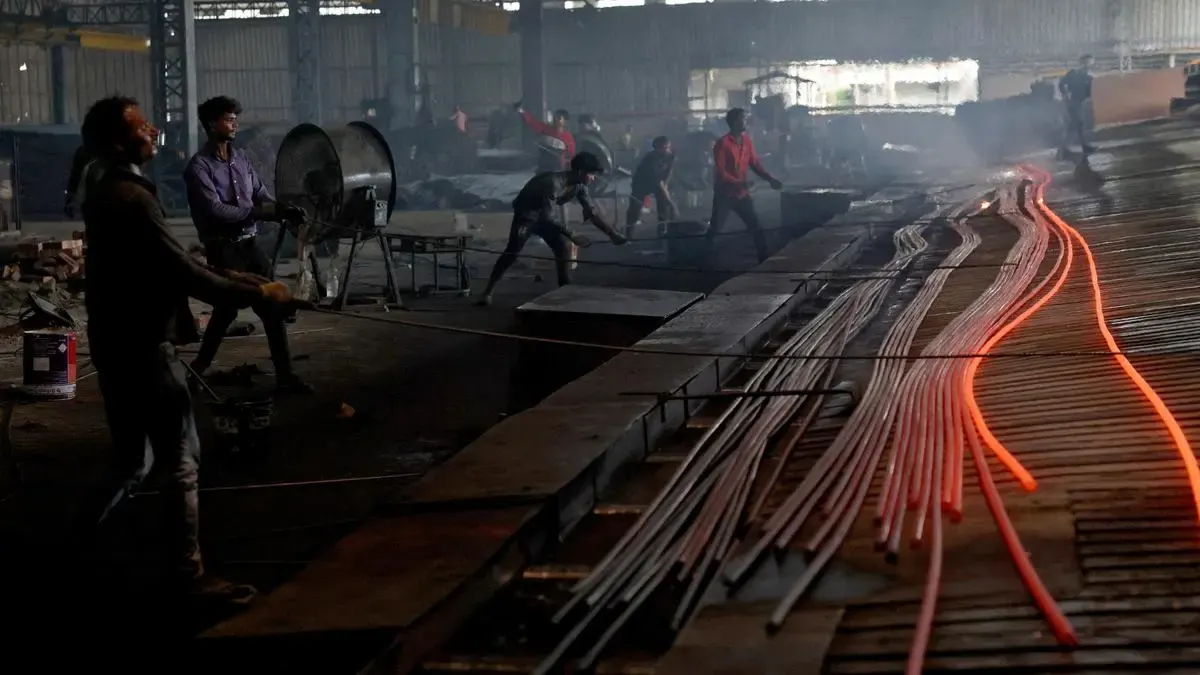
Steel production grew 5 percent in May year-on-year, with cumulative growth for April to May of FY27 standing at 5.2 percent. Cement output rose 8.4 percent, supported by sustained government investment in highways, ports, and railways. Electricity generation climbed 8.7 percent, reflecting continued demand from industry, infrastructure projects, and households.
These are not incidental numbers. Steel and cement growth at this level points to active construction activity. The kind that comes from spending on roads and urban infrastructure, not just paper announcements. Electricity demand growing at nearly 9 percent signals that industrial and residential consumption is rising.
The cumulative core industries growth rate for April-May FY27 stands at 1.1 percent, which matches the pace recorded during the same period last year.
A Structural Picture, Not Just a Monthly Blip
What the May data reveals is an increasingly divided industrial picture. On one side are fossil fuel and hydrocarbon sectors, coal, crude oil, natural gas, and refinery products, which face a combination of declining domestic output and structural headwinds. On the other side are steel, cement, and electricity, which are benefiting directly from public capital expenditure and rising urbanization.
This is not a random divergence. It reflects a shift that has been building over several quarters, where infrastructure-linked industries outperform energy extraction industries. The underlying cause of the coal decline, for instance, may partly include rising renewable energy capacity reducing coal demand for power generation, though production data alone does not confirm that interpretation fully.
What analysts are watching is whether the energy-side weakness stabilizes or deepens. A prolonged fall in refinery products output combined with declining crude oil production could create cost pressures that eventually blunt the construction momentum driving cement and steel.
Read More: Praggnanandhaa Beats Magnus Carlsen Twice at Norway Chess 2026: What Just Happened Is Historic
Closing Thoughts
A 0.5 percent core sector growth reading is quiet enough to dismiss and important enough to watch. The economy is not moving in one direction. It is moving in two, with infrastructure pulling upward and traditional energy sectors pulling back. What that balance looks like three months from now will say a great deal about where India's broader industrial production is heading in FY27.
For now, the number is low. But the texture underneath it is more complicated than the headline suggests.
Read More: The Cockroach Janta Party: India's Gen Z Turned Humiliation Into a Political Warning Shot
Disclaimer: This article is based on information available across the web. Parchar Manch does not take responsibility for its complete accuracy, as the content could not be fully verified.
FAQs
What are India's eight core industries?
The eight core industries are coal, crude oil, natural gas, refinery products, fertilizers, steel, cement, and electricity. Together they make up over 40 percent of the weight in India's Index of Industrial Production.
Why did core sector growth fall to 0.5% in May 2026?
Five out of eight sectors recorded negative growth. Coal fell 9.3 percent, refinery products dropped 8.7 percent, and crude oil and natural gas also declined. These declines outweighed strong performances in steel, cement, and electricity.
Is 0.5% core sector growth a sign of economic trouble?
Not necessarily by itself. The cumulative growth for April-May FY27 stands at 1.1 percent, matching last year's pace. However, five sectors contracting in a single month is worth monitoring, especially given the heavy weight of refinery products in the index.
Which sectors performed well in May 2026?
Cement grew 8.4 percent, electricity generation rose 8.7 percent, and steel production increased 5 percent year-on-year, all driven by government infrastructure investment and rising energy demand.
How does core sector growth affect the broader economy?
The core index feeds directly into the Index of Industrial Production, which is a key measure of overall manufacturing and industrial health. A sustained slowdown in core industries can signal reduced industrial activity, higher input costs, and slower GDP growth over time.
What was India's core sector growth in April 2026?
The final revised figure for April 2026 was 1.8 percent, which makes May's 0.5 percent a sharp month-on-month deceleration.