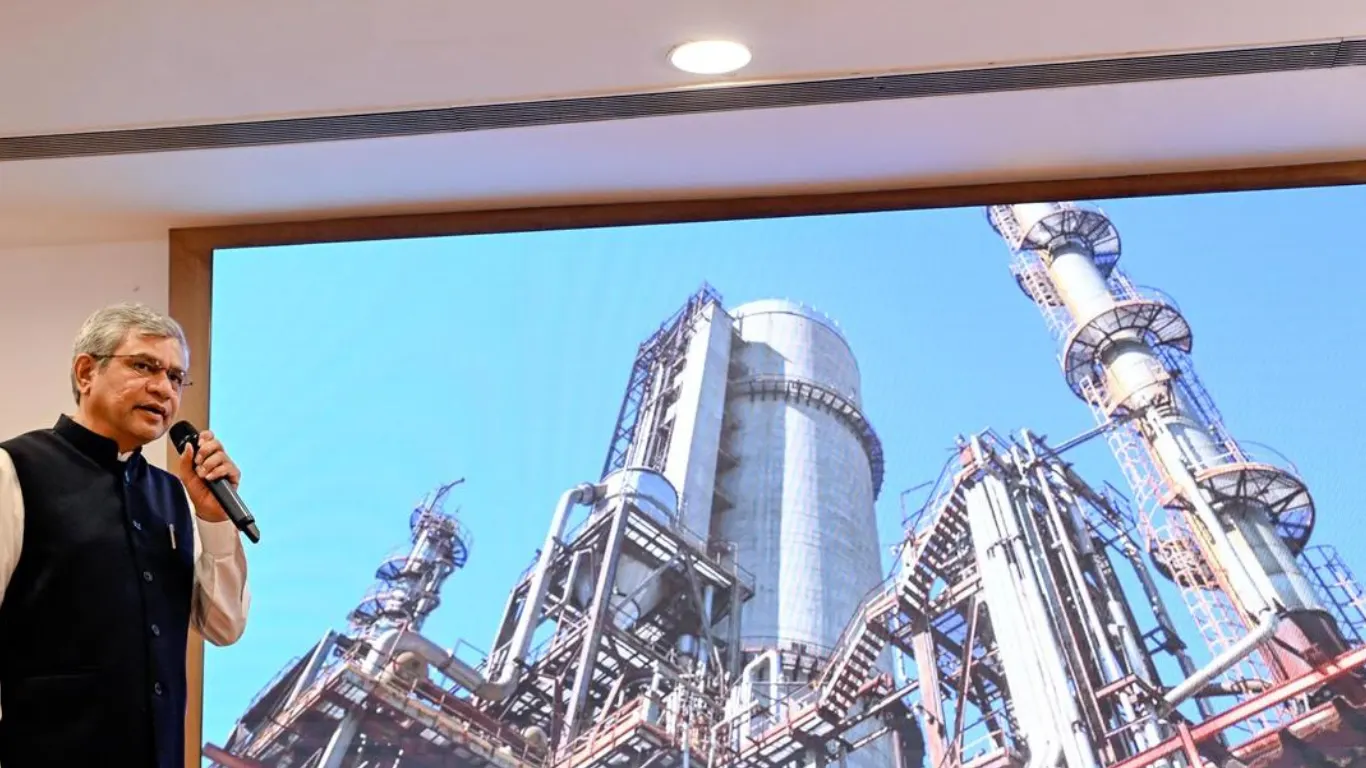
India's Rs 37,500 Crore Coal Gasification Scheme: What It Means for Your Energy Bill, Jobs, and the Future of Fuel
Coal gasification in India just got a massive government push. On May 14, 2026, the Union Cabinet, chaired by Prime Minister Narendra Modi, approved a Rs 37,500 crore scheme to promote surface coal and lignite gasification projects across the country. That is roughly $4.5 billion. For a country that spends nearly Rs 2.77 lakh crore every year importing fuels and chemicals it could theoretically produce at home, this decision carries weight that goes far beyond a press release.
Let us understand what just happened, why it matters, and what it actually means in plain terms.
Why India's Import Bill Made This Scheme Inevitable
India imports more than 50 per cent of its LNG requirements. Nearly all of its ammonia demand comes from outside the country. Methanol imports hover between 80 and 90 per cent. Even urea, the fertiliser that feeds millions of Indian farmers, is about 20 per cent imported.
Every time geopolitical tensions flare up, whether in West Asia, the Black Sea, or anywhere near a major shipping lane, India feels it in fuel prices, fertiliser costs, and eventually food prices. This is not abstract economic theory. It shows up in the vegetable prices at your local market.
The Indian coal gasification scheme is, at its core, an answer to that vulnerability. India holds approximately 401 billion tonnes of coal reserves and around 47 billion tonnes of lignite reserves. Coal already accounts for over 55 per cent of the country's energy mix. The question was never whether India has enough coal. The question was always whether it could use that coal more smartly.
Read More: Raghav Chadha and Six Other AAP MPs Join BJP: What It Means for Indian Politics
What Coal Gasification Actually Is, Explained Simply
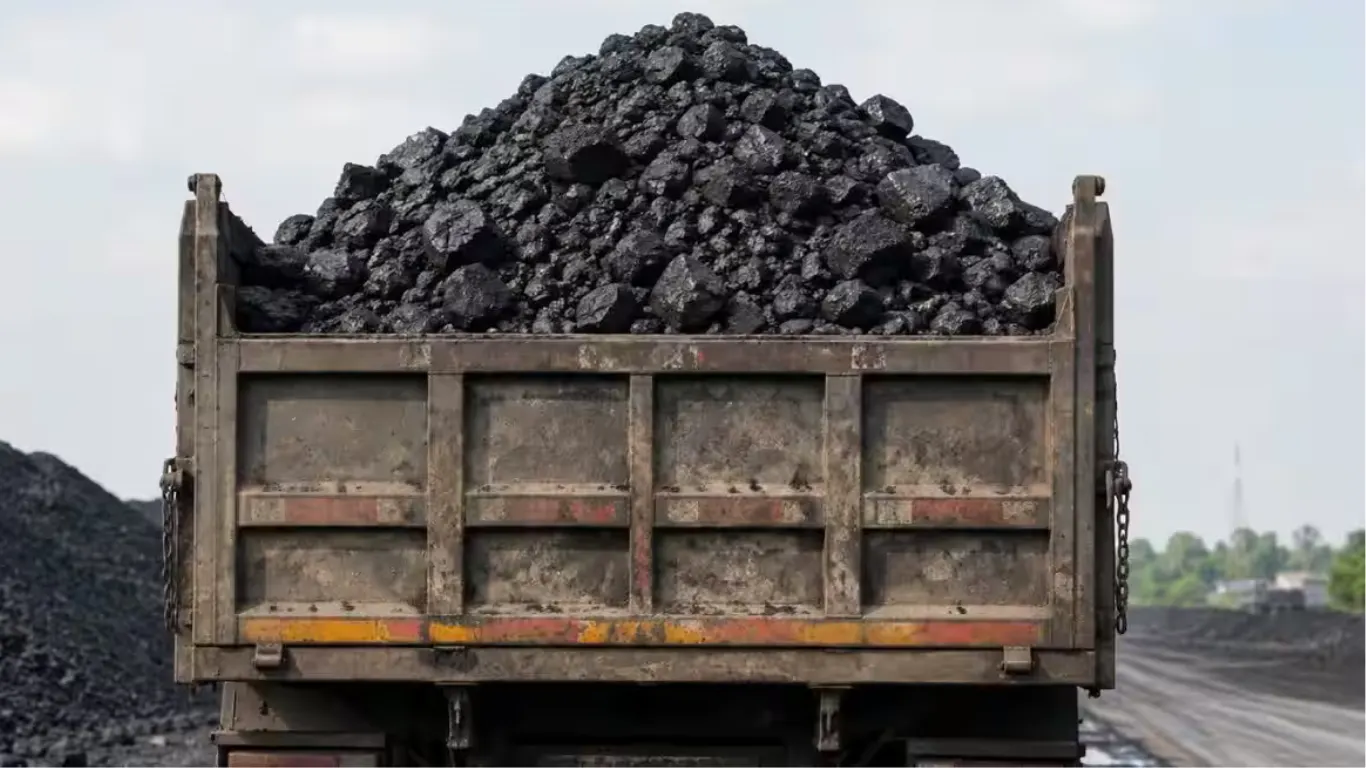
Burning coal releases energy but also a cocktail of pollutants. Coal gasification works differently. Instead of burning coal directly, it converts coal or lignite into synthesis gas, widely called syngas, by reacting it with controlled amounts of oxygen and steam at high temperatures.
Think of it like this. Instead of burning a log of wood to get warmth and ash, you first convert that log into a combustible gas that you can then use to run a stove, a power plant, or a chemical factory, with far more control and far less waste. Syngas is versatile. From syngas, industries can produce LNG substitutes, urea, ammonia, methanol, and even hydrogen.
The technology is not new. Germany used coal gasification during the Second World War. South Africa has run commercial coal gasification plants for decades. What is new here is the scale of India's ambition and the financial muscle being put behind it.
The Scheme's Structure: How the Money Works
The approved programme carries a total outlay of Rs 37,500 crore and targets the gasification of approximately 75 million tonnes of coal and lignite. The government has set a national target of gasifying 100 million tonnes of coal annually by 2030.
Here is how the financial incentive is structured. Projects receive up to 20 per cent of plant and machinery costs as a financial incentive through a competitive bidding process. Disbursements are linked to project milestones in four equal instalments, which keeps projects honest and prevents money from disappearing into planning documents.
Read More: Core Member Sandeep Pathak's Exit from AAP Hits Party the Most , And Here Is Why
Caps have been set to prevent monopolisation. A single project can receive no more than Rs 5,000 crore. A single entity group across all its projects is capped at Rs 12,000 crore. Except for synthetic natural gas and urea, any single product category is capped at Rs 9,000 crore.
The government also extended coal linkage tenure up to 30 years under the syngas production sub-sector. This matters enormously for investors. Nobody builds a multi-thousand crore gasification plant if they are unsure about their coal supply for the next decade. Thirty-year linkages send a clear signal: this is a long game, and the government is in it.
What Gets Produced and Who Benefits
Downstream products from syngas production include LNG substitutes, urea, ammonia, methanol, ammonium nitrate, dimethyl ether, and eventually, clean hydrogen at potentially competitive prices. One report suggests coal gasification could yield clean hydrogen at approximately $1.25 per kilogram, which would be a significant development for India's hydrogen ambitions.
Around 25 major projects are expected to emerge from this scheme, concentrated in coal-bearing states such as Jharkhand, Odisha, Chhattisgarh, and Madhya Pradesh. The government estimates these projects will generate approximately 50,000 direct and indirect jobs across construction, operations, logistics, and downstream manufacturing.
For the fertiliser sector, domestic ammonia and urea production would reduce input costs for farmers and insulate agricultural supply chains from global price swings. For the chemical industry, domestic methanol availability could reshape cost structures significantly. Annual government revenue from coal and lignite utilisation through this scheme alone is projected at around Rs 6,300 crore, plus downstream GST and other levies.
Building on What Already Exists
This scheme does not emerge from thin air. It builds on the National Coal Gasification Mission launched in 2021 and an earlier Rs 8,500 crore support scheme approved in January 2024, under which eight projects worth Rs 6,233 crore are already under implementation. The new scheme is significantly larger in financial scope and broader in target, representing a decisive scaling-up of what was previously a more cautious experiment.
The scheme is also described as technology-agnostic, meaning companies can use various gasification technologies. However, the government has specifically encouraged the adoption of indigenous technologies, which is a deliberate push toward reducing dependence on foreign engineering, procurement, and construction contractors.
What Could Go Wrong
Honesty demands some acknowledgement of the challenges. India's coal has notoriously high ash content, sometimes above 40 per cent. High-ash coal is harder to gasify efficiently and creates more waste. Commercial viability depends significantly on how technology choices are matched to coal quality, and that is not a trivial engineering problem.
Water is another concern. Gasification is water-intensive, and many coal-bearing regions in India already face water stress. Environmental safeguards around ash and effluent disposal will need to be carefully monitored.
There is also the question of timeline. Large industrial projects in India have a complicated relationship with deadlines. The 2030 target for 100 million tonnes of gasification capacity is ambitious, and project execution will determine whether this scheme delivers on its promise or becomes another well-intentioned policy gathering dust.
Read More: Shreyas Iyer on His Career: From BCCI Contract Snub to India's White-Ball Captaincy Race
The Larger Picture: Energy Atmanirbharta
The phrase energy security for India comes up constantly in policy circles, but this scheme represents something more concrete than rhetoric. If even half the projected investment materialises and 25 projects come online over the next decade, India's exposure to import disruptions in LNG, fertilisers, and chemicals will be meaningfully reduced.
The timing also carries a certain logic. Global supply chains remain fragile. Geopolitical risk is not declining. India's industrial ambitions, including its push for domestic manufacturing across semiconductors, electronics, and chemicals, require stable and affordable energy and feedstock inputs. Coal gasification, at scale, addresses multiple supply vulnerabilities simultaneously.
Whether one views coal as a transitional fuel or a long-term reality, the core question remains the same: if India is going to use coal anyway, should it not extract far more value from it than simple combustion allows? The government has answered that question with Rs 37,500 crore.
Disclaimer: This article is based on information available across the web. Parchar Manch does not take responsibility for its complete accuracy, as the content could not be fully verified.
FAQs
What is the Indian coal gasification scheme approved in 2026?
The Union Cabinet approved a Rs 37,500 crore scheme on May 14, 2026, to promote surface coal and lignite gasification projects. The scheme aims to gasify 75 million tonnes of coal and lignite to produce syngas and downstream products such as LNG substitutes, urea, ammonia, and methanol domestically.
How does coal gasification differ from simply burning coal?
Burning coal produces heat, ash, and emissions. Coal gasification converts coal into syngas by reacting it with oxygen and steam under controlled conditions. Syngas is a flexible industrial feedstock that can be used to manufacture fuels, fertilisers, and chemicals with greater efficiency and reduced direct emissions compared to combustion.
How many jobs will the coal gasification scheme create?
The government estimates approximately 50,000 direct and indirect jobs will be generated across around 25 projects, primarily in coal-bearing states. Jobs will span construction, plant operations, logistics, and downstream manufacturing activities.
What products will be produced through coal gasification in India?
Key downstream products include synthetic natural gas, urea, ammonia, methanol, ammonium nitrate, dimethyl ether, hydrogen, and coking coal substitutes. These are currently heavily imported, and domestic production would reduce India's import bill significantly.
What is India's coal gasification target for 2030?
India has set a national target of gasifying 100 million tonnes of coal annually by 2030. The newly approved scheme targets approximately 75 million tonnes of that goal through incentivised surface gasification projects.