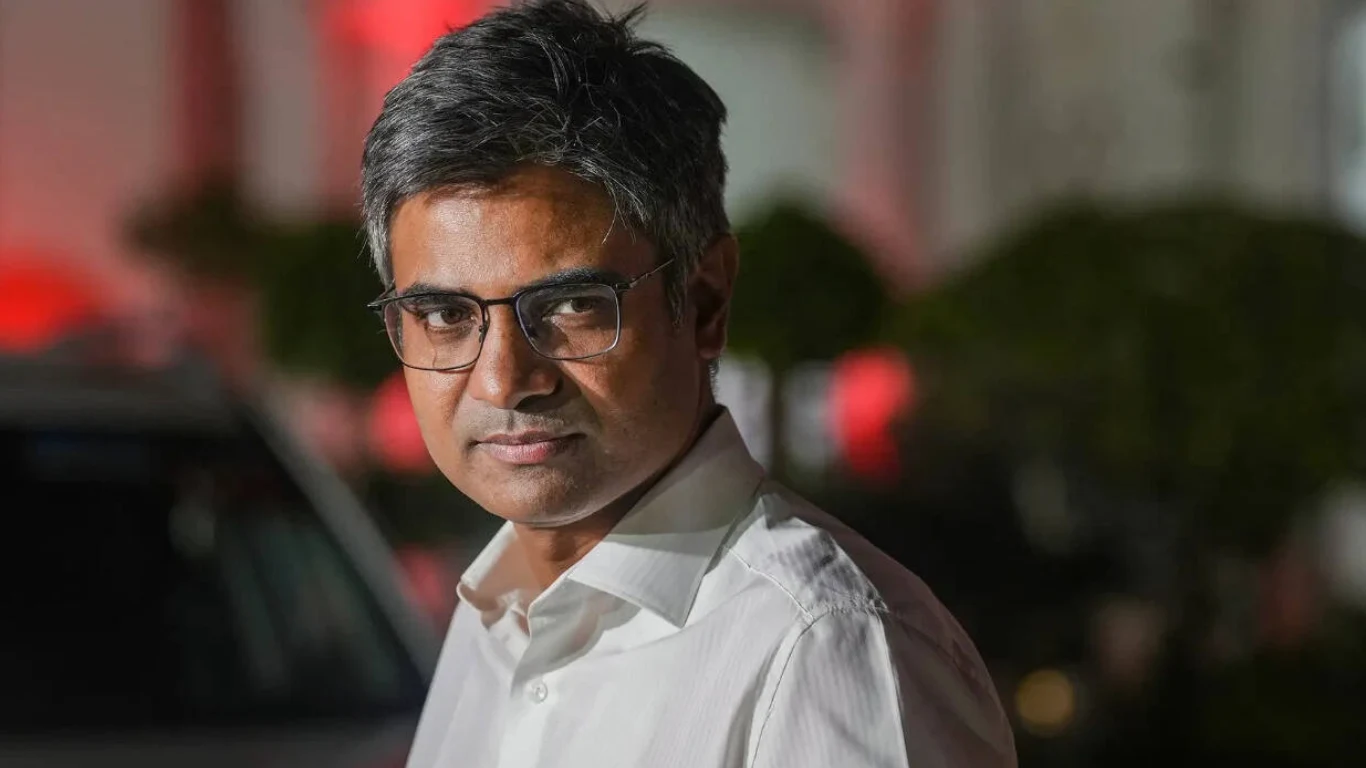
Core Member Sandeep Pathak's Exit from AAP Hits Party the Most , And Here Is Why
Raghav Chadha made the headlines. That much was inevitable. He is the face, the voice, the man with the Instagram reels and the parliamentary soundbites. But ask anyone who has watched the Aam Aadmi Party from the inside , really watched it , and they will tell you the same thing: the exit that actually stings is Sandeep Pathak's.
On April 25, 2026, a press conference in New Delhi changed the political map of AAP in the Rajya Sabha. Rajya Sabha MPs Raghav Chadha, Ashok Mittal, and Sandeep Pathak quit the AAP in a big jolt to Arvind Kejriwal and joined the Bharatiya Janata Party. Chadha, at the microphone as always, announced that two-thirds of AAP's Rajya Sabha members were exercising constitutional provisions to merge with the BJP. The room buzzed. The news spread fast.
But here is what got lost in the noise.
Why Sandeep Pathak's Exit Is the Wound That Will Not Heal Quickly
Most people watching AAP news that afternoon were focused on Raghav Chadha. Understandably. He has always been the public-facing personality , articulate, camera-ready, the kind of politician who fills a frame well. But political organisations do not run on faces alone.
Sandeep Pathak holds significant influence within the party as the National General Secretary (Organisation), managing operations in key states like Gujarat, Himachal Pradesh, and Punjab. That title , National General Secretary, Organisation , is not decorative. It means he was the person who built the internal machinery. The structures, the networks, the quiet institutional memory that holds a party together between elections.
Pathak was instrumental in the party's 2022 Punjab landslide victory and was central to AAP's expansion beyond Delhi. That expansion did not happen through press conferences. It happened through unglamorous, relentless ground-level work. The kind most voters never see or credit.
Before entering politics, he worked as an assistant professor at IIT Delhi and a research associate at the University of Oxford and MIT. He holds a PhD from the University of Cambridge. This is not the profile of someone who stumbled into politics for the perks. This was a deliberate choice , and now that choice is being reversed.
What Raghav Chadha Said , And What He Actually Meant
Addressing the press conference, Chadha said, "The Aam Aadmi Party, which I nurtured with my blood and sweat and to which I gave 15 years of my youth, has now completely deviated from its principles, values, and core morals."
Strong words. The kind that suggests this was not a sudden decision.
Chadha said that for the past few years, he felt like "the right man in the wrong party." He also alleged that the party, which was once formed to eliminate corruption, had become compromised. Meanwhile, Sandeep Pathak, slightly quieter at that press conference but no less decisive, said something equally telling. "I had never thought that such a situation would ever occur in my life. But it did. I was a part of this party for 10 years. Today, I am separating my path from that of the AAP."
Ten years. For someone who designed the party's entire ground-level architecture in Punjab, that is not a small thing to walk away from.
Read More: Tim Cook to Step Down as Apple CEO: Inside Apple’s Biggest Leadership Transition in Years
The Scale of AAP's Rajya Sabha Collapse
The full picture is harder to look at. Raghav Chadha said that AAP has 10 members in the Rajya Sabha, and seven of them have decided to leave the party and merge with the Bharatiya Janata Party.
Seven out of ten. The three leaders , Chadha, Pathak, and Mittal , announced this at a press conference in New Delhi, with Chadha also claiming that
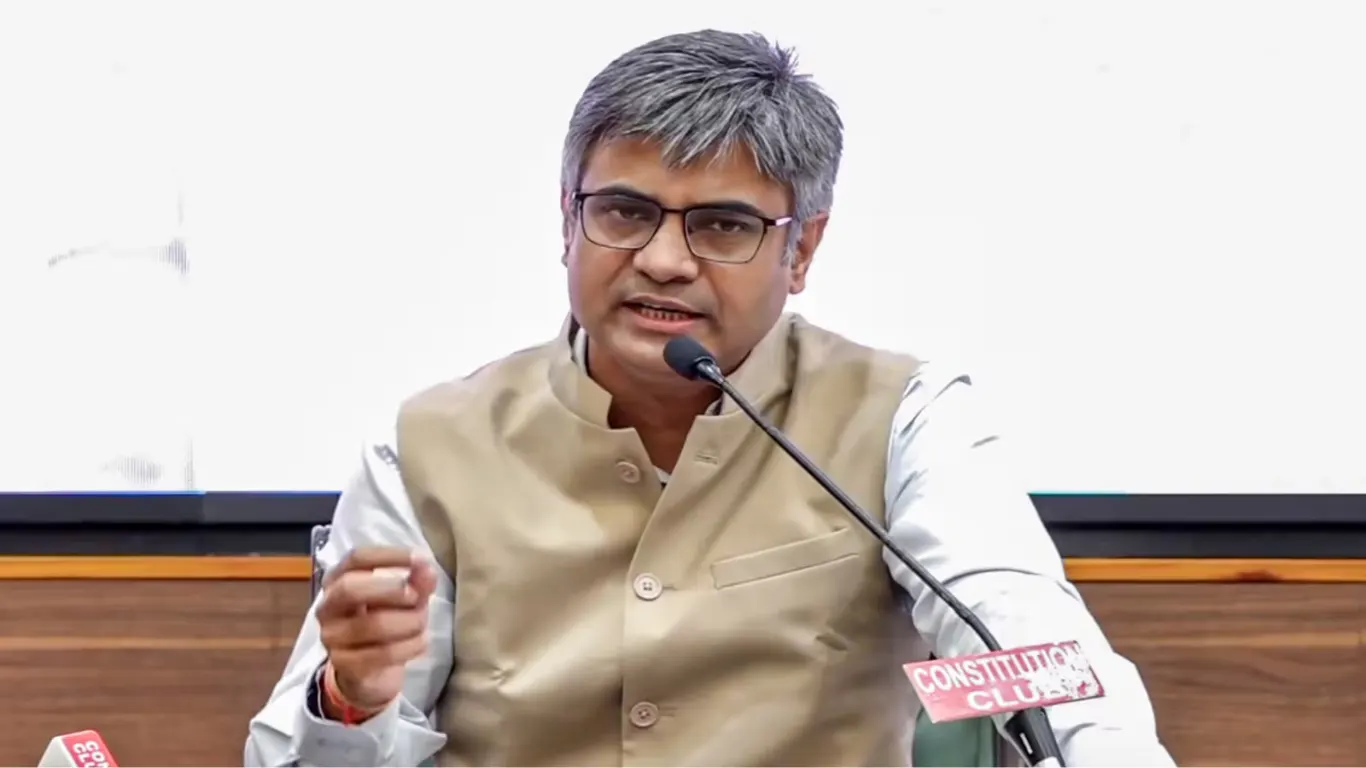
Harbhajan Singh, Rajinder Gupta, Vikram Sahney, and Swati Maliwal were also with them.
That leaves Sanjay Singh, N.D. Gupta and Sant Seechewal are holding the fort for AAP in the upper house. Three people. From ten.
The three Rajya Sabha MPs, Raghav Chadha, Sandeep Pathak, and Ashok Mittal, visited the BJP Headquarters and met BJP President Nitin Nabin, who welcomed them by offering sweets. A symbolic moment. Sweets mean celebration. For the BJP, this was a very good day.
AAP's Response: Betrayal and Operation Lotus
The AAP did not take this quietly. Sanjay Singh called the development "Operation Lotus," alleging that the BJP used state machinery to create fear and initiate the split. He also accused central agencies of being used to create pressure and destabilise the party in Punjab.
Singh underscored that many of the departing MPs were given opportunities by AAP that propelled them to national politics , Sandeep Pathak was entrusted with major organisational responsibilities, Swati Maliwal and others rose from grassroots activism to Parliament, and even Harbhajan Singh was given a political platform through AAP.
The emotional charge in that statement is real. These were not outsiders who wandered in. These were people the party built, backed, and believed in.
Singh framed the development as a direct affront to the public mandate, saying, "Today, seven AAP Rajya Sabha MPs have joined the BJP. The people of Punjab should remember these seven names."
Whether Punjab will remember , or forgive , is a different question entirely.
Read More: Rajnath Singh Arrives in Berlin for Defence Talks — A Quiet Visit With Loud Global Signals
Why This Is Not Just About Numbers
Losing Rajya Sabha seats is quantifiable. Losing Sandeep Pathak is harder to measure. The AAP party built its Punjab story on organisational depth , ward-level workers, coordinated messaging, and the ability to mobilise quickly. Pathak was a key architect of all of that.
For the BJP, the entry of seven sitting MPs is both a symbolic and strategic boost, especially as it looks to expand its footprint in Punjab. AAP, meanwhile, faces immediate political and organisational challenges , containing the fallout, reassuring its cadre, and preventing further exits.
That last part , preventing further exits , is the part Arvind Kejriwal and AAP MPs still in the fold will be thinking about tonight. Once an organisation starts fracturing at this scale, the question is always: who is next?
Ashok Mittal and the LPU Connection
Among the three who addressed the press conference, Ashok Mittal , founder of Lovely Professional University , is another significant departure. He has contributed to parliamentary discussions on education and entrepreneurship policy and is recognised for his contributions to the education sector and higher education reforms. His exit, alongside Pathak and Chadha, signals that this is not a fringe rebellion. These are central, credentialed figures of the party.
What Happens to AAP Now
The party retains power in Punjab under Bhagwant Mann. That is nothing. State governments have their own momentum, their own bureaucratic infrastructure, their own voter relationships. But a party with three Rajya Sabha MPs , down from ten , is a very different organisation from a legislative standpoint. It reduces AAP's ability to block, bargain, or shape legislation at the national level.
And then there is the symbolic damage. The AAP Rajya Sabha members who left are not unknown quantities. They are people voters in Punjab associated with the party's promise. When they stand in front of cameras and say the party has betrayed its values, it lands differently than when an outsider says it.
The Quiet Cost of Sandeep Pathak's Exit
Raghav Chadha will be fine. He is already fine , suited up, press conference done, new chapter begun. His public profile will survive the transition.
But political organisations are not just about public profiles. They are about the people who answer calls at 2 AM, who know which district-level leader needs what kind of support, who can read a constituency's mood before the polls open. Sandeep Pathak was one of those people. And those people, when they leave, take something with them that no press conference can easily replace.
AAP is not finished. That would be too simple a conclusion. But it is diminished. And the dimension in which it is most diminished , the organisational, structural, behind-the-scenes dimension , is precisely the one Sandeep Pathak owned.
Disclaimer: This article is based on information available across the web. Parchar Manch does not take responsibility for its complete accuracy, as the content could not be fully verified.
FAQs
Did Raghav Chadha join the BJP?
Yes. Raghav Chadha, along with Sandeep Pathak and Ashok Mittal, formally quit the AAP and joined the BJP on April 25, 2026, invoking constitutional provisions for a merger.
Why did Raghav Chadha leave AAP?
Chadha said the party had deviated from its founding values and that he had felt like "the right man in the wrong party" for the past few years. He also alleged internal corruption and ideological drift.
Which party did Raghav Chadha join?
He joined the Bharatiya Janata Party (BJP), along with six other AAP Rajya Sabha MPs, including Sandeep Pathak, Swati Maliwal, Harbhajan Singh, Ashok Mittal, Vikram Sahney, and Rajinder Gupta.
Who is Sandeep Pathak, and why does his exit matter more?
Sandeep Pathak served as AAP's National General Secretary (Organisation) and was the key strategist behind the party's 2022 Punjab election campaign. A former IIT Delhi professor with a Cambridge PhD, he managed the party's organisational work across Gujarat, Himachal Pradesh, and Punjab. His exit represents a structural loss, not just a political one.
How many AAP MPs are left in the Rajya Sabha?
After the mass exit, only three AAP MPs remain in the Rajya Sabha , Sanjay Singh, N.D. Gupta and Sant Seechewal , out of the original ten.
What is AAP saying about the defections?
AAP MP Sanjay Singh has called it "Operation Lotus," alleging the BJP used state machinery and investigative agencies to engineer the split and create an atmosphere of fear among AAP's Rajya Sabha members.