Iran War and Oil Prices: How a Conflict in the Gulf Changed the World's Fuel Economy in 2026
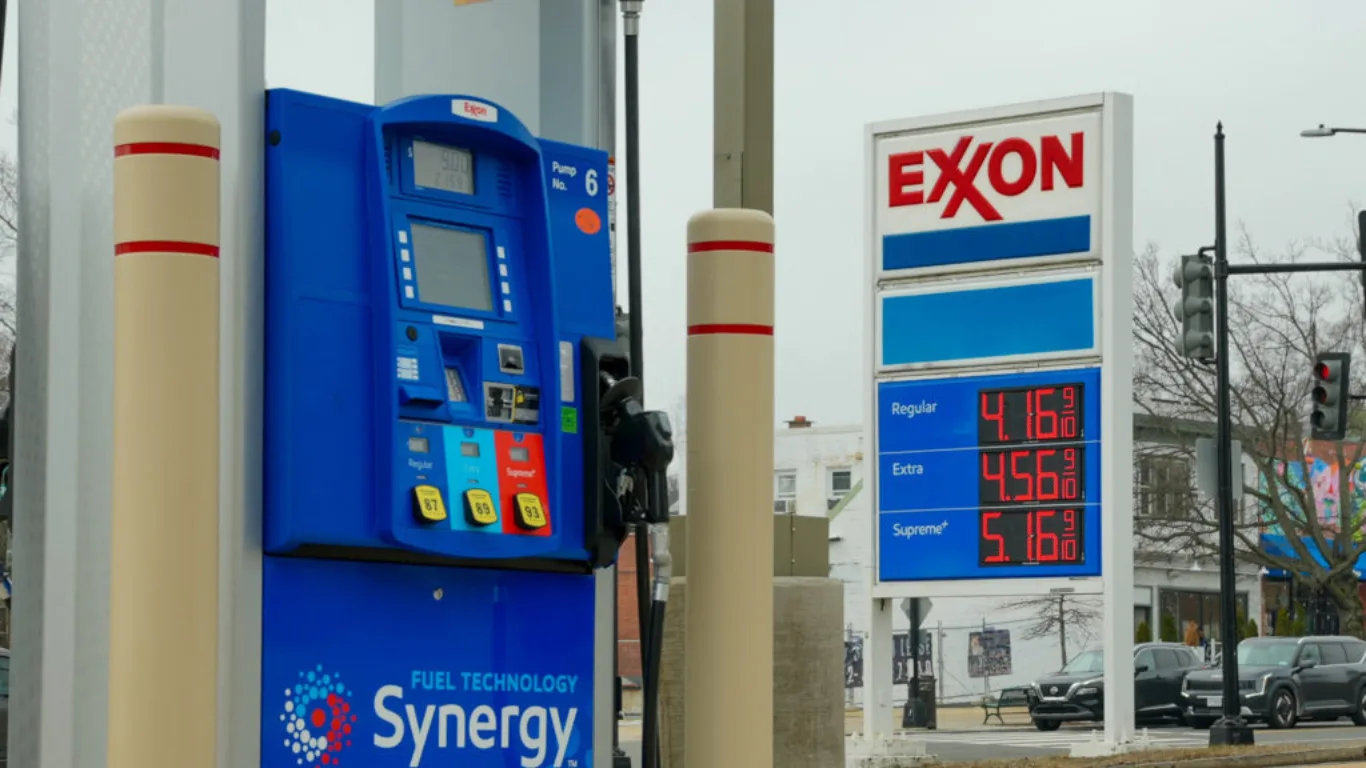
Oil does not spike by 40 percent without a reason. When Iran oil prices surged past $100 per barrel in early March 2026, within days of the outbreak of the Iran war, it was the first time crude had crossed that threshold since Russia invaded Ukraine in 2022. For ordinary people, that number translated almost immediately into higher fuel costs at petrol pumps, costlier airline tickets, and the quiet dread of rising prices on everything that gets transported.
This is what happens when the world's most critical energy chokepoint comes under threat.
Why the Iran War Hit Oil Markets So Hard
The Strait of Hormuz is a narrow passage, barely 33 kilometres wide at its narrowest point, between Iran and Oman. More than 20 percent of the world's daily oil supply flows through it. Saudi Arabia, Iraq, Kuwait, the UAE, and Qatar all depend on this waterway to export their oil to Asian and European markets.
When the 2026 Iran war began in February, Iran's new Supreme Leader Mojtaba Khamenei vowed to keep the Strait of Hormuz shut as leverage against the United States and Israel. Global oil supply plummeted by 10.1 million barrels per day to 97 million barrels per day in March alone, according to the International Energy Agency. The IEA described this as the largest oil supply disruption in history.
Brent crude, the international oil benchmark, surged well past $100 per barrel when energy markets opened after the first major strikes. WTI, the US benchmark, followed.
Read More: Modi's Matua Gambit: The One Speech That Could Decide West Bengal's 2026 Election
The Price Timeline: Surge, Volatility, and a Partial Recovery
Understanding how crude oil prices moved during the Iran war requires following the rhythm of the conflict itself.
Before the war began, Brent was trading around $70 per barrel. As early fears of an Iran conflict grew in late January and February, oil ended January near $70.69. When war broke out, prices surged dramatically. Brent crossed $100 following the first strikes on Iranian oil infrastructure in Tehran in early March.
At its peak, Brent touched levels not seen in years. Analysts at Goldman Sachs, Bank of America, Citigroup, HSBC, and BMI all scrambled to revise their oil forecasts upward. Bank of America expected Brent to average $80 per barrel for the second quarter of 2026. HSBC had a $80 forecast for the year.
Then came the volatility. Every ceasefire rumour sent prices falling. Every escalation sent them spiking. Oil markets in 2026 have been, in the words of one analyst, a cycle of soaring on fear and plunging on hope.
By late May 2026, Brent had fallen nearly 19 percent for the month, the worst monthly performance since the COVID-19 pandemic, settling around $92.56 per barrel. WTI fell to approximately $87 per barrel. The reason was a wave of cautious optimism about US-Iran ceasefire talks and the possibility of the Strait of Hormuz reopening to shipping.
But even at $92, prices remain significantly above pre-war levels. Infrastructure damage to refineries and pipelines across the Gulf, depleted inventories, and ongoing security concerns for tanker traffic mean that a full return to pre-war prices is not expected quickly.
Read More: Sun Pharma's $11.75 Billion Organon Acquisition: India's Biggest Pharma Bet Explained
What the Economists Are Saying About Oil Price Recovery
Research published through the Federal Reserve Bank of Dallas offered scenario modelling on the conflict's economic impact. Under a cautiously optimistic scenario where the Strait of Hormuz stays closed for one quarter before gradually reopening, WTI crude oil would peak at around $94 per barrel and remain above $80 throughout 2026.
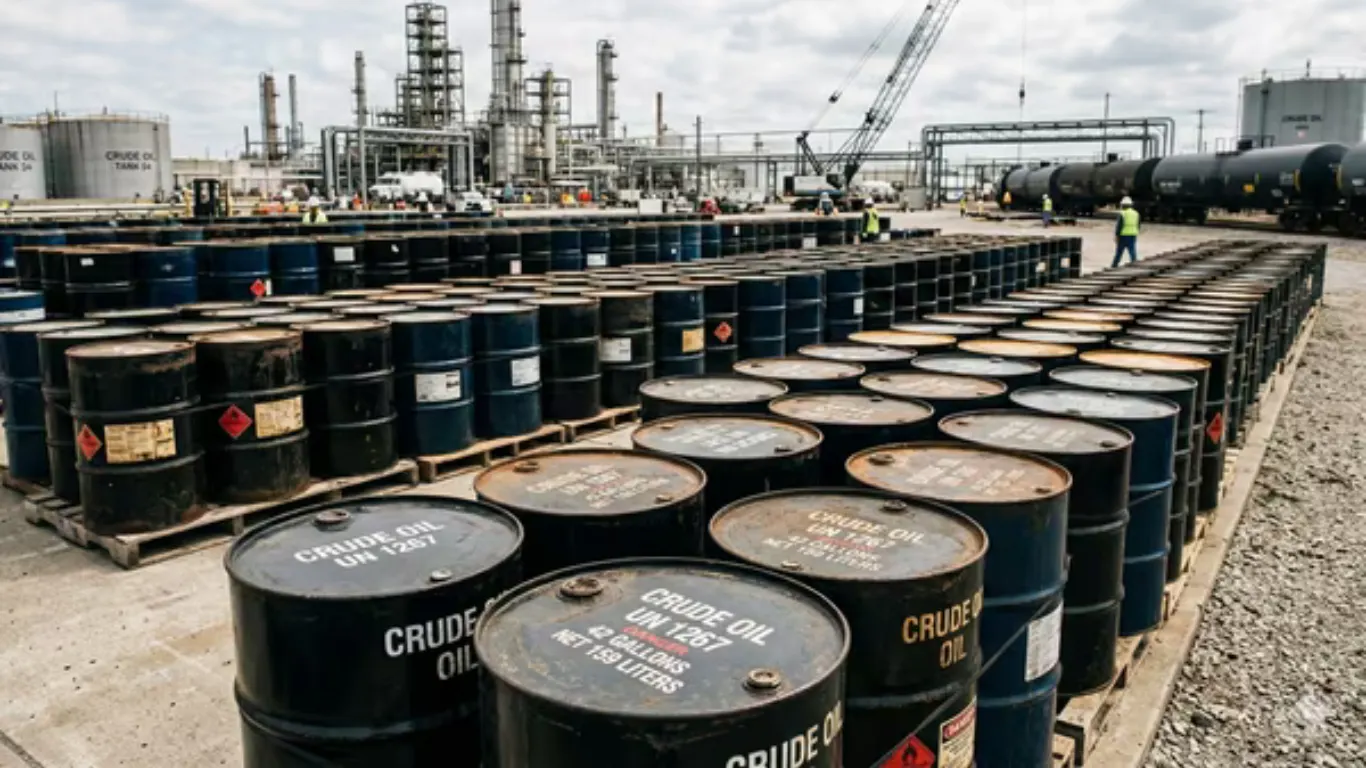
The same research estimated that even this relatively contained scenario would add 0.6 percentage points to US headline inflation and 0.2 percentage points to core inflation. For India and other large oil-importing nations, the impact on the current account, fuel subsidies, and consumer prices has been substantial.
Iran's own crude oil exports dropped sharply. Loadings for May 2026 fell below 0.3 million barrels per day, compared to 1.5 million barrels per day in April and 1.7 million barrels per day in March. Iran was one of the world's significant oil producers, and removing that volume from the market adds structural tightness that lingers even after the conflict fades.
Read More: Raghav Chadha and Six Other AAP MPs Join BJP: What It Means for Indian Politics
What Happens to Oil Prices If a Deal Is Reached
The market's May 2026 decline is essentially priced around one scenario: a lasting ceasefire that allows the Strait of Hormuz to reopen and oil flows to resume. But analysts urge caution.
Bob Parker of the International Capital Markets Association cautioned that even if the Strait reopens, the opening will likely be only partial. Significant infrastructure damage to refineries, pipelines, and oil terminals across the Gulf will take months to repair. Tankers need to be repositioned. The supply backlog needs to be worked through. Exxon's CEO estimated that normalising oil flows from the Persian Gulf would take a month or two after the strait actually reopens.
The market consensus, as it stands, is that Brent is likely to stay in the $80 to $100 range through the rest of 2026, even under optimistic assumptions. Pre-war prices in the high $60s are not expected to return in the near term.
A Reflection Worth Sitting With
The 2026 Iran war has done what energy economists have warned about for decades: demonstrated exactly how fragile the global oil supply chain is around a single 33-kilometre strait. No redundancy. No alternative route that can handle the same volume. Just one waterway between the world and its fuel.
The ceasefire talks happening now may succeed. Oil prices may ease further. But the vulnerability that was exposed does not disappear when the conflict ends. That question will outlast the negotiations.
Disclaimer: This article is based on information available across the web. Parchar Manch does not take responsibility for its complete accuracy, as the content could not be fully verified.
FAQs
How much did oil prices rise because of the Iran war in 2026?
From pre-war levels around $70 per barrel, Brent crude surged well past $100 per barrel in March 2026, a rise of more than 40 percent within days of the war beginning.
Why does the Iran war affect global oil prices so much?
Iran sits adjacent to the Strait of Hormuz, through which more than 20 percent of global daily oil supply is transported. Any disruption to this route causes immediate global supply shortfalls and price spikes.
What are Brent crude prices as of May 2026?
As of the end of May 2026, Brent crude was trading around $92 per barrel, down nearly 19 percent for the month due to ceasefire optimism, but still significantly above pre-war levels.
Will oil prices fall further if there is a US-Iran ceasefire?
Possibly, but analysts expect any decline to be gradual. Infrastructure damage across the Gulf, depleted inventories, and tanker repositioning will keep the market tight even after shipping routes reopen.
What do analysts forecast for oil prices for the rest of 2026?
Most major brokerages forecast Brent to remain in the $75 to $90 range through the rest of 2026, with gradual easing as ceasefire progress is made. A return to pre-war prices below $70 is not expected in the near term.