Modi's Matua Gambit: The One Speech That Could Decide West Bengal's 2026 Election
There is a particular kind of political moment when a Prime Minister stands at a temple, offers prayers, and then walks to a microphone and tells a crowd that anyone who votes for the wrong party will hurt their ancestors. That is not a small thing to say. It is not the kind of line that gets written by accident.
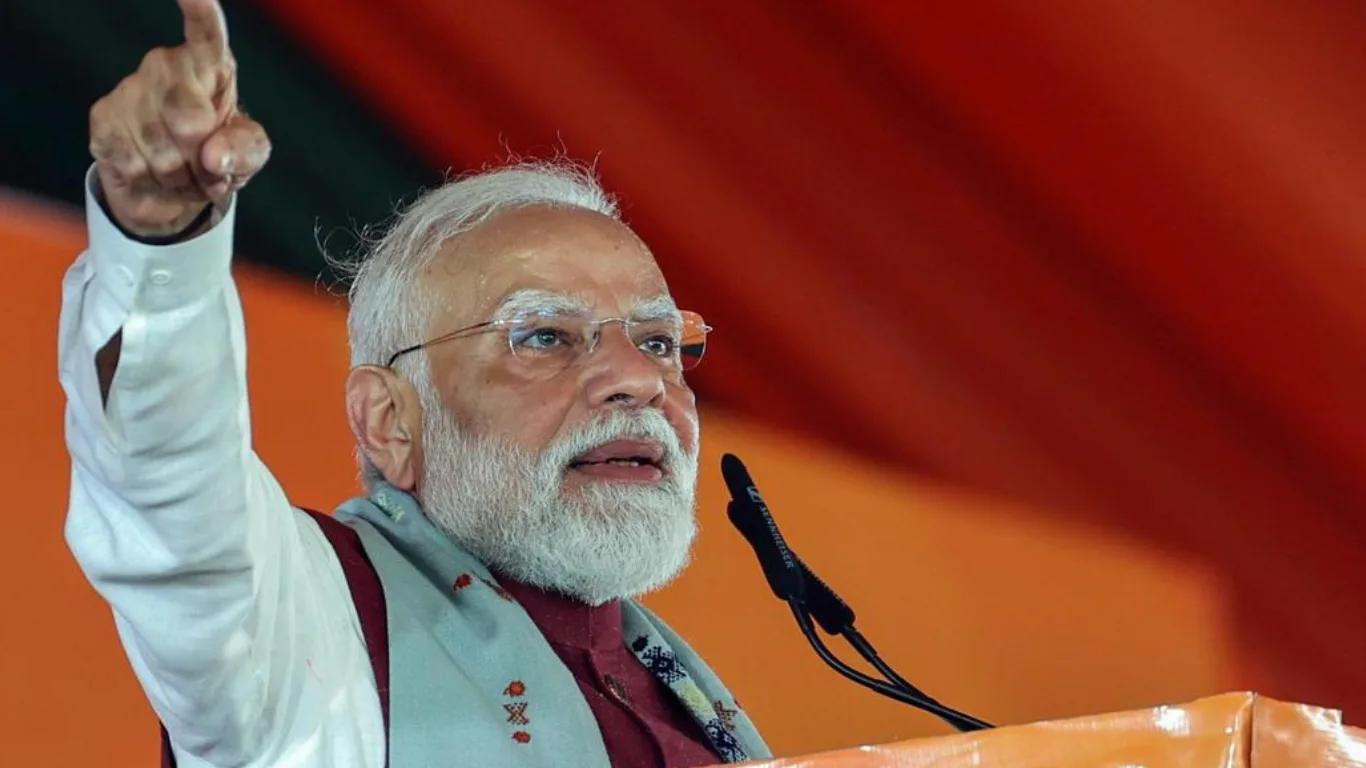
On April 26, 2026, Narendra Modi stood at Bongaon in North 24 Parganas and said exactly that. He was talking to the Matua community. And three days before the second phase of the West Bengal assembly election 2026, every word he chose carried enormous political weight.
Why the Matua Vote Is the Most Watched Number in These Elections
Here is the thing about the Matua community that most national coverage tends to rush past: this is not a fringe group. Comprising around 17 per cent of the state's population, the Matua community plays a deciding factor for about 50 Assembly seats in West Bengal. Fifty. In a 294-seat assembly where every seat in the second phase matters, that is not a demographic you can afford to lose.
The Matuas are a Hindu minority community with roots in what is now Bangladesh. They migrated to West Bengal following religious persecution. For generations, their political status has been tangled up with questions of citizenship, belonging, and documentation. The Citizenship Amendment Act (CAA) was supposed to resolve that. It has not quite done so yet. And that gap is exactly where the politics of this election lives.
The CAA remained a separate campaign issue, particularly in areas where refugee and Maata politics were significant. BJP leaders said that a BJP government in West Bengal would speed up citizenship processing under the Act.
What Modi Said at Thakurnagar and Why It Went Viral
Before the rally, Modi visited the Thakurbari Temple in Thakurnagar. The shrine serves as the spiritual centre of the Matua Mahasangha, a socio-religious movement aimed at uplifting the Namasudra community through social reform and education. Originating in Orakandi, once in undivided Bengal and now a part of Bangladesh, the Matua Mahasangha's founders, Harichand Thakur and Guruchand Thakur, have an important place in the temple.
The timing was deliberate. It is the timing of the temple visit that has gone viral. Modi visited the central shrine of the Matua community ahead of a rally at Bongaon in the North 24 Parganas district, highlighting the BJP's renewed focus on the politically influential Matua community.
At the rally, he made his pitch clearly. He reiterated the BJP's promise that all refugees who once took shelter in India following religious persecution in Bangladesh would be granted citizenship under the CAA, saying: "I pledge before the Matua Namasudra community members that they will receive citizenship through CAA."
Then came the sharper edges of the speech. Modi alluded to Netaji Subhas Chandra Bose's pre-Independence slogan of 'Give me blood, and I will give you freedom', to urge the people to vote for the BJP, saying "give me votes and I will give you freedom from TMC's maha jungleraj."
And on the matter of infiltrators, he set a hard deadline. He said: "Today, from Bongaon, I want to fearlessly give a warning. Those who have entered Bengal illegally, those who are living here with fake documents, should leave Bengal and India before April 29th. Else after May 4, every infiltrator will be chased away."
The SIR Problem: The Controversy Sitting Right in the Middle of All This
Here is where it gets complicated. The very community Modi was trying to reassure has been directly affected by one of the most contentious electoral controversies of this election cycle: the Special Intensive Revision of voter rolls, known as the SIR.
The SIR removed around 9 million voters from the rolls in West Bengal, representing about 12 per cent of the electorate. Dalit Hindus, especially from the Matua community, were affected in certain districts.
The scale in Matua-dominated areas was particularly striking. The Matua-dominated constituencies of North 24 Parganas and Nadia have been complicated by the SIR, which led to about 3.25 lakh names being cut from North 24 Parganas alone. In several constituencies, such as Gaighata and Bagda, deletion rates were about 67 to 80 per cent for flagged voters.
Read More: Tim Cook to Step Down as Apple CEO: Inside Apple’s Biggest Leadership Transition in Years

This is the contradiction at the heart of the BJP's Matua outreach strategy in 2026. The party has spent years promising citizenship to Matua refugees under the CAA. But the SIR, which the BJP has broadly defended as a clean-up of bogus and duplicate entries, has also removed thousands of Matua names from voter rolls. The TMC has claimed that the Matua community was being used for its political sway, after which the BJP would allegedly brand them as infiltrators.
The Trinamool Congress has leaned hard into this tension. It has positioned itself as the party that will protect Matua voters' registration status. Whether that message has landed or not is something only the ballot box will answer on May 4.
What the Second Phase of Voting Actually Covers
The West Bengal Phase 2 elections on April 29 are the concluding act of a two-phase process. The first phase of elections to the 294-member West Bengal assembly was held on April 23, while the second phase takes place on April 29. Votes will be counted on May 4.
The North 24 Parganas district, where Bongaon sits, is the geographic heart of Matua political influence. The constituencies going to the polls here include areas with some of the highest concentrations of Maatau voters in the state. This is the zone where the BJP needs to hold or expand its 2021 gains, and where the TMC is fighting hard to regain ground.
The overall voter count tells a wider story of how fraught this cycle has been. As per the Election Commission of India, a total of 9,102,577 voters were removed since October 2025 during the entire SIR programme, shrinking total eligible voters by nearly 12 per cent compared to October 2025.
Women, Safety, and the Other Message Modi Was Sending
The Matua outreach was not the only thing going on at Bongaon. Modi also framed the BJP's candidate choices as a statement on women's safety. He said the BJP giving poll tickets to Sandeshkhali's Rekha Patra and the mother of the RG Kar victim is proof of the party's commitment to ensuring women's security, adding that miscreants who rape and torture women will be brought to justice after May 4 by the new BJP government of Bengal.
The RG Kar hospital case, in which a trainee doctor was raped and murdered, became a defining issue of 2024 and carried significant emotional weight into this election campaign. By fielding the victim's mother as a candidate, the BJP is trying to keep that wound open for the TMC going into the final hours of voting.
The Closing Hours Before April 29
There is a particular kind of quiet before the second phase of an election. The speeches are done. The temples have been visited. The promises have been made. And now it all sits in the hands of communities who have been courted, warned, reassured, and sometimes threatened over the course of a very long campaign.
For the Matua community, the question is not simply who to vote for. It is whether their names are even on the list. That is the reality of this election in North 24 Parganas. And no rally, however well-timed, can entirely paper over that.
The results come on May 4. The arithmetic of 50 seats will become clear. And with it, some answer to the question of whether a Prime Minister standing at a community's holiest shrine, three days before polling, was an act of connection or calculation. Perhaps, in Indian politics, those two things are not always so easy to separate.
Disclaimer: This article is based on information available across the web. Parchar Manch does not take responsibility for its complete accuracy, as the content could not be fully verified.
Read More: IAF Civilian Arrested for Spying for Pakistan: Security Breach
FAQs
Who are the Matua community and why do they matter in West Bengal elections?
The Matua community is a Hindu minority group that migrated from present-day Bangladesh following religious persecution. They make up approximately 17 per cent of West Bengal's population and are considered a decisive vote bank across around 50 assembly constituencies, making them one of the most politically significant communities in state elections.
What is the Citizenship Amendment Act (CAA) and how does it relate to the Matua community?
The CAA offers a pathway to Indian citizenship for persecuted Hindu, Sikh, Christian, Buddhist, Parsi, and Jain minorities from Pakistan, Bangladesh, and Afghanistan who entered India before December 2014. For Matua refugees who migrated from Bangladesh, citizenship under the CAA has been a long-standing demand, and the BJP has consistently promised to fulfil it.
What is the Special Intensive Revision (SIR) of voter rolls in West Bengal?
The SIR is a process by which the Election Commission reviews and updates voter registration lists in West Bengal, removing names considered invalid, duplicate, or belonging to deceased or absent voters. Around 9 million names were removed statewide. In Matua-dominated North 24 Parganas, about 3.25 lakh names were deleted, which has become a major political controversy.
When is the second phase of the West Bengal 2026 assembly election?
The second and final phase of polling is scheduled for April 29, 2026, covering 142 constituencies. The first phase was held on April 23. Vote counting for both phases takes place on May 4, 2026.
What did Modi mean by referencing Netaji's slogan at the Bongaon rally?
Modi borrowed the spirit of Netaji Subhas Chandra Bose's wartime call "Give me blood, and I will give you freedom," adapted it to the electoral context, and told the crowd to give him their votes in exchange for freedom from what he described as the TMC's misrule and lawlessness in Bengal. It was a deliberate invocation of a Bengali icon to strengthen an emotional connection with the audience.