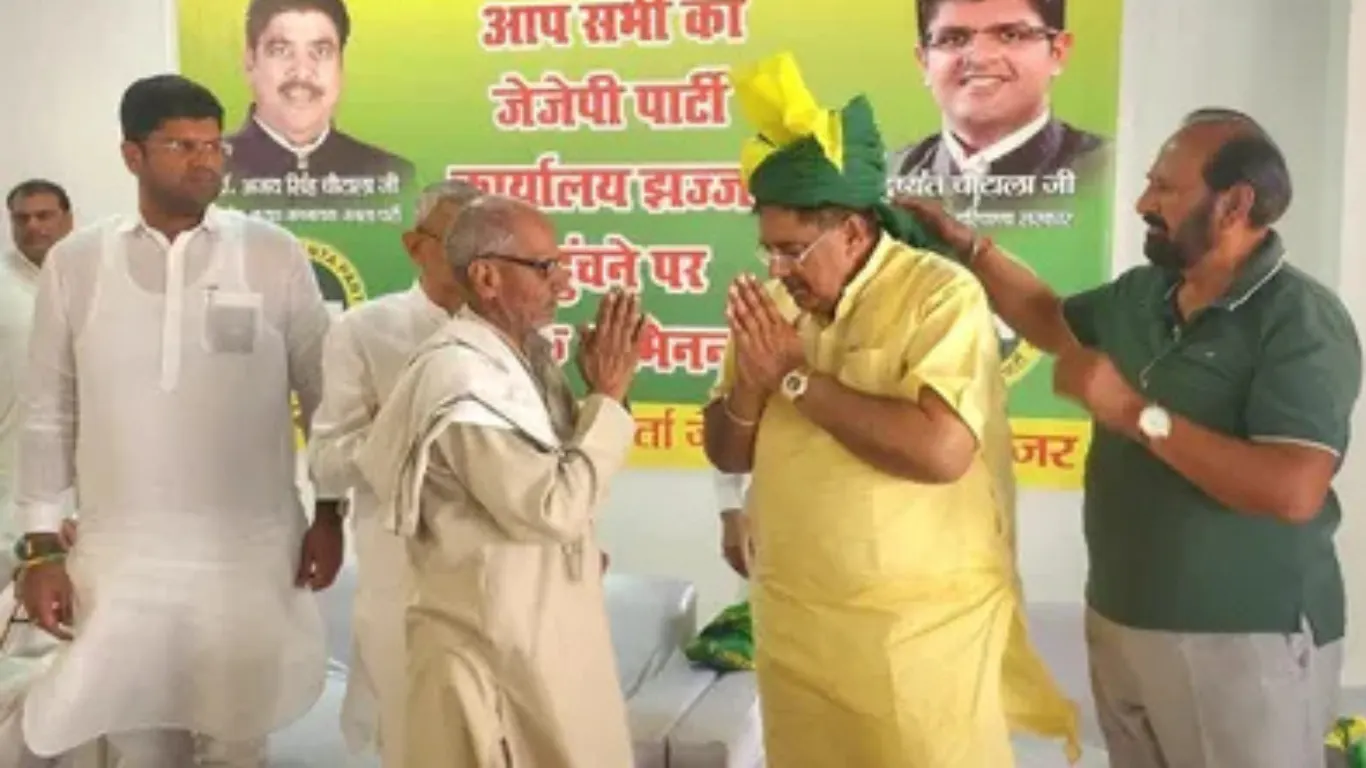
JJP Workers Allege Police Excesses in Hisar Raids , What It Really Means, And Why It Feels Bigger Than One Story
Something about these kinds of stories, they don’t sit quietly.
You read a headline , allegations, raids, rights panels , and at first, it feels like just another political update. Routine. Predictable, even.
But then you pause.
Because underneath the surface, there’s tension. Real people. Real fear, maybe. And a question that doesn’t go away easily: what actually happened?
Recently, members of the Jannayak Janata Party , often called JJP , have come forward with serious claims. They say police conducted excessive and forceful raids in Hisar. Not just routine searches. Something harsher. Something, off.
And now they’ve taken the matter to rights panels.
Which, if you think about it, is not a small step.
So let’s slow down and unpack this , carefully, clearly, without noise.
WHY This Story Matters (Even If It Feels Political at First)
At first glance, this might look like a typical political conflict.
Opposition party vs administration. Allegations vs denial.
But, that’s not quite it. Or maybe not only that.
This story matters because it touches something deeper , the relationship between citizens and law enforcement.
Think about it.
If police action crosses a line , even slightly , it doesn’t stay confined to one party or one city. It creates a ripple effect:
- People begin to question safety
- Trust starts thinning out
- Fear replaces cooperation
And trust, once shaken, doesn’t return easily.
Especially in places like Haryana, where political identity and local dynamics run deep.
The involvement of rights bodies , like the National Human Rights Commission and state-level panels , adds another layer. It signals that this isn’t just noise. It’s being taken seriously.
Or at least, seriously enough to investigate.
WHAT Exactly Happened in Hisar?
Let’s try to piece it together without jumping to conclusions.
According to JJP workers, police conducted multiple raids targeting party members in Hisar. These weren’t described as routine or procedural.
Instead, the allegations include:
- Use of excessive force
- Harassment of workers and families
- Property damage during searches
- Lack of clear legal documentation in some cases
Now , pause here.
These are allegations. That matters. Because allegations are not conclusions.
But they are also not meaningless.
They are the starting point of accountability.
JJP workers have formally approached rights panels, requesting an inquiry into what they call misuse of police power.
On the other side, police authorities may argue operational necessity. Law enforcement often works under pressure , intelligence inputs, urgency, and unknown risks.
So the truth likely sits somewhere, complicated.
And that’s exactly why an independent review becomes essential.
Understanding “Police Excesses” , A Simple Breakdown
The term police excesses gets used often. Maybe too often.
But what does it really mean?
In simple terms, it refers to situations where police:
- Use more force than necessary
- Act beyond legal limits
- Violate rights during investigation or arrest
It’s not always black and white.
Sometimes force is justified. Sometimes it’s not.

The line, is thin.
And often blurred in real-time decisions.
But that’s where legal frameworks come in. In India, law enforcement must follow procedures defined under:
- The Code of Criminal Procedure (CrPC)
- Constitutional rights (especially Article 21 , right to life and liberty)
- Supreme Court guidelines on arrests and searches
If those guidelines are ignored , even slightly , it becomes a matter of concern.
Not just legally. Socially too.
HOW These Cases Move Forward (Step-by-Step)
So what happens after allegations like these?
It’s not immediate justice. It’s, slower. Layered.
Here’s how the process usually unfolds:
1. Filing Complaints
Affected individuals or groups submit formal complaints to:
- State Human Rights Commission
- National Human Rights Commission (NHRC)
- Sometimes courts
This is exactly what JJP workers have done.
Read More: Bombay High Court Hall Ticket 2026: Direct Download, Exam Details, and What You Must Not Miss
2. Preliminary Review
The panel reviews whether the complaint:
- Has merit
- Falls under their jurisdiction
- Requires further investigation
Not every complaint moves forward. But many do.
3. Notice to Authorities
If accepted, the panel issues a notice to:
- Police department
- State administration
They are asked to respond. Explain. Justify actions.
4. Investigation
This may include:
- Examining evidence
- Visiting sites
- Recording statements
Sometimes independent teams are involved.
5. Findings and Recommendations
The panel may:
- Recommend disciplinary action
- Suggest compensation
- Call for policy changes
But here’s the thing , these recommendations are influential, not always binding.
Still, they matter.
Real-World Context , This Isn’t an Isolated Case
If you zoom out, you’ll notice something.
Incidents involving alleged police excesses aren’t new in India.
They appear periodically , across different states, different political contexts.
Some become national headlines. Others fade quietly.
For example:
- Custodial violence cases in various states
- Disputed land eviction drives
- Protest crackdowns
Each case carries its own details, its own truth.
But together, they build a pattern , or at least the perception of one.
And perception, sometimes, is just as powerful as reality.
Because it shapes how people feel.
Read More: India Is Burning Early: What IMD's Heatwave Forecast Means for You This Summer
COMMON MISTAKES People Make While Understanding Such News
Let’s be honest , news like this can be confusing.
And people often fall into certain traps:
- Assuming guilt immediately
- Allegations are not proof. Some claims need investigation.
- Blindly trusting authority
- Just because action was taken doesn’t mean it was justified.
- Ignoring due process
- Legal systems exist for a reason. Skipping them leads to chaos.
- Reducing everything to politics
- Yes, politics is involved. But human rights go beyond party lines.
- Not questioning sources
- Every side has a narrative. Critical thinking matters.
PRO TIPS: How to Read and Understand Sensitive News Like This
This might sound simple, but it’s surprisingly powerful.
When reading stories about police excesses in Hisar or anywhere else:
- Pause before reacting
- Quick judgments often miss nuance.
- Look for multiple perspectives
- Police, victims, independent bodies , all matter.
- Understand legal context
- Know what rights exist. It changes how you interpret events.
- Watch what happens next
- The real story often unfolds after initial reports.
- Separate emotion from analysis
- Feelings are valid , but clarity needs calm thinking.
The Human Side of This Story
And maybe this is where things get, quieter.
Because, beyond legal language and political reactions, there are people involved.
Families.
Homes that were entered.
Voices that felt unheard.
Or perhaps officers doing their duty under pressure, believing they were acting correctly.
Both can exist at the same time.
That’s the uncomfortable truth.
And maybe that’s why these situations feel so heavy , they resist easy conclusions.
Conclusion
So where does this leave us?
Not with answers. Not yet.
But with something else , awareness.
The allegations by JJP workers in Hisar have opened a conversation. About power. About accountability. About trust.
Whether the claims are proven or not, the process itself matters.
Because it reminds us that systems must remain answerable.
Always.
And maybe that’s the real takeaway here.
Not who is right or wrong , at least not yet , but whether the system is willing to examine itself honestly.
That’s where trust begins.
Or ends.
FAQs
What are JJP workers alleging in Hisar?
They claim that police conducted raids using excessive force, leading to harassment, property damage, and procedural violations.
What does “police excesses” mean?
It refers to situations where police may use more force than necessary or act beyond legal limits during operations.
Which authority will investigate these allegations?
Bodies like the National Human Rights Commission or state human rights panels may review the case and conduct inquiries.
Are these allegations proven?
No. They are currently claims made by JJP workers and are subject to investigation.
What happens if the police are found guilty?
Possible outcomes include disciplinary action, compensation for victims, or policy recommendations.