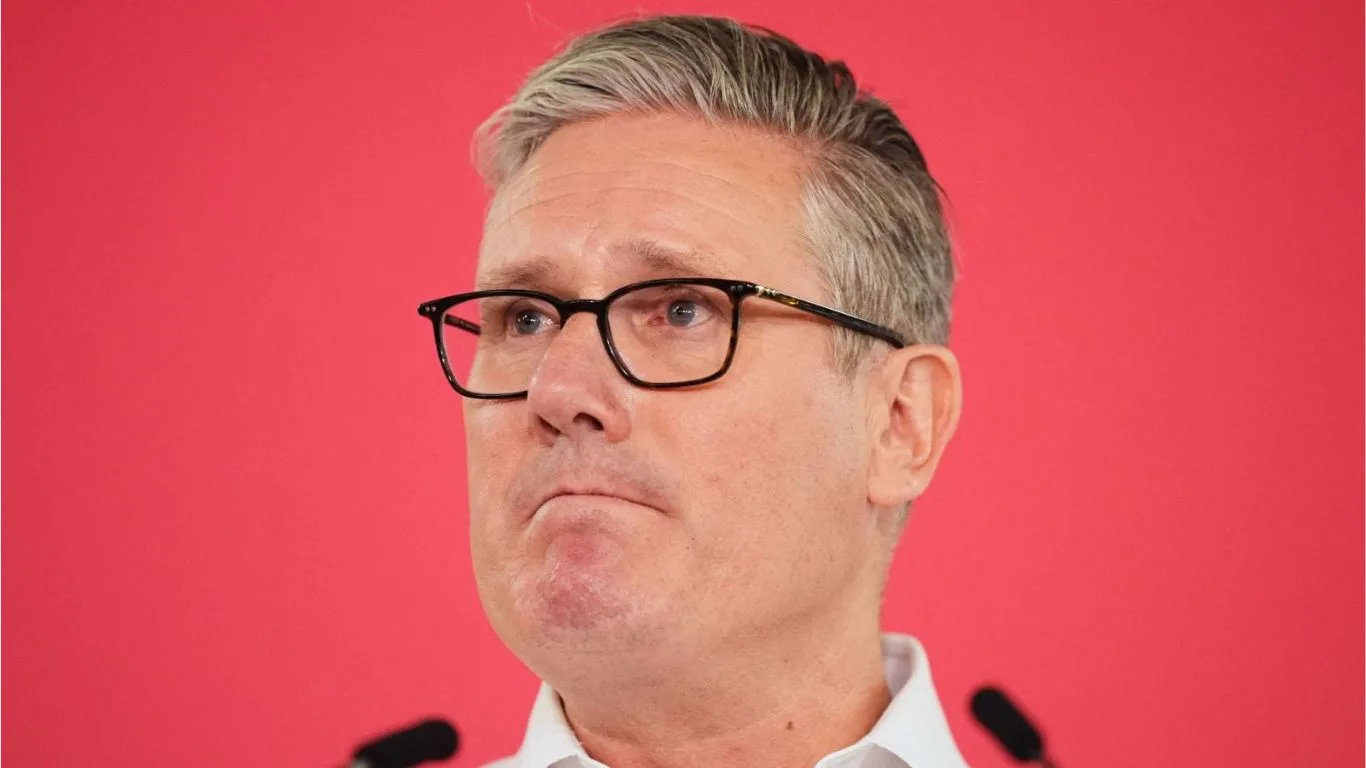
Keir Starmer Refuses to Quit as Labour MPs and Ministers Demand His Resignation: What Is Really Happening Inside No. 10
Keir Starmer's resignation pressure is now the defining political story of Britain in May 2026. Almost eighty Labour MPs have signed letters demanding the Prime Minister step down. Four ministers have already quit. And yet, Starmer sat in front of his Cabinet on Tuesday and told them plainly: he is not going anywhere without a formal leadership challenge.
That is where Britain stands right now.
Why the Keir Starmer Leadership Crisis Matters to Everyone, Not Just Political Insiders
You might wonder why an internal Labour Party dispute should matter to someone just trying to understand the news. Here is why it does. When a sitting Prime Minister loses the confidence of his own ministers and his own MPs, the entire machinery of government starts to seize up.
Bills stall. Decisions get delayed. Investors pause. International partners quietly reassess who they are actually dealing with. The question of Labour leadership stability is not an abstract parliamentary drama. It touches economic confidence, policy delivery, and Britain's standing in a world that already has enough instability.
The country was watching this week. So was the rest of the world.
How Did the Keir Starmer Resignation Calls Actually Begin?
It started with local elections. Labour suffered heavy losses, and the results were the kind that make backbenchers nervous. After that, the pressure did not build slowly. It erupted.
Nearly eighty Labour MPs signed correspondence urging the Prime Minister to step aside. Four ministers, including Junior Minister Miatta Fahnbulleh, resigned from their government roles. Fahnbulleh was direct in her statement: the Prime Minister had, in her view, lost the trust of the public.
That phrase landed hard. "Lost the trust of the public" is the kind of language that becomes its own headline. It is the kind of language a party tries to avoid, because once it enters the conversation, it is genuinely difficult to remove.
Then there was the Cabinet meeting. Starmer called it, looked across the table, and told his senior colleagues he would not resign voluntarily. If they wanted him gone, they would need to trigger a formal Labour Party leadership contest under party rules. And under those rules, Starmer actually holds considerable protection. Ousting him is legally and procedurally harder than it looks from the outside.
What Happens in a Labour Leadership Challenge? How the Rules Actually Work
This is where many people get confused, and it is worth slowing down.
Under current Labour rules, a sitting leader cannot simply be removed by a vote of MPs or a Cabinet rebellion. A formal challenge requires a threshold of nominated support from constituency parties and affiliated trade unions, not just parliamentary signatures. This means Starmer can, in theory, keep fighting even if the mood inside Westminster turns strongly against him.
He has made clear he intends to do exactly that.

The Labour Party leadership rules essentially give the leader a structural advantage. The grassroots membership and union affiliates have historically been more sympathetic to the sitting leader than the parliamentary group. That is not a guarantee, but it is a real factor.
Kemi Badenoch, Conservative Party leader, put it bluntly from the opposition benches: Starmer's earlier speech felt like a man who knows something has gone badly wrong but cannot quite name what it is.
That is a fair political read, even from an opponent.
Read More: Why China’s Wang Yi Is Skipping the BRICS Delhi Meet — And What It Signals for Global Diplomacy
Who Could Replace Starmer? The Names Already Circulating
Multiple outlets have already begun running pieces on potential successors. The names being mentioned most seriously include Wes Streeting, the Health Secretary, Angela Rayner, the Deputy Prime Minister, and Andy Burnham, the Greater Manchester Mayor.
The irony is that Streeting is himself now at the centre of a delicate calculation. Reports suggest Starmer requested a personal meeting with Streeting, whose support or opposition could prove decisive. A report from a senior ITV political editor framed it starkly: the PM's future may be essentially down to Streeting's choice.
If Streeting moves against Starmer, the arithmetic changes significantly. If he holds, the rebellion may plateau.
Meanwhile, reporting from The Telegraph suggests Ed Miliband is being discussed as someone who could stand to block a Streeting coronation, which would complicate matters further and potentially open up a wider ideological contest within Labour.
Mistakes Being Made on All Sides of This Crisis
There is a pattern in Westminster crises like this, and it tends to repeat.
The first mistake is the dramatic public letter. It feels decisive, but it often hardens the leader's resolve without actually removing them. Starmer's response to the letters was essentially: fine, make your formal move. He called the bluff. And so far, no one has formally moved.
The second mistake is the resignation cascade. When ministers start leaving in sequence, it creates the visual of collapse. But visually dramatic departures do not automatically translate into constitutional change. Each resignation needs to be followed by something procedurally meaningful. So far, they have not been.
The third mistake, historically, is assuming the grassroots membership mirrors the parliamentary mood. It often does not. Labour's membership base did not elect Starmer to watch him be pushed out mid-term after one difficult electoral cycle.
What Starmer Actually Said, and Why It Changed the Tone Slightly
Starmer addressed the Cabinet with a defiant posture: he is getting on with governing. He said he believes he has made the right big political choices, even if the results do not yet show it.
Supporters of the Prime Minister, like Defence Secretary John Healey, argued publicly that further instability serves neither the party nor the country. Healey noted that people are worried about real global crises, and that the government's focus must stay on economic and security challenges.
That argument is nothing. It is, actually, a reasonable political position. Whether it is persuasive enough to quiet the Labour MPs' rebellion is a different question entirely.
What Comes Next in the Keir Starmer Leadership Battle
This story is moving fast. As of writing, the Cabinet meeting has happened. The four ministers who resigned have been replaced. The PM has stated he intends to serve for ten years in No. 10.
The critical question now is whether a formal no-confidence motion or a leadership nomination push actually materialises, or whether the rebellion quietly loses momentum. Political rebellions of this kind have a particular energy. If they do not convert into formal constitutional action within days, they tend to deflate.
The next few weeks will test whether this is a genuine rupture or a very loud warning.
Britain, watching quietly, is waiting to find out.
Disclaimer: This article is based on information available across the web. Parchar Manch does not take responsibility for its complete accuracy, as the content could not be fully verified.
Read More: Hantavirus Outbreak on MV Hondius: What Really Happened on That Cruise Ship , And Why It Matters
FAQs
Can Labour MPs force Keir Starmer to resign?
Not directly. Under Labour Party rules, removing a sitting leader requires a formal challenge with support thresholds from constituency parties and trade unions, not just MPs. Starmer would need to face and lose a full internal election.
Who are the main candidates to replace Starmer if he goes?
The most frequently named candidates are Wes Streeting (Health Secretary), Angela Rayner (Deputy PM), and Andy Burnham (Greater Manchester Mayor). Ed Miliband has also been mentioned as a possible candidate who could enter to prevent a Streeting takeover.
Why did four ministers resign?
The ministers resigned, citing loss of public trust in the Prime Minister's leadership, following poor local election results and what they described as a failure to connect with voters on key concerns.
What did Starmer say to the Cabinet about resigning?
Starmer told Cabinet members directly that he would not resign voluntarily. He stated he would only leave office if formally challenged and defeated through a full Labour leadership contest.
Is this the first time Starmer has faced serious resignation pressure?
While there has been criticism before, the scale of the current rebellion, involving nearly eighty MPs and multiple ministerial resignations, represents the most significant challenge to his leadership since he became Prime Minister.
What role does Wes Streeting play in this crisis?
Streeting is seen as both a potential challenger and a potential kingmaker. Starmer reportedly sought a private meeting with him, and political analysts suggest Streeting's decision to back or move against the PM could determine the outcome of this crisis.