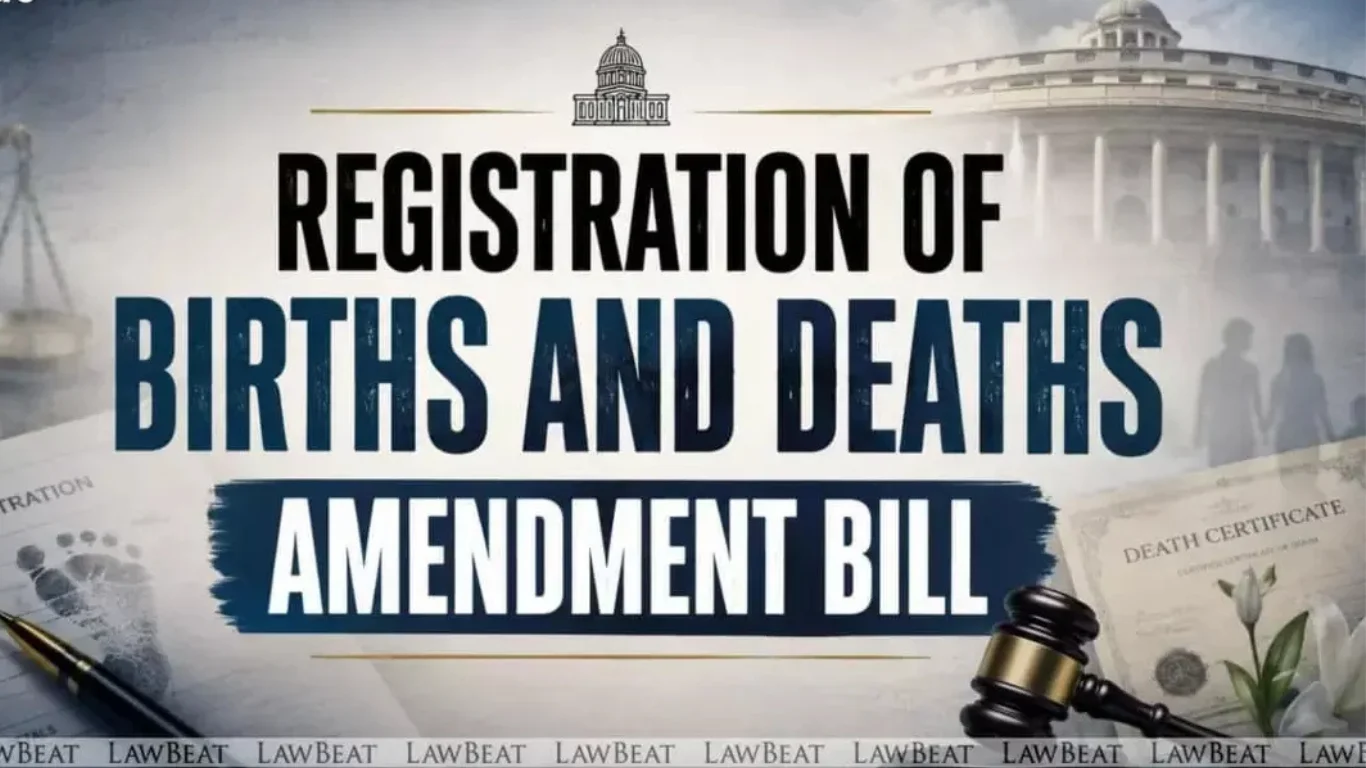
Late Birth, Death Registrations to Now Need a Court's Nod: Parliament Clears New Bill
New Delhi — Parliament has taken a step that will change how millions of Indians prove decades-old births and deaths on paper. The Lok Sabha has given its approval to the Registration of Births and Deaths (Amendment) Bill, 2026, a law that hands criminal courts a new role in verifying old, unrecorded life events.
The vote itself was almost a footnote to the day's real drama. Opposition benches were in no mood to discuss the bill — they were busy demanding that the Home Minister show up in the House to answer questions about a police crackdown on student protesters earlier in the month. The government pushed the legislation through by voice vote anyway, and the Chair openly remarked that an important law had just been passed without the Opposition's cooperation.
The Core Change: Two Timelines, Two Authorities
India's civil registration law already treats a birth or death reported within 21 days differently from one reported later. This new bill sharpens that difference further by splitting "late" into two distinct bands:
- One to two years late — nothing changes here. A District Magistrate, Sub-Divisional Magistrate, or Executive Magistrate can still authorise the registration, just as before.
- More than two years late — this now becomes a judicial matter. Anyone trying to register a birth or death this old will have to get an order from a First-Class Judicial Magistrate, who must first be satisfied that the claim is genuine.
In effect, a paperwork task that used to sit entirely with local administrators now spills into the courtroom once it crosses the two-year mark. The bill also tidies up old legal references, swapping mentions of the 1973 Code of Criminal Procedure for the newer Bharatiya Nagarik Suraksha Sanhita, 2023, and adds a prescribed fee for anyone filing a delayed registration — the amount to be decided later through separate rules.
Read more: https://www.parcharmanch.com/blog/gold-etf-outflows-suggest-investors-are-shifting-strategies-as-market-conditions-change-raising-questions-about-golds-role-as-a-safe-haven-asset-in-the-current-economic-environment
Building on a 2023 Overhaul
This isn't the first time the Registration of Births and Deaths Act, 1969, has been reopened recently. A 2023 amendment already created a national digital database of births and deaths and made it compulsory to record the Aadhaar details of parents and informants. The 2026 bill builds on that push toward tighter, more traceable civil records — this time by making the verification process itself harder to get through.
The Debate Nobody Had
Legal commentators see logic in the move: routing very old claims through a judge, rather than an administrative officer, could make it tougher to slip a fabricated birth or death into official records, and genuine applicants would simply need to convince a court rather than a bureaucrat.
The concerns are just as pointed, though. The bill doesn't spell out what evidence a magistrate should ask for, sets no deadline for a decision, says nothing about giving applicants a hearing, and offers no clear appeal path if a magistrate turns a request down — the law's existing appeal mechanism was written for registrars, not judicial magistrates. That gap worries advocates who point out that this change lands right in the middle of a nationwide revision of voter rolls, when proof of identity and birth is under unusually heavy scrutiny for a lot of ordinary citizens.
The bill now heads to the Rajya Sabha, where it must clear one more vote before becoming law.
Disclaimer: This article is based on information available across the web. Parchar Manch does not take responsibility for its complete accuracy, as the content could not be fully verified.
Read more: https://www.parcharmanch.com/blog/chrome-150-android-back-button-the-tiny-menu-change-google-took-years-to-ship
FAQs
What is the Registration of Births and Deaths (Amendment) Bill, 2026?
It's a bill passed by the Lok Sabha that amends the Registration of Births and Deaths Act, 1969, making it harder to register a birth or death long after it actually occurred.
What counts as a "delayed" registration?
Births and deaths are normally supposed to be reported within 21 days. Anything reported after that is treated as delayed, with the rules getting stricter the longer the gap.
What changes for registrations delayed by one to two years?
Nothing changes here. These will continue to be handled the way they are now, with approval from a District Magistrate, Sub-Divisional Magistrate, or Executive Magistrate.
What changes for registrations delayed by more than two years?
These will now require an order from a First-Class Judicial Magistrate instead of an administrative officer, meaning the request effectively goes through a court rather than a government office.
Why is a court being involved instead of an administrator?
The government's reasoning is that routing very old claims through a judicial magistrate adds a stronger layer of scrutiny, making it harder for fake or fabricated claims to enter official birth and death records.