Major Mohit Sharma Death Date, Biography & Full Life Story
The story of a hero often feels like a distant legend, something written in old books or whispered in hushed tones around a campfire. But when we talk about Major Mohit Sharma, the air feels different.
It feels heavy with a kind of silent respect. He wasn’t just a soldier; he was a force of nature, a man who lived a life so intense that it seems almost impossible for one person to have done it all in such a short time.
Born on January 13, 1978, in Rohtak, Haryana, Mohit was a boy who seemed destined for greatness from the very start. His family moved to Ghaziabad later, but that spark that fire stayed with him. He was the kind of kid who played hard and studied harder.
When we look at Major Mohit Sharma education and birth date, we see a young man who was an all-rounder. He went to Holy Child School and then DPS Ghaziabad. He was a brilliant guitarist, a champion swimmer, and someone who could command a room just by walking into it.
But the guitar strings were eventually traded for the weight of a rifle. He joined the National Defence Academy (NDA) in 1995. Even there, he was known as "Mike," a nickname that carried weight. He was a leader. He was the guy everyone looked up to when things got tough.
After graduating, he joined the 5th Battalion, The Madras Regiment, but his heart was set on something more challenging. He wanted to be part of the elite. He joined the 1 Para (Special Forces) in 2003, and that is where the real legend began.
The Man Behind the Uniform: Major Mohit Sharma Family Background
Behind every great soldier is a family that provides the foundation for such immense courage. When we dive into the Major Mohit Sharma family background, we find a story of simple values and deep love.
His father, Shri R.P. Sharma, and his mother, Smt. Sushila Sharma, raised him with a sense of duty that went beyond the self. He also had a brother, Madhur, who looked up to him.
Read More: Dhurandhar 1 & 2 TV Release Date: When to Watch on TV?
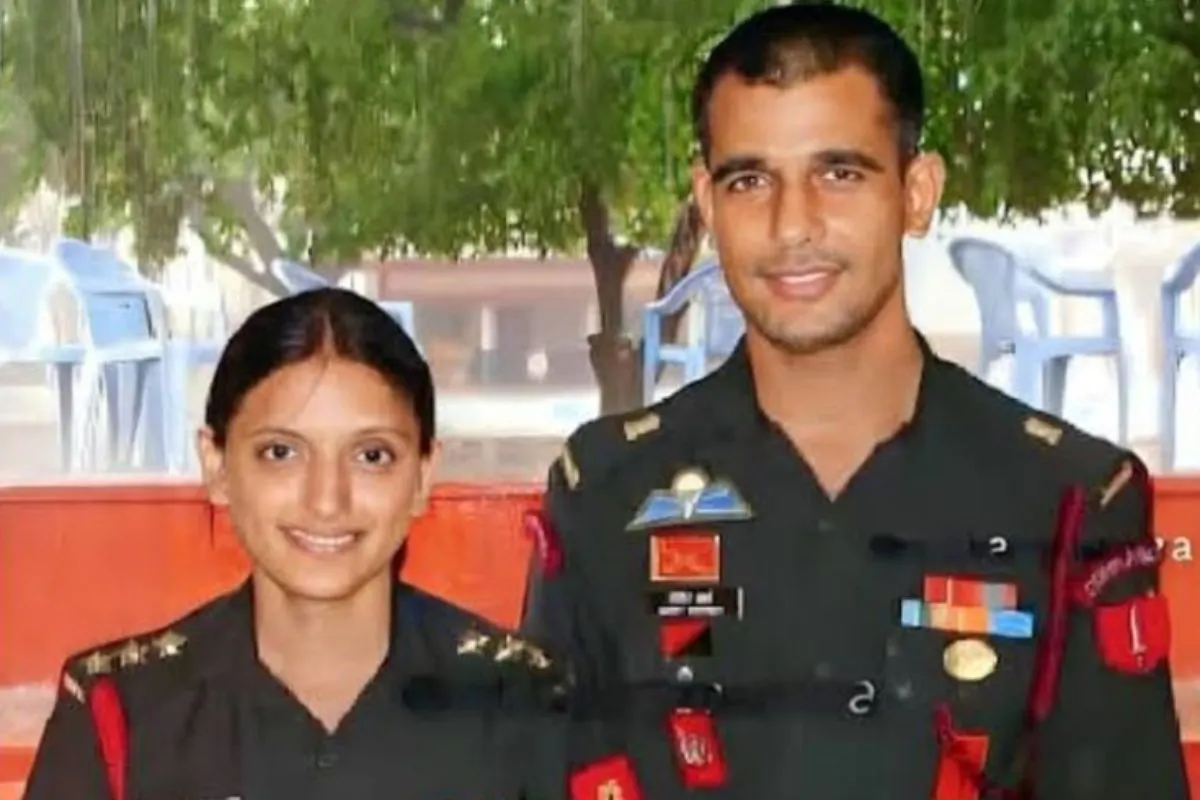
Later in life, Mohit married Rishima, who was also an Army officer. Can you imagine the conversations at their dinner table? Two people dedicated to the nation, living a life where "goodbye" could always be the last one. Their bond was built on a shared understanding of sacrifice. It wasn't a life of luxury; it was a life of purpose.
His family didn't just lose a son or a husband; they gave the nation a guardian. The strength of his family is what allowed him to go into the darkest corners of the world with a smile on his face. They were his anchor while he was out there fighting in the shadows.
It is this backbone of support that often goes unmentioned in the history books, but for Mohit, it was everything. He was a son of India in every sense of the word.
Into the Shadows: Para SF Undercover Missions
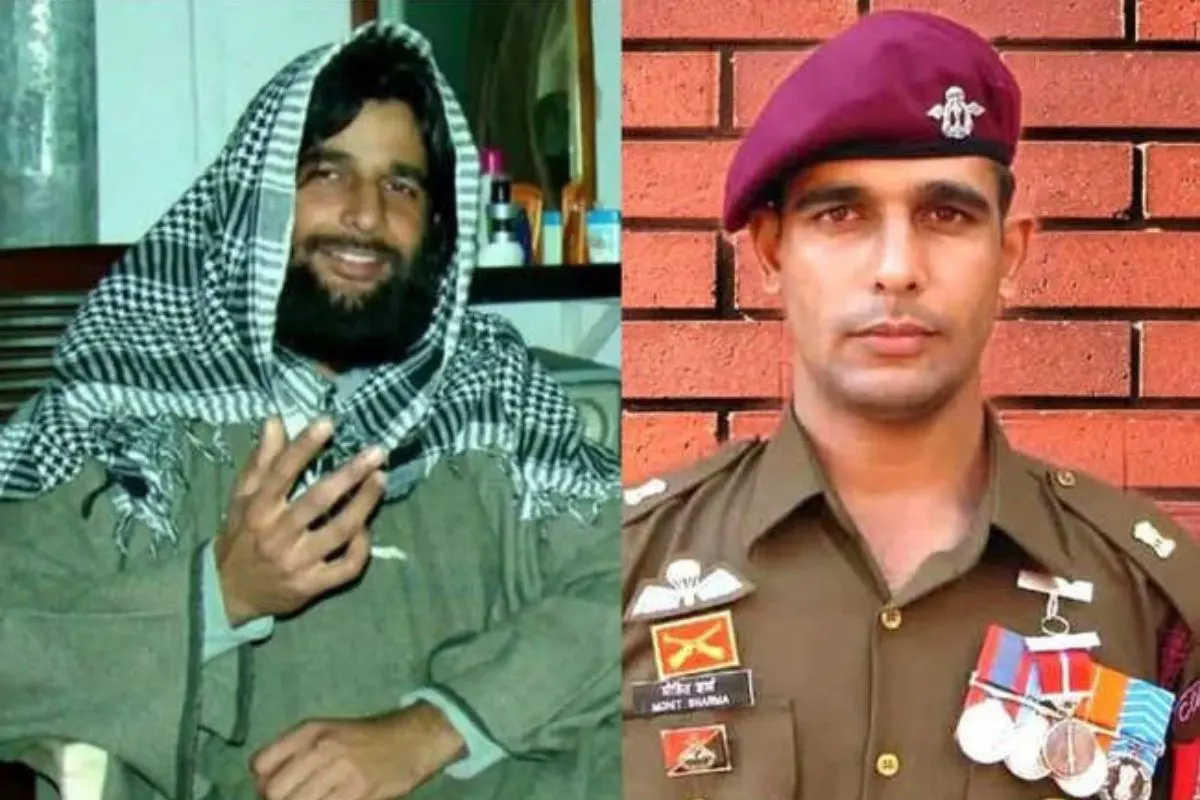
Being a Para SF officer is not just about physical strength. It is about the mind. Major Mohit Sharma was a master of disguise. One of the most gripping parts of his life involves the Para SF undercover missions he conducted. There is a story that sounds like it came straight out of a Hollywood movie the Real story of Iftikhar Bhatt.
Mohit once went deep undercover in the Kashmir valley. He grew his hair long, wore local clothes, and called himself Iftikhar Bhatt. He managed to infiltrate a group of terrorists so effectively that they had no idea they were sitting with an Indian Army officer.
He lived with them, ate with them, and gained their trust. Why? To find out their plans and take them down from the inside.He eventually lured two top commanders to a secluded spot under the pretext of an operation and neutralized them.
This level of bravery is rare. It takes a different kind of nerves to sit across from your enemy, knowing that one slip-up, one wrong word, would mean certain death. But Mohit was calm. He was the "quiet thunder" of the Special Forces. He didn't do it for the glory; he did it because it was necessary.
The Fateful Day: Major Mohit Sharma Death Date
Every hero's journey has a climax, and for Mohit, it happened in the thick forests of Kupwara. The Major Mohit Sharma Death Date is recorded as March 21, 2009. It was a day when the sky itself seemed to mourn. On this day, he led his team into a dense forest to intercept a group of terrorists who had infiltrated the border.
Read More: Ravindra Jadeja vs CSK IPL 2026: Revenge, Emotions & Gun Celebration
The terrain was brutal. The visibility was low. But Mohit was at the front. He always was. He wouldn't ask his men to do anything he wouldn't do himself. They were suddenly ambushed.
The fire was heavy, and the situation was turning bad. Mohit was hit. He was wounded, but he didn't stop. He crawled forward, pulling his injured teammates to safety while continuing to return fire.
He killed two terrorists in close combat and wounded more. Even as his life was slipping away, his only focus was his men and the mission. He fought until his last breath.
When we talk about the Major Mohit Sharma Death Date, we aren't just talking about a day of loss; we are talking about a day of ultimate sacrifice. He died so that others could live. He died with his boots on, facing the enemy, defending the land he loved.
The Bravery Documented: Ashok Chakra Award Citation
For his incredible bravery on that day, Major Mohit Sharma was posthumously awarded the Ashok Chakra, India's highest peacetime gallantry award. The Ashok Chakra award citation reads like a testament to a man who surpassed all human limits. It describes his "conspicuous gallantry," his "indomitable spirit," and his "exemplary leadership" under fire.
The citation details how he ignored his own pain to save his comrades. It mentions how he stood his ground when most would have retreated. Reading those words gives you goosebumps. It is a formal document, but between the lines, you can feel the heat of the battle and the cold resolve in Mohit’s eyes.
This award wasn't just a piece of metal or a certificate. It was a recognition by a grateful nation. It placed him among the greatest Indian Army martyrs life history has ever seen. His name was etched in gold, joining the ranks of those who gave everything for the tricolor. Whenever the Ashok Chakra is mentioned, Mohit’s name shines brightly, a reminder of what true courage looks like.
March 21 2009 Operation Khurmur: A Night of Fire
The specific engagement is known as the March 21 2009 Operation Khurmur. It took place in the Haphruda forest. The name "Khurmur" might not mean much to an average person, but for the Special Forces, it is a site of legendary bravery. The operation was launched based on intelligence about a large group of terrorists hiding in the woods.
The battle was intense. It wasn't just a shootout; it was a test of will. Major Mohit Sharma led his assault team with a level of precision that was awe-inspiring. Even after being shot in the chest and shoulder, he directed his troops, ensuring that the terrorists were pinned down.He didn't want to be evacuated. He knew the mission was at a critical point.
The March 21 2009 Operation Khurmur resulted in the elimination of top-tier terrorists, but the cost was the life of one of India's finest officers. The forest of Kupwara still echoes with the memory of that night the sound of gunfire, the shouting of orders, and the silent, final prayer of a falling hero.
A Legacy That Never Fades: Indian Army Martyrs Life History
When we look at the broader scope of Indian Army martyrs life history, Major Mohit Sharma stands out as a beacon for future generations. He wasn't a martyr by accident; he was a martyr by choice.
He chose the difficult path every single day of his life. He chose to go undercover. He chose to lead the assault. He chose to stay and fight when he was bleeding out.
His life story is taught to young cadets at the NDA and the IMA. They look at his portrait and see a man who was the perfect soldier. He had the skill of a marksman, the soul of an artist, and the heart of a lion.
His story teaches us that being a hero isn't about being fearless; it's about being terrified and doing your duty anyway.
Read More: Baba Premanand Ji Maharaj: Biography, News & Divine Teachings
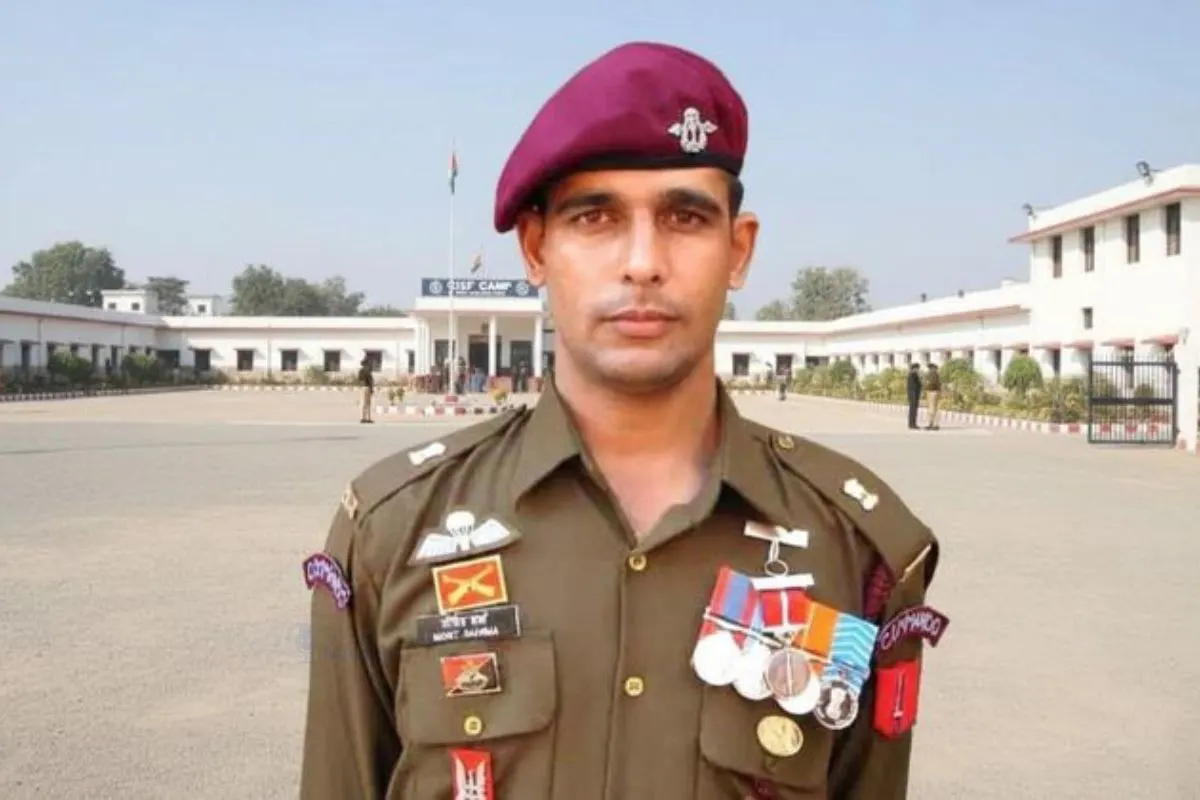
The legacy of Major Mohit Sharma is kept alive by his brothers-in-arms and by a nation that refuses to forget. He is a reminder that the peace we enjoy is paid for in blood.
His Major Mohit Sharma full biography is a roadmap of honor. For more inspiring stories and the latest updates on our national heroes, you can visit Parchar Manch, where we celebrate the lives of those who protect us.
Major Mohit Sharma Full Biography: Beyond the Battlefield
While we often focus on his death, the Major Mohit Sharma full biography is about how he lived. He was a man of many talents. He loved his guitar. He loved a good laugh. He was a friend you could count on. In the mess, he was the life of the party, but on the field, he was a shadow.
He once said that a soldier doesn't fight because he hates what is in front of him, but because he loves what is behind him. This philosophy guided his entire life. From his school days in Ghaziabad to the peaks of Kashmir, he was driven by love love for his family, love for his regiment, and love for India.
His journey from a young boy with a guitar to a Major with an Ashok Chakra is a story of evolution. He pushed himself to the limits of human endurance. He trained until his body broke, then trained some more.
He was a perfectionist. Whether it was playing a riff on his guitar or planning a high-stakes infiltration, he gave it 100 percent. That is the true biography of Mohit Sharma a life of total commitment.
The Real Story of Iftikhar Bhatt: A Masterclass in Deception
To truly understand his bravery, you have to go back to the Real story of Iftikhar Bhatt. This wasn't just a mission; it was a psychological battle. Mohit had to live a lie for weeks. He had to speak like the terrorists, pray like them, and act like them. One small mistake a slip of the tongue or a look in his eye and he would have been tortured and killed.
He stayed in their camps, listening to their plans to attack Indian civilians and soldiers. He felt the anger boiling inside him, but he kept his "bitter calm." He waited for the perfect moment. When he finally struck, it was swift and deadly.
This operation proved that Mohit was more than just a soldier; he was an intelligence asset. He understood the terrain and the people. He knew that to defeat the enemy, you had to think like them.
The Real story of Iftikhar Bhatt remains one of the most celebrated undercover operations in the history of the Indian Special Forces. It showed that Mohit was a man of immense patience and steel-cold nerves.
The Hero of Ghaziabad: Major Mohit Sharma Education and Birth Date
Even today, in Ghaziabad, people speak his name with pride. Looking back at Major Mohit Sharma education and birth date, he was born on a cold January day in 1978. No one knew then that this child would one day be the shield of the nation. His teachers remember him as a bright student, someone who was always helpful.
He was the kind of student who was good at everything sports, music, and academics. This foundation was crucial. The discipline he learned in school and at the NDA made him the man he became. He wasn't born a hero; he built himself into one.
Every year on January 13, people remember his birth. It is a day to celebrate the life of a man who gave his all. His education wasn't just about degrees; it was about character building. He learned the value of loyalty and the importance of standing up for what is right. That young boy from Rohtak and Ghaziabad grew up to be a giant among men.
Conclusion
Major Mohit Sharma was a man who lived a thousand lives in just thirty-one years. From the strings of his guitar to the trigger of his rifle, he was a master of everything he touched. His sacrifice on the Major Mohit Sharma Death Date changed the course of many lives and saved countless others.
He was the undercover "Iftikhar Bhatt" and the brave Major of the Para SF. His life is a reminder that heroes walk among us, often in silence, doing the impossible so we can sleep safely.
We owe it to him to remember his story, to speak his name, and to live with even a fraction of the courage he showed every day. He remains a "quiet thunder" in the heart of India, a legend who will never truly die as long as we keep his memory alive.
Read More: Who Was Bhagat Singh? 10 Facts About the Young Hero
FAQs
What is the significance of the Major Mohit Sharma Death Date in Indian military history?
The Major Mohit Sharma Death Date, March 21, 2009, marks the day of the legendary Operation Khurmur where a single officer displayed superhuman bravery. It is remembered as a day of immense sacrifice that earned him the Ashok Chakra and inspired a new generation of Special Forces soldiers.
Can you explain the Major Mohit Sharma education and birth date details?
He was born on January 13, 1978, in Rohtak and later moved to Ghaziabad where he attended Holy Child School and DPS. He was a brilliant student and an all-rounder who eventually joined the National Defence Academy in 1995 to serve his country.
What was the Real story of Iftikhar Bhatt during his undercover days?
The Real story of Iftikhar Bhatt involves Major Mohit Sharma infiltrating a terrorist group in Kashmir by disguising himself as a local named Iftikhar. He lived among the terrorists for weeks, eventually luring and neutralizing two top commanders in a daring display of undercover work.
What does the Ashok Chakra award citation say about his bravery?
The Ashok Chakra award citation highlights his exceptional leadership and "conspicuous gallantry" during the 2009 encounter in Kupwara. It details how he saved his men while being heavily injured and continued to fight the terrorists until his final breath.
How did the March 21 2009 Operation Khurmur unfold for the Para SF?
During the March 21 2009 Operation Khurmur, Major Mohit Sharma led a team into the Haphruda forest to take on a group of terrorists. Despite being severely wounded in an ambush, he killed two terrorists and ensured his team's safety, leading to a successful but costly mission.