Modi Australia Visit 2026: Inside The Melbourne Summit That Just Rewrote India's Ties With Canberra
There is something quietly telling about a prime minister showing up in a country for the third time. Not the first, when everything is new and photographed twice as much. Not even the second. The third visit. That is what just happened. The Modi Australia visit of July 2026 was not a courtesy stop tucked between other engagements, it was the centrepiece, and by the time PM Narendra Modi left Melbourne, both governments had put their names on eighteen separate agreements. Eighteen. That number alone tells you this was not a photo-op trip.
Why This Actually Matters
Here is the thing people miss when they scroll past foreign policy headlines. This is not just handshakes and joint statements for the news cycle. The Modi Australia visit touched uranium supply, defence cooperation, critical minerals and even university campuses opening in Indian cities. If you are someone who cares about energy prices, clean power, jobs in mining and manufacturing, or even where your kid might study abroad, this trip actually brushes against your life. Quietly, but it does.
India Australia relations have been building for years, not overnight, and this Modi Australia visit was where a lot of slow-cooked groundwork finally showed on the plate.
Read More: Russia Launches Progress MS-34 Cargo Ship to the ISS, Delivering Over 2.5 Tonnes of Vital Supplies
What This Visit Really Is, Explained Simply
Think of it like two neighbours who have been borrowing sugar and tools from each other for a while, deciding it is time to formalise things properly, put it on paper, make it official. That is roughly what the third Australia India Annual Leaders' Summit did. Modi and Australian PM Anthony Albanese met in Melbourne from July 8 to 10, and their governments expanded something called the Comprehensive Strategic Partnership, first signed in 2020 and upgraded again in 2022.
No, that is not quite the full picture either, let me rephrase. It is less like sugar and tools and more like two countries realising their economic and security interests genuinely overlap now, on energy, on the Indo-Pacific, on trade, and deciding to build formal structures around that overlap instead of leaving it to chance.
How The Modi Australia Visit Unfolded, Step By Step
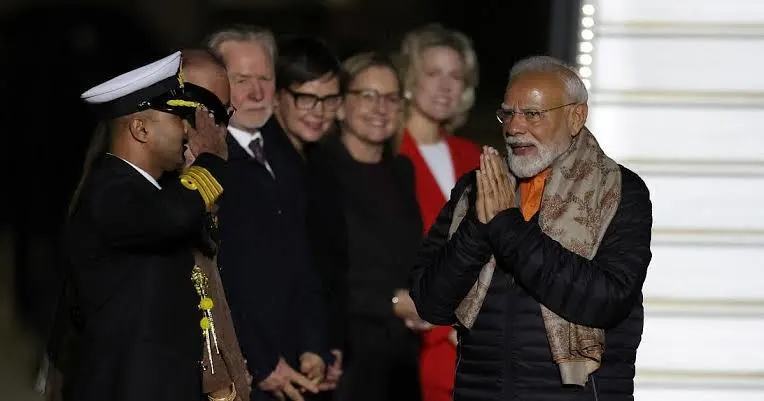
- Arrival and reception: Modi landed in Melbourne on July 8, arriving from Indonesia as part of a three-nation regional tour that also included New Zealand.
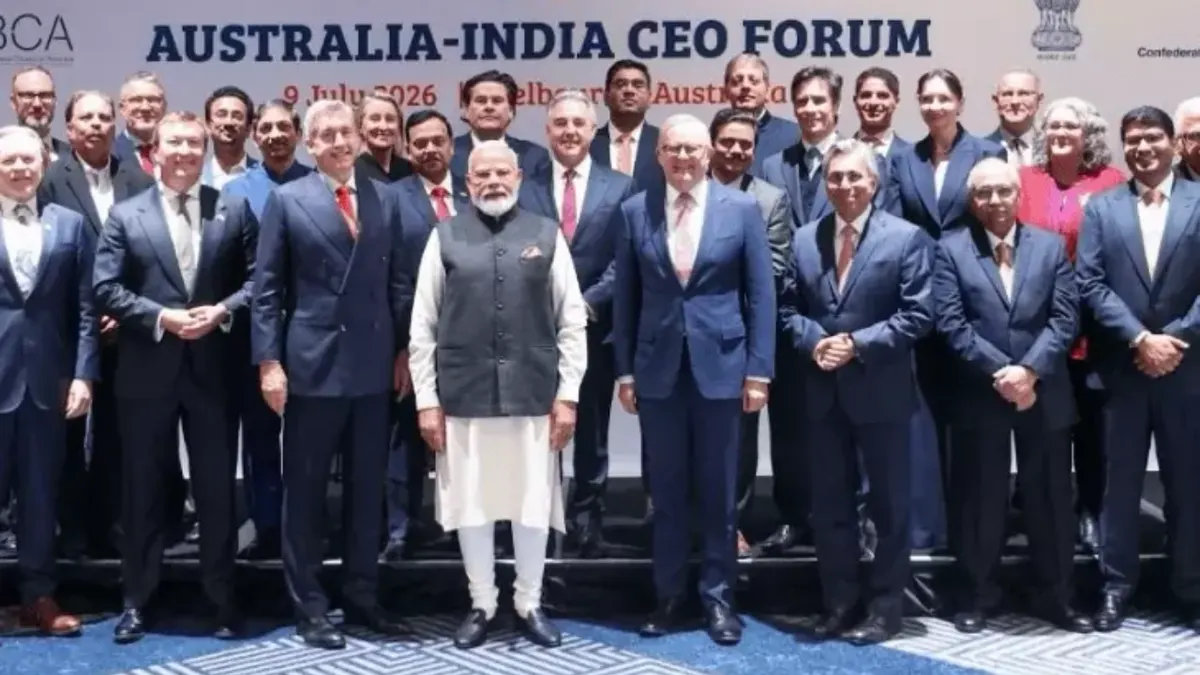
- Bilateral talks with Albanese: The core summit meeting happened where both leaders reviewed the Comprehensive Strategic Partnership and pushed officials to speed up work on a new trade pact.
- Agreements signed: Eighteen outcomes were formalised, including a civil nuclear energy pact enabling commercial uranium exports from Australia to India, something that had been stuck since 2015 despite an original agreement dating back to 2014.
- Defence declaration: A Joint Declaration on Defence and Security Cooperation was issued, setting up an Annual Defence Ministers' Dialogue.
- Education tie-ups: Letters of approval went out for Victoria University to open a campus in Gurugram and Flinders University to open one in Bengaluru.
- Community event: Modi addressed a sold-out crowd of nearly 30,000 people at Melbourne's Marvel Stadium, with Albanese sharing the stage.
Each of these steps built on the one before it. The talks set the direction, the paperwork made it real, and the stadium event was where the diplomacy met the diaspora.
Read More: Shreyas Iyer on His Career: From BCCI Contract Snub to India's White-Ball Captaincy Race
Real-World Examples That Make This Concrete
Take the uranium deal. For over a decade, Australia held back on actually shipping uranium to India despite signing a cooperation agreement, largely over concerns tied to India's civil nuclear laws. This time, that pause ended. Australia will now commercially supply uranium to fuel India's nuclear power plants, which directly feeds into India's clean energy targets. That is not an abstract diplomatic win, it is fuel for actual power stations.
Or take the critical minerals corridor the two countries announced. Australia sits on enormous reserves of lithium, cobalt and rare earth elements, the stuff that goes into batteries, electric vehicles and defence technology. India needs these badly for its own manufacturing push. Building a corridor for this supply chain is the kind of thing that quietly shapes whether your next electric scooter gets cheaper or stays expensive.
And the AU$500 million investment from AustralianSuper announced during the visit, that is real pension fund money from Australia looking at Indian infrastructure and clean energy projects. Concrete, not ceremonial.
Mistakes People Keep Making When Reading News Like This
A lot of readers skim headlines about the Modi Australia visit and assume these summits are just symbolic theatre, nothing that touches ordinary life. That is an easy trap, and an understandable one, foreign policy language is dry on purpose. But dismissing the whole thing misses how energy security, education access and trade agreements from India Australia relations actually filter down into prices, jobs and opportunities over time.
Another common mistake, treating every big number, like "eighteen agreements," as automatically meaningful. Numbers alone do not tell you impact. Some of these eighteen outcomes are frameworks for future dialogue rather than immediate action. It pays to separate what is signed and operational now, like the uranium pact, from what is a roadmap for later, like the pending Comprehensive Economic Cooperation Agreement.
Read More: WhatsApp Ending Support for Older Android Phones in September 2026: Is Your Device on the List?
Pro Tips For Actually Following This Story
If you want to track how India Australia relations evolve from here, keep an eye on three things. First, whether the Comprehensive Economic Cooperation Agreement, still under negotiation, actually gets concluded, since that is the bigger trade prize beyond the existing ECTA which already delivered a 55 percent jump in bilateral trade. Second, watch how the critical minerals corridor takes shape practically, not just on paper. Third, notice how education tie-ups like the Gurugram and Bengaluru campuses actually roll out, because that affects real student choices, not just headlines.
Closing Thoughts
There is a version of this story that reads like routine diplomacy, another summit, another joint statement, filed away. But watch the details closely and something else shows up, two countries with genuinely overlapping interests, choosing repeatedly, visit after visit, to formalise that overlap instead of letting it drift. Whether that translates into cheaper electric vehicles, more student options, or steadier power grids will take years to show up fully. For now, the Modi Australia visit of 2026 leaves behind a stack of signed paper that is, for once, unusually specific about what happens next. This Modi Australia visit will likely be remembered as the point where India Australia relations stopped being just friendly rhetoric and started carrying real weight.
Read More: Virat Kohli Becomes First Batter to Score 9000 Runs in IPL History: A Record Nobody Else Is Close To
Disclaimer: This article is based on information available across the web. Parchar Manch does not take responsibility for its complete accuracy, as the content could not be fully verified.
FAQs
What is the Modi Australia visit 2026 about?
It refers to PM Narendra Modi's three-day visit to Melbourne from July 8 to 10, 2026, for the third Australia India Annual Leaders' Summit with PM Anthony Albanese, resulting in eighteen bilateral agreements.
What is the uranium deal signed during this visit, and why does this uranium deal matter for India?
Australia and India operationalised a civil nuclear cooperation pact allowing Australia to commercially supply uranium to India for its nuclear power projects, ending a pause of roughly a decade.
What is the Comprehensive Strategic Partnership between India and Australia?
It is the overarching framework, first signed in 2020 and deepened since, covering defence, trade, education, energy and technology cooperation between the two countries.
Was this Modi's first visit to Australia?
No, this was his third visit as prime minister, following earlier trips in 2014 and 2023, and his first time specifically in Melbourne in over a decade.
What did the summit mean for trade between India and Australia?
Both leaders instructed officials to speed up negotiations on the Comprehensive Economic Cooperation Agreement, building on the existing Economic Cooperation and Trade Agreement from 2022 that already boosted bilateral trade significantly.
What is the critical minerals corridor announced during the visit?
It is a planned supply chain arrangement between India and Australia to secure resilient access to critical minerals like lithium and rare earths, key inputs for clean energy technology and manufacturing.