Modi Chairs 11th NITI Aayog Governing Council Meeting: What India's Biggest Development Plan Looks Like Now
Every year, the Prime Minister sits across from the Chief Ministers of every state and territory in the country. No election calendar. No partisan positioning. Just governance, on paper at least.
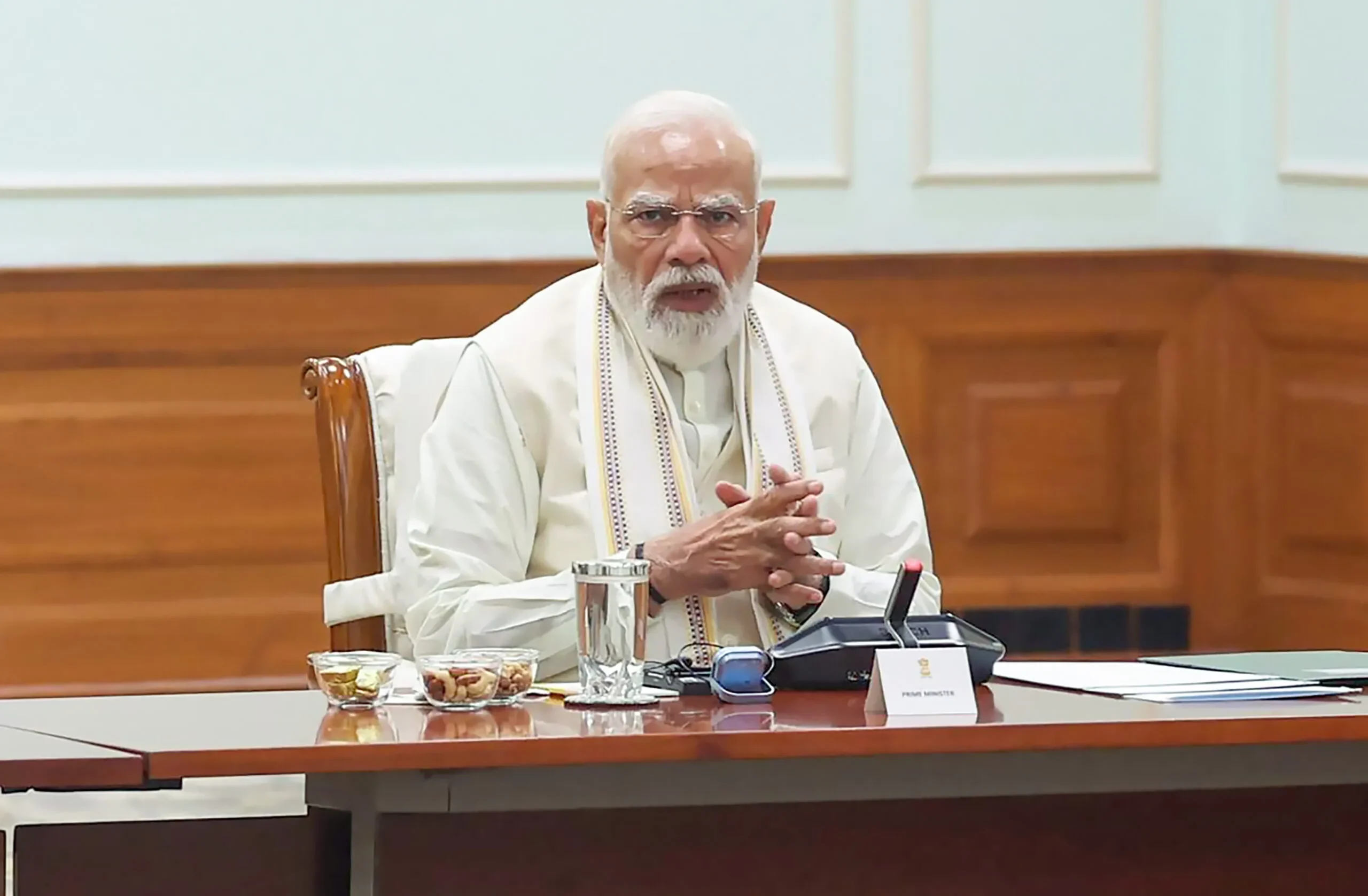
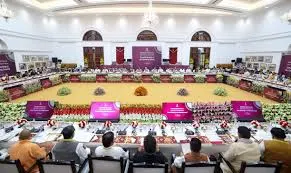
On June 11, 2026, that meeting happened for the 11th time since NITI Aayog was formed in 2015. Prime Minister Narendra Modi chaired the 11th Governing Council Meeting of NITI Aayog at the Rashtrapati Bhavan Cultural Centre in New Delhi, bringing together Chief Ministers of States and Union Territories, Lieutenant Governors and Administrators, and Union Ministers serving as ex-officio members.
The theme was not vague. It was specific and directional, and it points toward something worth paying attention to.
The Theme That Defines This Meeting: Viksit Bharat 2047
The theme for this year's meeting, "Inclusive Human Development for Viksit Bharat @2047," emphasised ensuring that the benefits of India's growth reach every citizen, regardless of age, gender, region, or economic background. The focus was not only on economic progress but also on improving access to quality education, healthcare, employment opportunities, and social welfare across the country.
Viksit Bharat 2047 is the government's long-term vision of transforming India into a developed nation by the 100th anniversary of its independence. The initiative aims to strengthen infrastructure, boost innovation, improve living standards, and create sustainable growth while ensuring that development remains inclusive. Meetings such as this serve as important platforms where national goals are discussed with state governments and translated into practical policy measures and action plans.
Addressing the gathering, Prime Minister Narendra Modi highlighted the importance of cooperation between the Centre and the States in achieving these objectives. "Guided by the spirit of cooperative federalism, we are working together to accelerate India's development journey. The collective efforts of the Centre and States will play a pivotal role in realising our shared vision of Viksit Bharat," he said, underlining that long-term national progress requires coordinated action at every level of government.
The Four Pillars at the Core of the 11th NITI Aayog Meeting
The Governing Council Meeting discussed the Inclusive Human Development Framework, anchored around four core pillars: Foundational Human Capital and Future-Ready Skills; Productive Employment, Entrepreneurship and Decentralised Growth; Health, Nutrition and Wellbeing; and Equity and Dignity for All.
Each of these pillars is less abstract than it sounds. The first is about education , from early childhood learning all the way through higher education and vocational training. The second is about jobs and economic growth, particularly in smaller cities and rural areas. The third is about access to healthcare and nutrition that actually reaches people. The fourth is about ensuring that development is not only measured in GDP numbers but in whether marginalized communities also see its benefits.
A key thrust was on aligning State Visions with the National Vision on Inclusive Human Development, reinforcing a unified and collaborative approach toward equitable and sustainable growth.
What the 5th National Conference of Chief Secretaries Feeds Into This
The Governing Council of NITI Aayog also focused on the recommendations of the 5th National Conference of Chief Secretaries held during December 26 to 28, 2025. Recommendations were made on five key themes: Early Childhood Education; Schooling; Skilling; Higher Education; and Sports and Extracurricular Activities.
This is the pipeline that actually matters. The Chief Secretaries conference in December fed into this June meeting. The ideas do not emerge in isolation , they move through consultation, review, and now deliberation at the highest inter-governmental forum in the country.
Read More: Top Home Buyer Subsidy Schemes 2026: Eligibility, Benefits & Savings Up to ₹2.5 Lakh
Digital Public Infrastructure and Data-Driven Accountability
One of the less-discussed but significant aspects of the meeting was its focus on how development goals will be monitored and measured over time. Beyond setting targets, leaders discussed the systems and frameworks needed to ensure that policies translate into real and measurable outcomes for citizens.
The discussions centred on creating a practical implementation roadmap supported by key enablers such as effective governance, digital public infrastructure, inter-departmental coordination, public-private partnerships, and data-driven decision-making. Participants also explored the importance of establishing clear mechanisms to track short-, medium-, and long-term progress, helping policymakers evaluate results and make course corrections when necessary.
At its core, this is about governance and accountability. Setting ambitious goals is only one part of the process; ensuring that progress can be measured transparently is equally important. By focusing on monitoring systems and measurable outcomes, the meeting highlighted the need to turn long-term development objectives into tangible improvements that citizens can see and experience in their daily lives.
Read More: The Hidden Walking Rule Nobody Knew Existed: Why Humans Naturally Turn Counterclockwise
Who Was in the Room , and Why That Matters
Several Chief Ministers attended, including Uttar Pradesh CM Yogi Adityanath, Assam's Himanta Biswa Sarma, Bihar's Samrat Choudhary, and Delhi CM Rekha Gupta. Union Home Minister Amit Shah and Defence Minister Rajnath Singh were also present.
This was the 11th meeting of the top decision-making body of NITI Aayog, which was formed in 2015 replacing the Planning Commission. The shift from a Planning Commission to NITI Aayog was meant to move India from a top-down planning model to one driven by cooperative federalism , where states are partners, not just recipients of central directives. This meeting format embodies that principle directly.
Disclaimer: This article is based on information available across the web. Parchar Manch does not take responsibility for its complete accuracy, as the content could not be fully verified.
FAQs
What is the NITI Aayog Governing Council?
It is the top decision-making body of NITI Aayog, formed in 2015 replacing the Planning Commission. It brings together the Prime Minister, Chief Ministers, and Lieutenant Governors of all states and union territories.
What was the theme of the 11th NITI Aayog Governing Council meeting?
The theme of the 11th NITI Aayog Governing Council meeting was "Inclusive Human Development for Viksit Bharat @2047." The theme focused on ensuring that India's development journey benefits all citizens through improved access to education, healthcare, employment opportunities, and social welfare while working towards the goal of becoming a developed nation by 2047.
Where was the 11th NITI Aayog meeting held?
The meeting was held at the Rashtrapati Bhavan Cultural Centre in New Delhi on June 11, 2026.
What are the four pillars of the Inclusive Human Development Framework?
The four pillars are: Foundational Human Capital and Future-Ready Skills; Productive Employment, Entrepreneurship and Decentralised Growth; Health, Nutrition and Wellbeing; and Equity and Dignity for All.
How will outcomes from this meeting be tracked?
The outcomes will be tracked through a structured monitoring framework that uses data-driven systems, digital public infrastructure, governance reforms, and regular progress reviews. The approach focuses on measuring short-, medium-, and long-term results to ensure accountability, transparency, and effective implementation of development goals across states and sectors.