Modi Commissions INS Dunagiri, INS Sanshodhak, and INS Agray: India's Indigenous Naval Ships Just Changed the Game
Three warships. One ceremony. One very clear message.
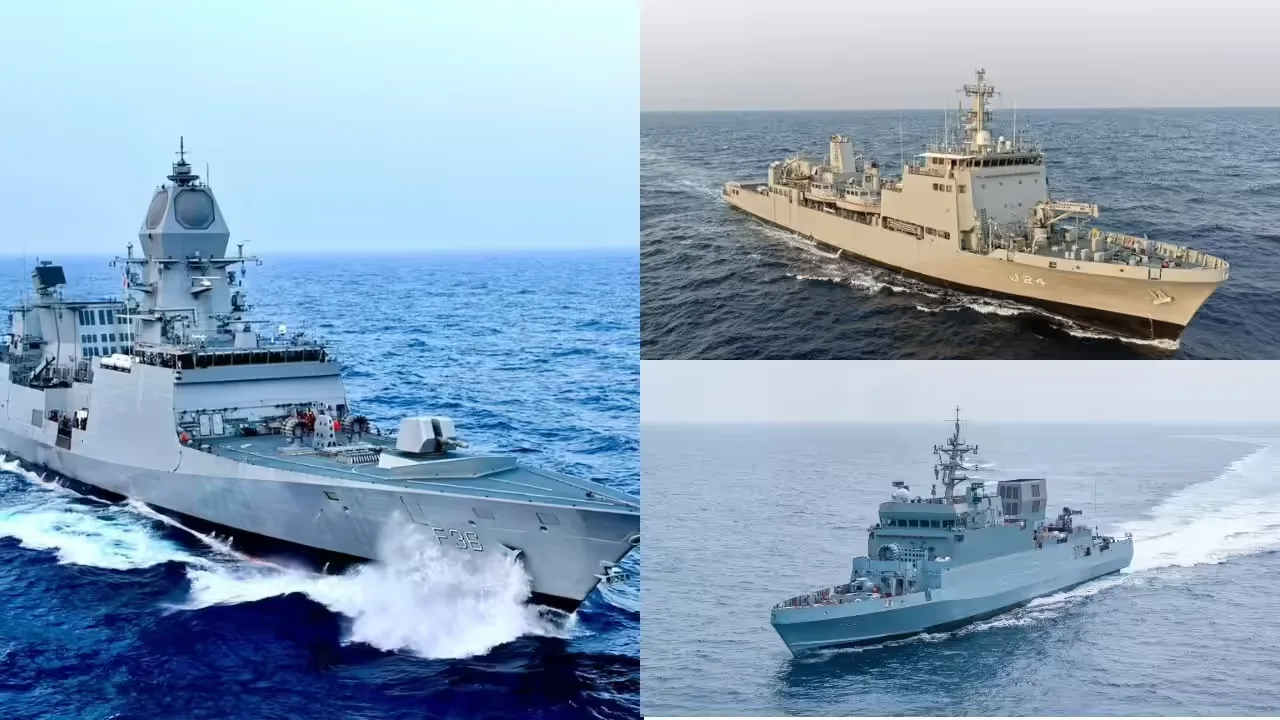
On June 21, 2026, Prime Minister Narendra Modi stood at the Syama Prasad Mookerjee Port in Kolkata and commissioned three indigenous naval ships into the Indian Navy simultaneously , an event officially called a tri-commissioning ceremony. The three vessels are INS Dunagiri, an advanced stealth frigate; INS Sanshodhak, a large survey vessel; and INS Agray, an anti-submarine warfare shallow water craft. Each one built in India. Designed in India. For India.
That last part is worth pausing on.
Why the Commissioning of These Indigenous Naval Ships Actually Matters
India has historically imported a significant portion of its defence equipment. That dynamic is changing , and fast. PM Modi stated that India does not want to remain only a buyer country in the defence sector, and the nation's armed forces cannot become just a market for the world. The commissioning of these three ships is not symbolic. It is structural , a shift in how India builds, arms, and sustains its naval power.
The construction involved extensive participation by Indian industry, including more than 200 MSMEs, and generated substantial direct and indirect employment. When a warship is built domestically, entire supply chains activate , steel manufacturers, electronics firms, sonar developers, small component makers in cities most people have never visited. The ripple effect is real.
Read More: Drishyam 3 Is Now Streaming on Amazon Prime Video – Mohanlal's Blockbuster Finale
What Each Ship Does: Breaking Down the Three Platforms
Think of the three vessels as a complete strategic toolkit, not just three separate additions.
INS Dunagiri is the combat arm. The fifth Project 17A stealth frigate, it is equipped with advanced weapons and sensors, including BrahMos surface-to-surface missiles and the Medium Range Surface-to-Air Missile system, significantly enhancing the Navy's combat capability. A stealth frigate is designed to be difficult to detect on radar while carrying heavy firepower. Dunagiri strengthens what naval strategists call blue-water operations , the ability to operate far out at sea, not just near coastlines.
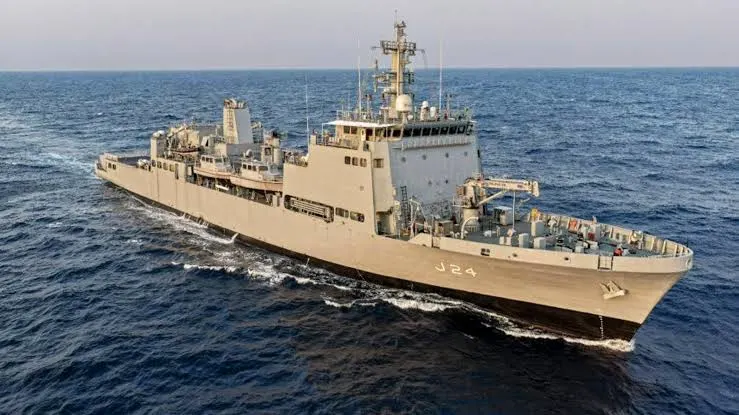
INS Sanshodhak plays a quieter but equally critical role. The fourth Survey Vessel (Large), it is designed for coastal and deep-water hydrographic surveys and collection of oceanographic and geophysical data for defence and civil applications, and is equipped with advanced survey systems including Autonomous Underwater Vehicles and Remotely Operated Vehicles. Maritime domain awareness , knowing exactly what lies beneath the ocean surface , is the foundation of modern naval strategy. Sanshodhak is that foundation.
INS Agray handles a threat most people underestimate: submarines. The fourth of the Arnala-class Anti-Submarine Warfare Shallow Water Craft, it is equipped with lightweight torpedoes, indigenous rocket launchers, and shallow-water sonar systems to detect and engage underwater threats in littoral waters. Littoral waters , the shallow coastal zones , are where underwater threats are hardest to detect and most dangerous. Agray is built precisely for that difficult terrain.
Read More: Nifty IT Crashes 6%: Why Accenture's Revenue Guidance Cut Is Rattling Indian IT Stocks
The Aatmanirbhar Bharat Connection
The three platforms demonstrate the growing maturity of India's indigenous shipbuilding ecosystem, with indigenous content exceeding 75 per cent. That number , 75 per cent , represents years of technology transfer, skill development, and deliberate policy.
The vessels were designed by the Indian Navy's Warship Design Bureau as well as by Garden Reach Shipbuilders and Engineers (GRSE), Kolkata, and constructed by GRSE. GRSE is a defence public sector undertaking with decades of shipbuilding experience , and this commissioning is arguably its most visible moment.
Modi noted that over 40 war
ships and submarines have been commissioned in the last few years, and 45 large naval platforms are currently under construction. The pace is deliberate. The Indian Navy expansion is not an announcement , it is already in motion.
Read More: Five Days of Green: Why Indian Stock Indices Are on a Winning Streak and What Is Really Driving It
A Quiet Note Worth Thinking About
PM Modi pointed out that June 21 is also observed globally as World Hydrography Day and described it as a remarkable coincidence that India's most advanced hydrographic survey vessel, INS Sanshodhak, is commissioned on the same day. Coincidence or not, it gives the moment a kind of completeness , a ship designed to understand the ocean, commissioned on a day the world pauses to think about it.
Modi said that no nation can emerge as a major power without strong maritime capabilities, and that development, security, and prosperity are closely linked to the oceans. That is not rhetoric. It is geography. India has a coastline of over 7,500 kilometres and sits at the intersection of some of the world's most critical trade routes. What happens in those waters matters , and these three ships are now part of that story.
Closing Thoughts
Three ships. But the real count is different. Over 200 MSMEs. Hundreds of engineers. A Warship Design Bureau that has spent years building expertise that was once considered out of reach for India. The ceremony in Kolkata was the visible part. The invisible part , the years of work that made indigenous content cross 75 per cent , is the story that deserves just as much attention.
India is not just commissioning ships. It is commissioning a different version of itself.
Read More: India Calls Pakistan a "Frankenstein State" at UN — Here Is What That Really Means
Disclaimer: This article is based on information available across the web. Parchar Manch does not take responsibility for its complete accuracy, as the content could not be fully verified.
FAQs
What are the three indigenous naval ships commissioned by PM Modi in 2026?
The three ships are INS Dunagiri (an advanced stealth frigate), INS Sanshodhak (a large survey vessel), and INS Agray (an anti-submarine warfare shallow water craft). All three were designed and built in India.
Where were the ships commissioned?
The tri-commissioning ceremony was held at Syama Prasad Mookerjee Port in Kolkata on June 21, 2026.
Who built the three warships?
The vessels were designed by the Indian Navy's Warship Design Bureau and built by Garden Reach Shipbuilders and Engineers (GRSE), a Kolkata-based defence public sector company.
What does INS Dunagiri's stealth capability mean?
It means the frigate is designed to minimise its radar signature , making it harder for enemy systems to detect , while carrying powerful weapons including BrahMos missiles and surface-to-air missile systems.
What is anti-submarine warfare, and why does INS Agray matter?
Anti-submarine warfare involves detecting and neutralising enemy submarines. INS Agray is specifically built for shallow coastal waters , a zone where submarines are hardest to track , equipped with torpedoes, sonar systems, and rocket launchers.
What is the significance of 75 per cent indigenous content?
It means more than three-quarters of the ship's components, systems, and materials were sourced and manufactured domestically. This reduces import dependence, builds local industry, and signals genuine self-reliance in defence manufacturing.