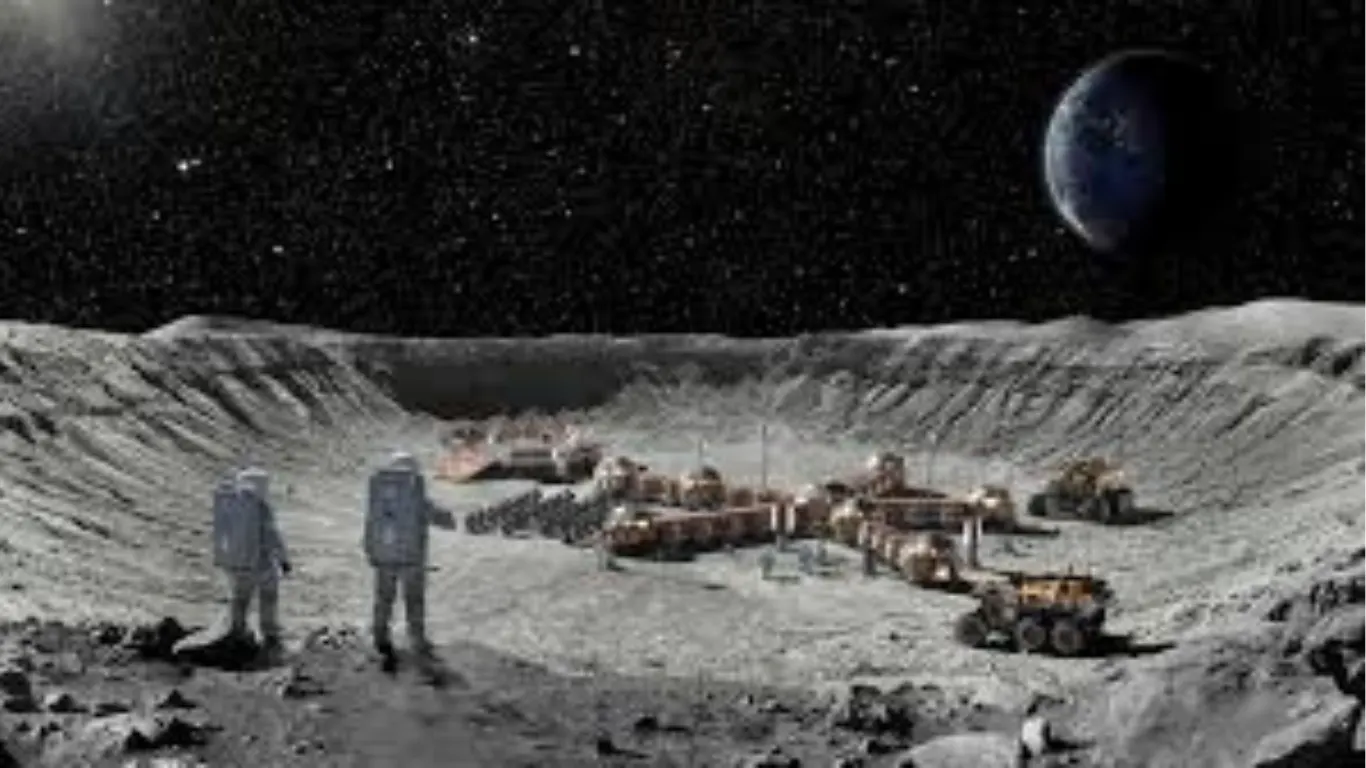
NASA's $20 Billion Moon Base Plan: What Is NASA Actually Building on the Moon and When Will It Happen?
NASA lunar base plan has been talked about for decades. But this time, something feels different. On May 26, 2026, NASA laid out a concrete, phased roadmap to build a permanent human settlement on the Moon, and the details are more specific than anything the agency has shared before.
No vague promises. No distant timelines buried in bureaucratic language. Just a plan, a price tag, and a timetable that has the entire space community paying close attention.
Why NASA's Moon Base Update Actually Matters Right Now
Following the successful Artemis II mission last month, NASA officials described the project as a critical step toward sustained lunar exploration and future missions to Mars. That context matters. Artemis II was a crewed mission that orbited the Moon, and its success gave NASA the momentum to make these announcements with confidence.
NASA Administrator Jared Isaacman outlined plans to launch two moon landing missions per year to establish semi-permanent astronaut occupation on the lunar surface, with the goal of conducting research and developing the technology needed for eventual flights to Mars.
This is not a science fiction project. The money is committed. The contractors are named. The launch windows are real.
The Three-Phase Plan Explained Simply
Think of it like building a house. You do not start by moving furniture in. You pour the foundation first, then put up walls, then make it livable.
Development of the settlement will occur over three phases that begin with increasing the number of lunar missions in the next few years, sending rovers and other technology to test things like mobility, communications, and nuclear power generation capabilities on the surface. After that, rocket launches will help deliver semi-habitable infrastructure and transportation like rovers to support recurring astronaut operations on the surface. Only then will NASA have established the ability to support a long-duration human presence on the Moon.
Read More: Easy Healthy Lunch Recipes for Busy Weekdays (Ready in 20 Minutes)
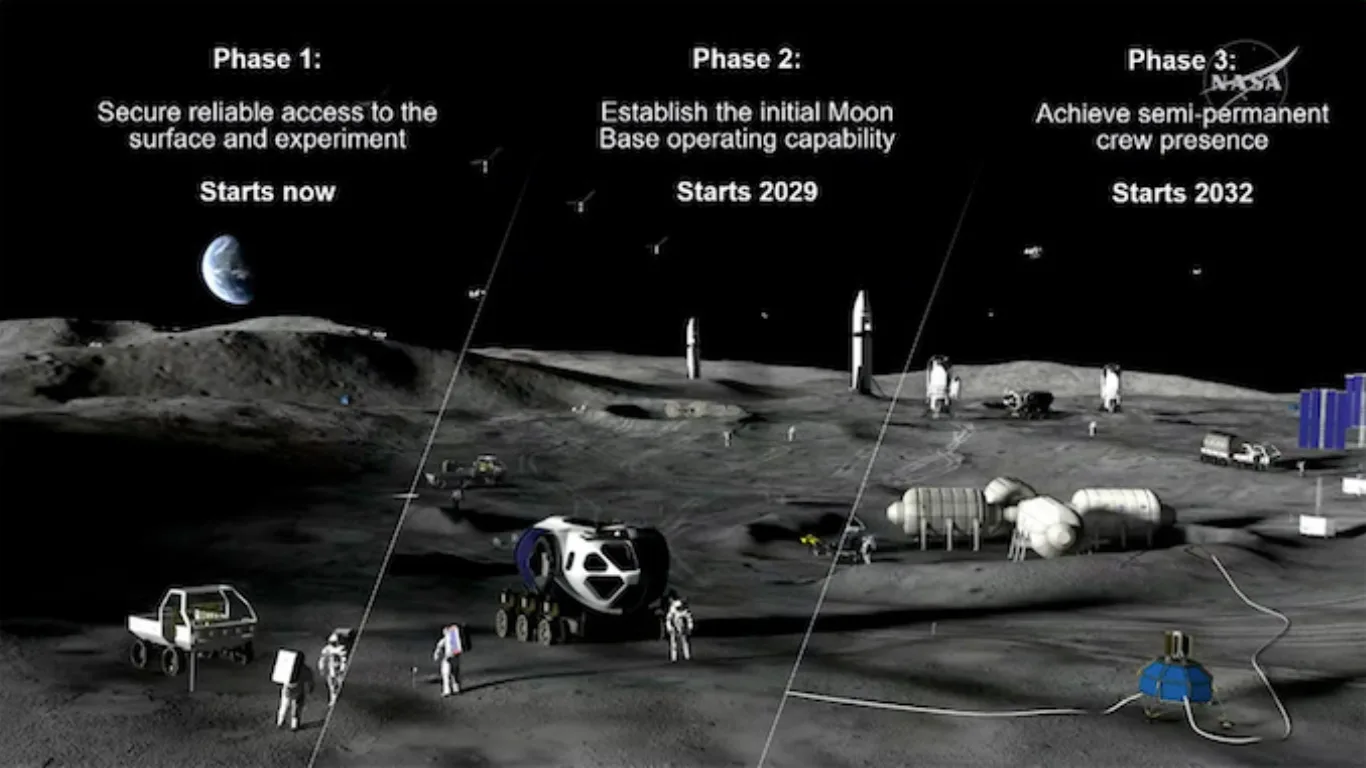
Phase 1 is already underway. It will transition from infrequent, once-a-year moon missions to a templated approach that will generate significant learning through experimentation.
Phase 2 brings humans back more regularly, with rover-based mobility and basic shelter systems in place.
Phase 3 delivers the heavy infrastructure needed for astronauts to actually live there, not just visit.
Where on the Moon and Why That Location
The future lunar base could eventually stretch across hundreds of square miles near the Moon's south pole.
The south pole is not a random choice. The moon station will require radioactive isotope power sources, and eventually a nuclear reactor, to survive long periods of shadow on the lunar south pole. These periods sometimes last months and preclude solar power. Specific craters in that region also contain water ice, which astronauts can convert into drinking water, oxygen, and even rocket fuel.
The Companies Building It Alongside NASA
Jeff Bezos's Blue Origin was revealed as the first company tasked with conducting the robotic missions. Astrolab was also awarded a contract to build Lunar Terrain Vehicles for NASA, alongside Lunar Outpost. Firefly Aerospace, which last year became the first private operator to make a successful Moon touchdown with its Blue Ghost lander, was also awarded a contract.
The first mission connected to the project, Moonbase 1, will use Blue Origin's Mark I Endurance lander. NASA currently targets a fall 2026 launch for the mission. The spacecraft will carry multiple payloads to the Shackleton Connecting Ridge area near the lunar south pole and will also transport two NASA science payloads to test technologies designed to reduce risks for future human landings.
What About the Gateway Space Station?
The new plans also now require canceling the construction and deployment of a space station in lunar orbit. Components from that project will instead go toward building a $20 billion base on the Moon's surface.
That is a significant shift. The Gateway was years in planning. Redirecting those resources toward the surface base tells you where NASA's priorities now sit.
Read More:Vijay's Tamil Nadu Power Bid: What Is Really Happening and Why This Political Drama Is Far From Over
The Cost Question Everyone Is Asking
NASA plans to spend $20 billion over the next seven years to build a Moon base near the lunar south pole featuring habitats, pressurized rovers, and nuclear power systems.
The Planetary Society estimates NASA will have spent about $107 billion on return-to-the-moon plans through 2026 in inflation-adjusted dollars, thanks in large part to repeated program changes over the past 20 years by successive presidential administrations.
That history of cost overruns is real, and Isaacman acknowledged it directly. Speaking of past delays and budget overruns, Isaacman said "the programs we left behind in this effort were not success stories. NASA takes ownership for the shortcomings, but contributing billions more and time that we do not have was not a pathway to success."
What This Means for Mars
The Moon base is not the final destination. Officials say it is meant to help the science community proceed with plans to travel to Mars and push the boundaries of exploration.
Isaacman noted his ambition to "achieve the near impossible," by establishing "an enduring presence on another celestial body."
The Moon, in this vision, is essentially a testing laboratory. Every system, every habitat module, every nuclear power unit that survives the Moon's brutal conditions is one step closer to making Mars achievable.
Closing Thoughts
"People are looking up again, believing in big things again, and paying attention to the moon again," Isaacman said. There is something quietly powerful about that sentence. Not triumphant, not boastful. Just honest.
The NASA permanent Moon base will not appear overnight, as officials have said themselves. But for the first time in a long time, it feels less like a dream and more like a construction schedule.
Read More: Born After 2008? You Can Never Legally Buy a Cigarette in the UK. Here Is What That Actually Means
Disclaimer: This article is based on information available across the web. Parchar Manch does not take responsibility for its complete accuracy, as the content could not be fully verified.
FAQs
When will NASA's Moon base be ready?
The development will occur over three phases. The first phase focuses on sending rovers and technology to the lunar surface in the next few years. A long-duration human presence is the final stage, which follows after semi-habitable infrastructure is delivered. A fully operational base is expected toward the early 2030s.
Where exactly will the Moon base be located?
The base will be built at the Shackleton Connecting Ridge area near the lunar south pole. This region offers access to water ice and relatively stable light conditions.
Who is building the Moon base with NASA?
Blue Origin, Astrolab, Lunar Outpost, and Firefly Aerospace have all received contracts for rovers, landers, and surface missions as part of Phase 1.
How much will NASA's Moon base cost?
NASA plans to spend $20 billion over the next seven years on the lunar south pole base, featuring habitats, pressurized rovers, and nuclear power systems.
Why does the Moon base need nuclear power?
The lunar south pole experiences periods of shadow that sometimes last months, making solar power unreliable. Nuclear reactors will keep habitats, equipment, and astronauts operational during those extended dark periods.
What happened to the Gateway lunar space station?
NASA has paused the Gateway space station program in lunar orbit. Its components are being repurposed toward the surface Moon base instead.