NDA Push For Numbers Ahead Of Delimitation Bill: Inside The Quiet Arithmetic Reshaping Parliament
There's a particular kind of political tension that doesn't show up in speeches. It shows up in numbers, quiet ones, counted late at night by party managers who rarely speak to cameras. That's exactly what's unfolding right now with the NDA push for numbers ahead of delimitation Bill, and if you've been half following the headlines without fully understanding why everyone keeps mentioning seat counts and two-thirds majorities, well, this is worth slowing down for.
Why This Actually Matters To You
Here's the honest answer. This isn't just an inside-Parliament story. If the Delimitation Bill eventually passes, it would reshape how many seats each state gets in the Lok Sabha, some potentially gaining, some potentially losing relative political weight. That affects how your vote counts, how your state's voice sounds in Delhi, and how power gets distributed across the country for decades. Not an exaggeration. This is genuinely one of those quiet, structural questions that ends up mattering more than most headline-grabbing news cycles.
Read More: Pokémon GO Fest 2026 Global Begins July 11, and For the First Time Ever, It Costs Nothing to Join
What Delimitation Actually Means, Explained Simply
Let's slow down here, because the term itself confuses people, understandably. Delimitation is essentially the process of redrawing how many parliamentary seats each state gets, based on population. Right now, the Lok Sabha has 543 seats, and that number has been frozen since 1976. Why frozen? Because states that successfully controlled population growth, largely in the south, didn't want to be penalised with fewer seats compared to states with faster-growing populations, mainly in the north.
Think of it like splitting a pizza among friends based on how hungry each person claims to be, except the slicing hasn't changed in decades even though appetites have shifted a lot. The proposed bill would expand the Lok Sabha to nearly 850 seats, using 2011 Census data, and it's tied to another major reform, implementing the women's reservation law, which requires one-third of seats to be reserved for women, ideally before the 2029 general election.
Read More: Modi Albanese Meeting: Why This Melbourne Handshake Could Reshape India's Energy Future
How The NDA Is Trying To Get The Numbers, Step By Step
- Starting point: During an April 2026 vote on the bill, the government secured 298 votes against 230, falling short of the two-thirds majority required for a constitutional amendment, which sits at 362 in a full 543-member house.
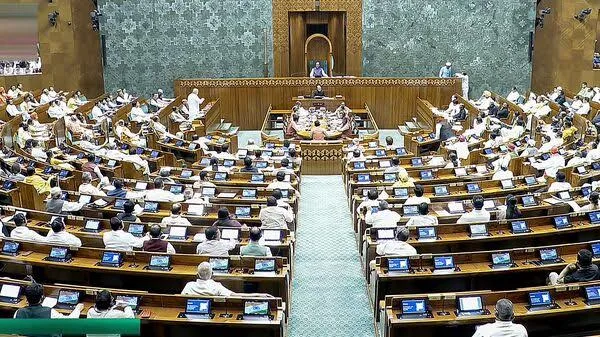
- Building through realignment: Since then, political shifts have added to the NDA's tally, including AAP MPs merging with the BJP, and a faction of Shiv Sena (UBT) MPs aligning with the NDA-allied Shiv Sena group.
- Courting fractured opposition parties: A split within the Trinamool Congress parliamentary group has created a separate bloc of around 20 MPs, and the government is reportedly hoping some of them lean toward supporting the bill.
- Reaching out to DMK: The DMK, now the largest non-aligned party in the Lok Sabha with 22 seats after exiting the INDIA bloc, has remained officially non-committal, though political shifts in Tamil Nadu are being watched closely as a possible factor.
- Sharad Pawar's NCP factor: Reports suggest the Sharad Pawar-led NCP, holding eight Lok Sabha seats, may extend issue-based support without formally joining the NDA, partly due to internal pressure from legislators seeking closer ties to the ruling government.
Even with all this movement, sources indicate the NDA remains short of the full two-thirds threshold, meaning the arithmetic is close, but not yet closed.
Real-World Stakes Behind The Political Chess Game
Southern states, particularly Tamil Nadu, have consistently raised concerns that basing new seat allocations on 2011 population data would reduce their relative political representation, since they've kept population growth lower than northern states like Uttar Pradesh and Bihar. The DMK has specifically demanded that any freeze on inter-state seat allocation simply be extended further, rather than recalculated. Meanwhile, the government has floated the idea of building consensus by keeping the freeze on how seats are distributed between states, while still updating constituency boundaries within each state.
This isn't a small technical disagreement. It's a genuine north-south tension over political power, and it's part of why the Opposition has closed ranks so firmly on this specific issue, even as several of its members have splintered on other matters entirely.
Read More: TMC MPs Join BJP: Inside The Kolkata Defection That Just Reshaped West Bengal's Rajya Sabha Math
Mistakes People Keep Making While Following This Story
A common mistake is assuming this is purely a north versus south issue, full stop. It's more layered than that, several southern-aligned parties are engaging in quiet negotiations rather than blanket opposition, and some, like Sharad Pawar's NCP, have floated conditional formulas, such as a uniform percentage increase in seats across all states rather than a purely population-based split. Another mistake is assuming Opposition unity here means unity everywhere. Parties fiercely resisting this particular bill are, in some cases, simultaneously experiencing internal splits over entirely separate issues.
Pro Tips For Actually Following This Story As It Develops
Watch the Monsoon Session dates closely, Parliament convenes around July 21 and continues into August, and an all-party meeting has been called beforehand to discuss the legislative agenda. Also worth tracking, whether the government chooses to actually bring the bill to a vote this session, since it has previously held such legislation back when the numbers weren't fully in its favour. That decision alone will tell you more than any speech will.
Closing Thoughts
There's something almost quietly tense about watching a democracy recalculate its own internal balance of power, seat by seat, MP by MP. Numbers rarely make headlines the way controversies do, yet this particular numbers game may end up shaping India's political map for a generation. Whether it happens this session or gets delayed again, the underlying question, how power gets distributed across a country as vast and varied as India, isn't going away anytime soon.
Read More: Alpha Box Office Collapse: Why Alia Bhatt's Big Spy Thriller Cratered After a Promising Opening Weekend
Disclaimer: This article is based on information available across the web. Parchar Manch does not take responsibility for its complete accuracy, as the content could not be fully verified.
FAQs
What is the Delimitation Bill trying to do?
It aims to increase the number of Lok Sabha seats from 543 to nearly 850, based on 2011 Census data, partly to implement the women's reservation law.
Why do southern states oppose it?
They fear losing relative political representation since they controlled population growth more successfully than northern states, and seat allocation based on newer population data could favour northern states.
Did the bill pass in April 2026?
No, it fell short of the required two-thirds majority, securing 298 votes against 230.
What is the two-thirds majority threshold in the Lok Sabha?
With all 543 seats considered, it's 362 votes, though the exact number needed depends on how many MPs are present during the vote.
Which parties are seen as possible swing votes?
Reports point to sections of the Trinamool Congress, the DMK, and Sharad Pawar's NCP faction as parties whose support could shift the numbers.
When will Parliament next take this up?
The Monsoon Session is expected to begin around July 21 and run into August, with an all-party meeting scheduled beforehand.