NEET-UG 2026 Cancelled: The Paper Leak That Broke 22 Lakh Dreams and What Happens Next
On May 3, 2026, roughly 22.79 lakh students walked into exam halls across India, carrying two years, sometimes three, of grinding preparation. Some had woken up at 4 AM. Some had barely slept. All of them sat for the NEET-UG 2026 exam, the single gateway to MBBS and BDS admissions in the country.
Nine days later, the National Testing Agency told them it was all for nothing.
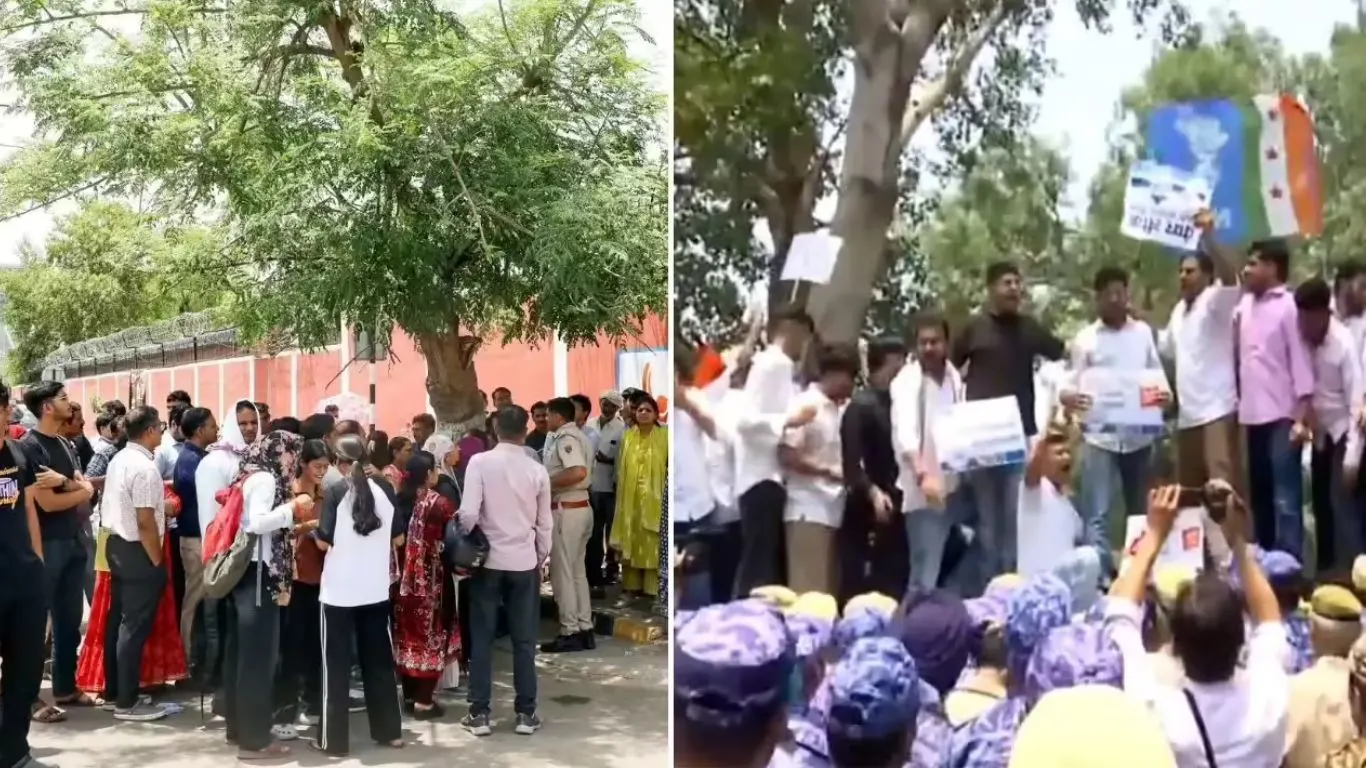
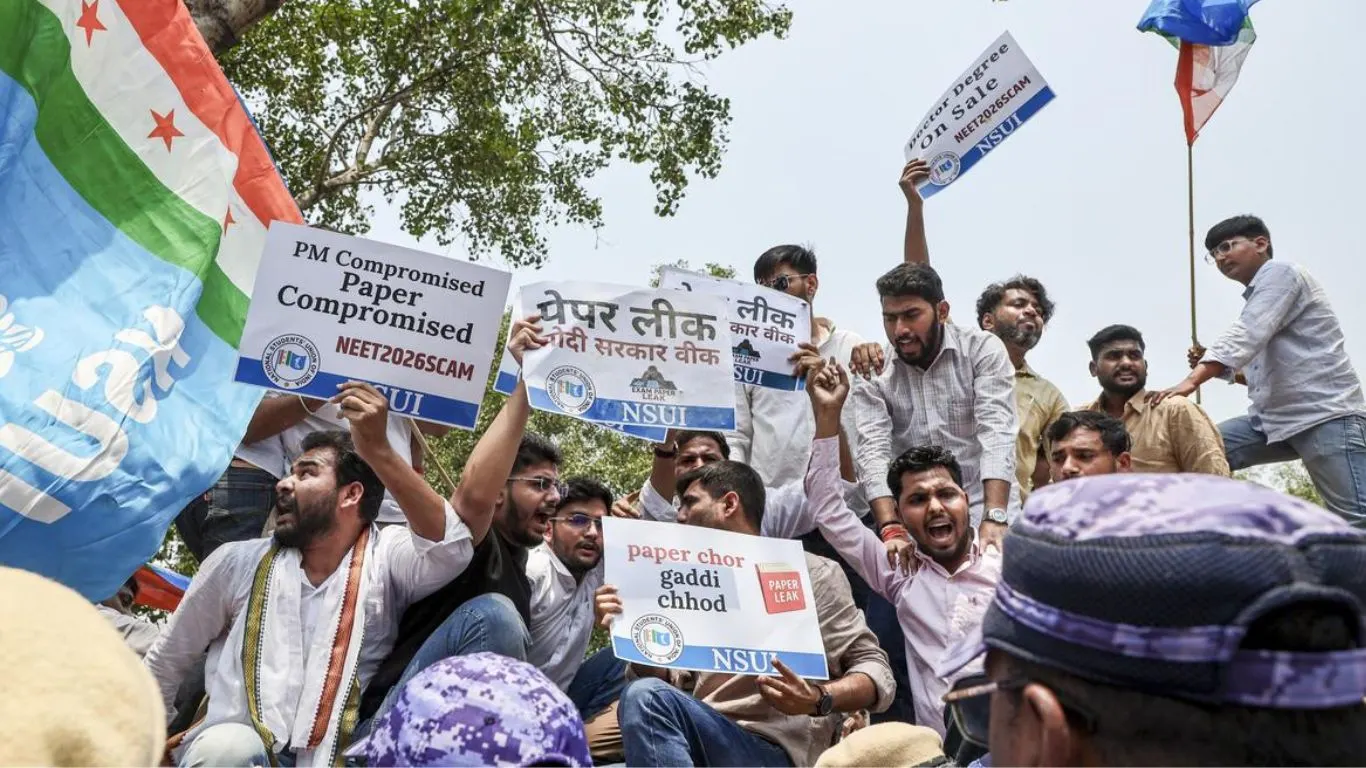
The NEET-UG 2026 exam has been cancelled. The reason: credible, multi-state evidence of a NEET paper leak that had circulated the question paper before the exam even began. The Central Bureau of Investigation has taken over the probe. Protests have erupted in Delhi and across the country. And over two crore families are, once again, waiting.
Why the NEET-UG 2026 Cancellation Is More Than Just an Exam Issue
Let us be honest about something. This is not the first time. NEET paper leak allegations shook the country in 2024, too. A high-level committee was formed then, headed by a former ISRO chief, and it submitted reform recommendations. Those recommendations, according to reports, were largely left unimplemented.
So when you hear about the NTA NEET exam cancellation 2026, the question that follows naturally is not just "what happened?" It is "why did this happen again?" And underneath that, something harder to say aloud: how many more times can lakhs of students afford to start over?
The National Testing Agency conducts NEET-UG as the sole medical entrance exam for the entire country. A single exam. A single date. One shot per year. For students who have given up their teens to this preparation, cancellation is not an administrative inconvenience. It is, in India Today's words, "not just an academic crisis but an emotional one too."
How the NEET 2026 Paper Leak Was Discovered
Here is what the investigation reveals so far, pieced together from multiple law enforcement disclosures.
A whistleblower apparently emailed a tip to Rajasthan officials days before the exam. That tip was ignored. Then, after May 3, the Rajasthan Special Operations Group began questioning candidates, guardians, and coaching contacts after irregularities surfaced. More than 150 individuals were interrogated.
What emerged was damning. The SOG IG Ajay Pal Lamba stated publicly that the NEET question paper had been circulated in Rajasthan before the exam began. A person from Haryana was identified as the one who distributed it. That individual had received it from Nashik in Maharashtra. The paper reportedly moved through what investigators are calling a "private mafia" network, travelling from Nashik via courier channels through a coaching belt, across states including Maharashtra, Rajasthan, Haryana, and, reportedly, Dehradun as well.
Reports indicate the leaked NEET paper was being sold at prices between Rs. 10 lakh and Rs. 25 lakh per copy. A PDF that allegedly matched 120 out of 180 exam questions has emerged as key evidence. One suspect, Shubham Khairnar of Nashik, has been taken into CBI custody. Around 20 key suspects are currently being questioned by central agencies.
The NEET 2026 exam cancellation was formally announced on May 12. The NTA stated that the decision was taken "with the approval of the Government of India to maintain transparency, fairness, and credibility."
What the NTA Has Said and What Comes Next
The NTA's official statement confirmed that the NEET-UG re-examination date will be announced separately on its official website. Reports suggest the schedule will be declared within seven to ten days of the cancellation announcement, though no confirmed date has been set as of May 13, 2026.
That means 22.79 lakh students now wait again, this time for a fresh exam date, a fresh paper, and fresh anxiety.
Students and coaching institutes have begun calling for the re-NEET 2026 exam to be conducted digitally to reduce leak risks. Several have demanded greater security at printing presses and transit points, which are historically the weakest links in the paper distribution chain.
Read More: Google's REPLIQA Program: How Quantum AI and Life Sciences Are About to Change Medicine Forever
The Political and Legal Fallout
The fallout has been swift. Former Rajasthan Chief Minister Ashok Gehlot accused the BJP government in Rajasthan of suppressing leaked information for two weeks. Opposition leaders, including Rahul Gandhi and Tamil Nadu Chief Minister MK Stalin, have attacked what they describe as a broken exam system. Several medical professionals' bodies have written to the Prime Minister demanding the dissolution of both the NTA and the National Medical Commission.
A petition has already been filed in the Supreme Court of India, seeking that the re-examination be conducted under judicial supervision, and that the NTA be replaced as the conducting authority.
The ABVP, the student wing of the RSS, has also demanded a "time-bound investigation" and greater accountability, signalling pressure from across the political spectrum.
What Students Got Wrong About This System (And What They Should Know Now)
Many students assumed the NEET exam security after 2024 had been tightened. It had, on paper. New protocols, new SOPs. What was not changed, apparently, was the distribution chain for physical question papers, the single greatest vulnerability in a pen-and-paper exam at this scale. Printing, packing, transporting, and storing 22 lakh question papers across thousands of centres in a single overnight window creates dozens of leak opportunities.
Students writing re-NEET 2026 should know: the CBI investigation is ongoing, suspects are in custody, and the government has signalled it will hold a clean exam. Whether the structural reform happens before then is a different question.
Closing Thoughts
There is a kind of exhaustion in this story that goes beyond outrage. The student quoted by ANI said it plainly: "We studied for 15 hours. The security should be increased." She is not asking for sympathy. She is asking for a basic assurance that what she earns cannot be stolen before she even submits her answer sheet.
The NTA NEET paper leak 2026 is a crisis of institutional trust. And that trust, once broken twice in two years, takes far more than a re-examination to rebuild.
Disclaimer: This article is based on information available across the web. Parchar Manch does not take responsibility for its complete accuracy, as the content could not be fully verified.
FAQs
Why was NEET-UG 2026 cancelled?
The National Testing Agency cancelled the exam following credible evidence from the Rajasthan SOG and central agencies that the question paper had been leaked and circulated across multiple states before the May 3, 2026, exam.
When will the NEET-UG 2026 re-examination be held?
The NTA has stated it will announce the re-exam date within seven to ten days on its official website, nta.nic.in. No confirmed date has been released as of May 13, 2026.
Who is conducting the NEET 2026 paper leak investigation?
The Central Bureau of Investigation (CBI) has taken over the probe from the Rajasthan SOG. Multiple suspects are in custody, including Shubham Khairnar from Nashik.
Will all students have to give the re-NEET exam?
Yes. The NTA has announced that the re-examination will be held for all 22.79 lakh registered candidates, with no distinctions based on centre or region.
Can the NTA be replaced as the exam authority?
A petition in the Supreme Court has sought exactly that. The matter is sub-judice as of now. Several political parties and medical bodies have called for dissolving the NTA, though no official government decision has been taken yet.
How can students protect themselves going forward?
Candidates should monitor only official NTA communications at nta. nic. Avoid WhatsApp-forwarded "papers" which are either fabricated or illegal to use, and report any suspicious material to local police or the CBI directly.