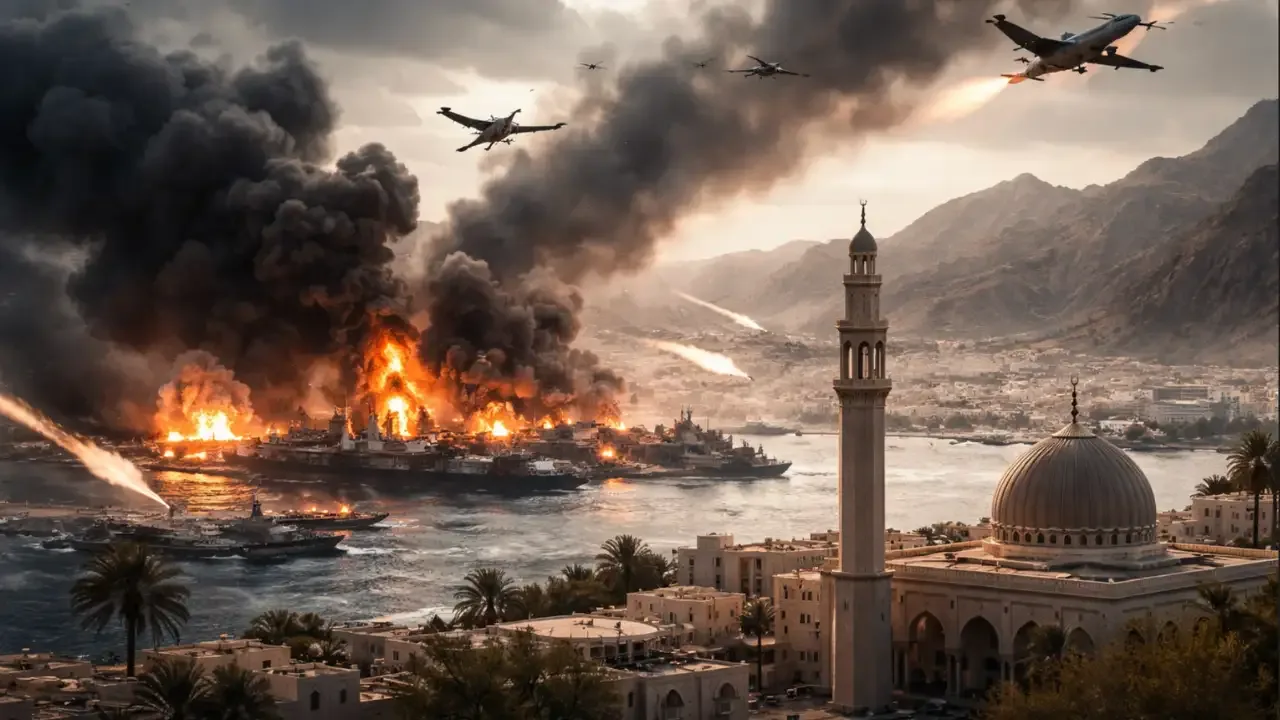
Oman in the Crossfire: Why the World's Most Neutral Nation Is Now Under Enormous Pressure
Oman has spent decades building something rare in the Middle East , a reputation for staying out of other people's wars. It has hosted secret diplomacy between bitter enemies. It has kept doors open when every other door slammed shut. It is the kind of country that does not make headlines, precisely because it works so hard not to.
That quiet era may be ending. And what is happening to Oman right now matters far beyond its borders.
The Trump Threat That Shocked the Gulf: Oman's Neutrality Under Attack
US President Donald Trump threatened to use military force against Oman if it collaborated with Iran to assert control over the Strait of Hormuz, saying at a cabinet meeting: "Oman will behave just like everybody else, or we will have to blow them up."
The remark was not a slip. The US State Department later shared the comment on social media with a transcript that referred specifically to the Arab country. That confirmation removed any doubt about the target.
US Treasury Secretary Scott Bessent also issued a threat of targeting Oman with sanctions over its cooperation with Iran toward exercising control over the Strait of Hormuz.
For a country that has spent decades maintaining trust with both Washington and Tehran, these threats represent a genuine rupture.
Read More: Mamata Banerjee Refuses to Resign After West Bengal Election Defeat: Is Democracy Under Threat?
What the Strait of Hormuz Crisis Actually Is
The Strait of Hormuz is one of the most consequential waterways on earth. The Strait handles more than 20 percent of the world's global oil traffic and sections of it run through both Iranian and Omani territorial waters.
The effective closure of the Strait has skyrocketed energy prices and disrupted the trade of several other commodities around the world. Iran closed the strait after the US-Israeli war on Iran began in February 2026 and began asserting sovereignty over it.
In late April 2026, Iranian Foreign Minister Araghchi visited Muscat and reportedly suggested Iranian-Omani cooperation over the Strait. Iran also suggested it could impose tolls on ships transiting the Strait, and on May 5, 2026, established a new "Persian Gulf Strait Authority" as a revenue-generating operation.
Nearly every affected country opposed the tolls. Trump called the idea "totally unacceptable." Then he turned his anger toward Oman.
Read More: Mamata Banerjee Refuses to Resign After West Bengal Election Defeat: Is Democracy Under Threat?
Why Oman Finds Itself in This Position
Oman has often acted as a mediator between the Islamic Republic and the West. These tensions surfaced after the US-Israeli war on Iran began on February 28, 2026.
For decades, Oman's geography and foreign policy were its greatest assets. It shares a coastline with the Strait of Hormuz, shares a border with no active warzone, and has maintained formal relations with Iran while remaining a US treaty partner. It is the Switzerland of the Gulf , except Switzerland does not sit on the world's most contested oil shipping lane.
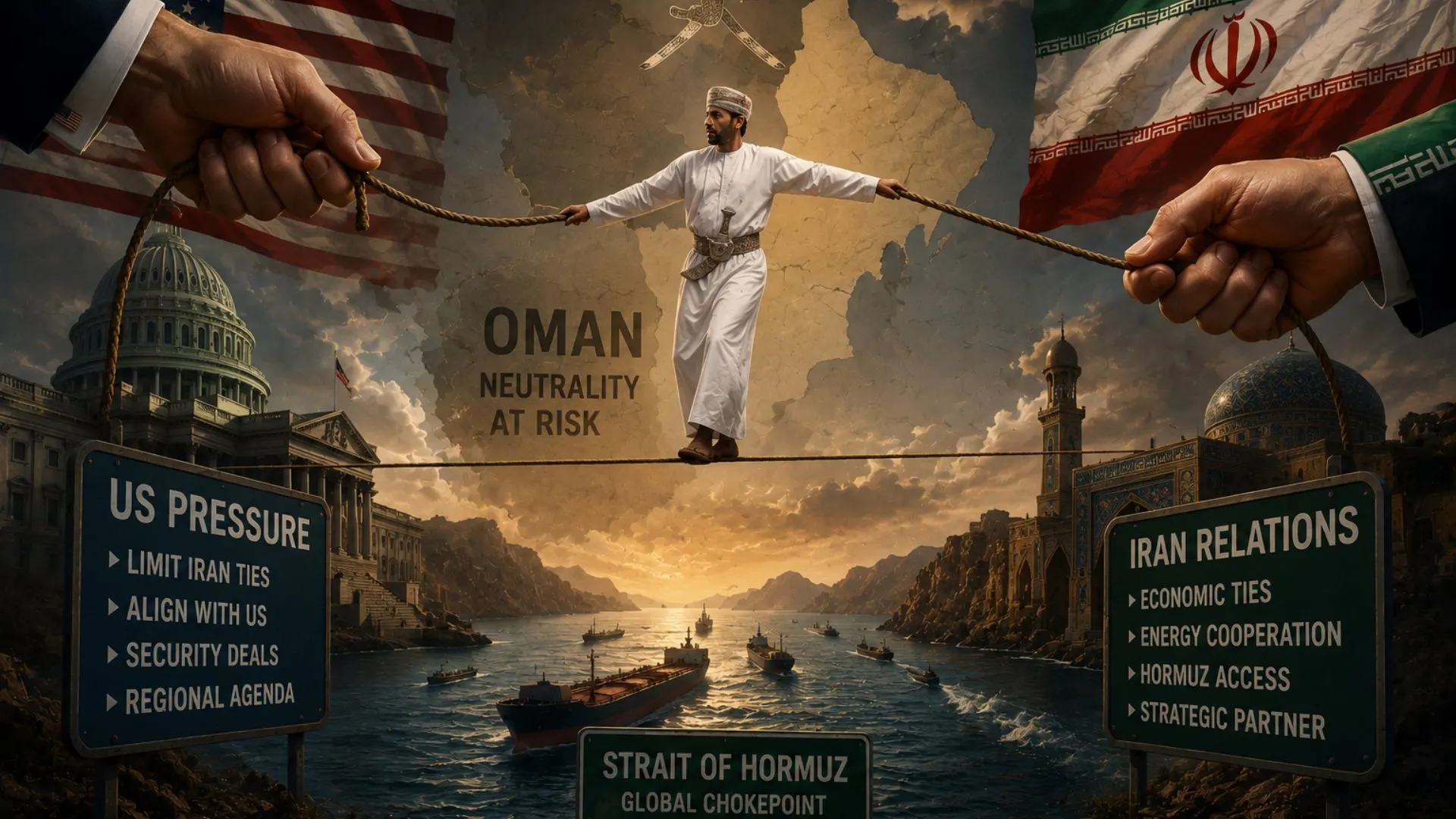
Oman's strategic quietism was built on the premise that being a "friend to all" provided a physical shield. The real strategic shift has been Oman's attempt to decouple its economy from the Strait, pouring billions into the Port of Duqm, which sits outside the Strait on the Arabian Sea and allows a "back door" for global trade that bypasses Iranian or Emirati chokepoints.
That long-term strategy makes sense. But it takes years to fully come online, and the crisis is happening now.
Oman's Economy: Genuine Progress at a Fragile Moment
The crisis hits at a time when Oman's economic transformation was genuinely gaining momentum. On January 1, 2026, Oman launched its 11th Five-Year Development Plan targeting an ambitious 4 percent annual GDP growth, backed by a newly achieved investment-grade credit rating from Moody's, S&P, and Fitch, after public debt was cut from 68 percent of GDP in 2020 to approximately 35 percent by 2026.
Oman's debt-to-GDP ratio has been cut in half. Nonhydrocarbon exports have tripled as a share of total exports since the early 2010s.
Oman Vision 2040, the sultanate's long-term economic diversification plan, is not just a slogan. It is backed by real fiscal discipline and strategic investment in green hydrogen, digital infrastructure, and tourism.
What Comes Next for Oman
The choices facing Muscat are genuinely difficult. Align too closely with Washington and it loses its credibility as a neutral channel between Iran and the West , the very quality that has made it diplomatically valuable for decades. Resist Washington's pressure and it risks sanctions and worse, at precisely the moment its economic reforms are beginning to show results.
The US and Oman conducted their third Strategic Dialogue in January 2026, reaffirming the strength of a partnership described as "one of the oldest in the Middle East," grounded in mutual respect and shared interests. The two sides conducted approximately $3.3 billion in trade in 2025.
That relationship is now under real strain.
The world watches the Strait of Hormuz for oil prices. It should also watch Oman , because what happens to the Gulf's most reliable neutral actor will shape the contours of any eventual peace.
Read More: Born After 2008? You Can Never Legally Buy a Cigarette in the UK. Here Is What That Actually Means
FAQs
Why is Oman important in the Iran-US conflict?
Oman shares territorial waters in the Strait of Hormuz with Iran and has historically acted as a diplomatic back-channel between Iran and Western powers. Its neutrality has made it valuable to both sides, but also vulnerable now that both sides are pressuring it to choose.
What did Trump say about Oman in 2026?
Trump threatened to "blow up" Oman if it cooperated with Iran to control the Strait of Hormuz, and the US Treasury Secretary threatened sanctions. These comments shocked regional observers given Oman's long-standing status as a US partner.
What is the Strait of Hormuz and why does it matter?
It is a narrow waterway between the Persian Gulf and the Arabian Sea through which over 20 percent of the world's oil and gas passes. Its disruption since February 2026 has caused significant spikes in energy prices globally.
What is Oman Vision 2040?
It is Oman's national economic diversification strategy to reduce dependence on oil revenues by building industries in tourism, green hydrogen, digital infrastructure, and manufacturing, including major investment in the Port of Duqm on the Arabian Sea.
Has Oman's economy been growing?
Yes. Oman achieved investment-grade credit ratings from Moody's, S&P, and Fitch in late 2025, cut its debt-to-GDP ratio significantly, and launched an ambitious five-year development plan targeting 4 percent annual GDP growth in 2026.