Over 11.21 Lakh Candidates Qualify NEET-UG 2026, Here Is What the Numbers Actually Reveal
Eleven point two one lakh. Say that number out loud and it barely registers as real. But that is roughly the population of a mid sized city, all of them clearing India's toughest medical entrance exam in a single year, out of a pool that itself topped nineteen lakh test takers.
Over 11.21 lakh candidates qualify NEET-UG 2026, according to results the National Testing Agency declared on July 16, and once you actually sit with the numbers behind that headline figure, the story gets a lot more interesting than a simple pass or fail count. This was not a quiet result day either, it came after a re-conducted exam, following controversy earlier in the year, which makes the scale of this qualification number even more worth understanding properly.
Why This Actually Matters Beyond the Headline Number
Here is why you should care even if you are not one of the candidates checking a scorecard right now. NEET UG is the single gateway into MBBS, BDS, AYUSH, and allied medical programmes across the entire country, meaning this one result effectively decides the next generation of doctors India will train. When 11.21 lakh candidates qualify out of roughly 20 lakh who appeared, that is a qualification rate hovering just above fifty five percent, a number that shapes everything from seat competition to how tightly packed the counselling rounds will be this year.
There is also something quietly significant buried in the demographic data. Women made up more than 58 percent of all qualified candidates this year, and cleared the exam at a marginally higher rate than men, 56.8 percent of women who appeared qualified, compared to 55.1 percent of men. That is not a small footnote, that is a meaningful shift worth sitting with for a moment.
Read More: When Missiles Move Markets: Why Indian Stocks Fell as US-Iran Tensions Reignited
What This Qualification Number Actually Means, Explained Simply
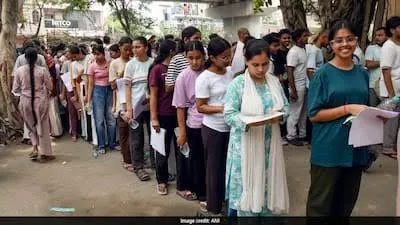
Think of NEET UG less like a single pass or fail gate and more like a funnel with several layers stacked inside it. Close to 20 lakh candidates walked into examination centres, nearly 5,440 of them spread across 551 cities in India and 14 cities abroad. Out of that enormous pool, 11.21 lakh cleared the qualifying cutoff, meaning they are now eligible to enter the counselling process, not guaranteed a seat outright, just eligible to compete for one.
Within that 11.21 lakh figure, the numbers break down further by category. The OBC-NCL category alone accounted for 5.12 lakh qualified candidates, the largest single group, followed by the General category at 2.91 lakh, SC at 1.59 lakh, Gen-EWS at 95,026, ST at 63,716, PwBD at 3,666, and PwD candidates at 303. Each of these categories carries its own separate cutoff mark, which is exactly why two candidates with different scores can both technically qualify.
How the Qualification Numbers Break Down, Step by Step
- Close to 20 lakh candidates appeared for NEET UG 2026 across 5,440 centres nationally and internationally, with the exam conducted in 13 languages.
- Of these, 11.21 lakh candidates cleared the qualifying cutoff and became eligible for counselling toward MBBS, BDS, AYUSH, and allied programmes.

- Category-wise qualification numbers were released alongside the result, with OBC-NCL leading at 5.12 lakh, followed by General at 2.91 lakh.
- The General category cutoff rose this year to a range of 715 to 213 marks, higher than the previous year, while OBC, SC, and ST cutoffs settled between 212 and 177 marks.
- Nineteen candidates scored above 700 marks nationally, and 1,492 candidates secured 650 marks or higher, reflecting a genuinely competitive exam despite the earlier controversy around it.
- Qualified candidates emerged from every one of the 36 states and union territories, ranging from over 1.7 lakh qualifiers in Uttar Pradesh alone to just 43 in Lakshadweep.
Read More: YRF Spy Universe Just Changed Forever: Inside the Alpha Film Teaser with Alia Bhatt and Bobby Deol
Real World Examples That Bring These Numbers to Life
Numbers on a page rarely feel real until you attach a name to them. Among the state toppers named by NTA, Jigmet Yangchan Lamo from Ladakh scored 530 marks, Dhruv Tripathi from the Andaman and Nicobar Islands scored 606, and Fahmida Anees from Lakshadweep secured 573, each representing very different regional cutoffs and candidate pools. Every single north eastern state also produced its own topper this year, a detail that speaks to how genuinely nationwide this exam's reach has become.
At the very top end, the picture gets even sharper. Seventeen state toppers scored 700 or above, and 26 crossed 690 marks, with the elite top 17 nationally, all scoring above 705, coming from just eight states, Punjab, Haryana, Rajasthan, Uttar Pradesh, Maharashtra, Bihar, Tamil Nadu, and Telangana. Interestingly, over 93 percent of these very top rankers were first time NEET aspirants, and 99 percent fell between 17 and 19 years old, suggesting the highest tier of this year's results skewed heavily toward younger, first attempt candidates rather than repeaters.
Mistakes People Keep Making When Reading NEET Qualification Numbers
A common mistake is treating the 11.21 lakh qualification figure as though it guarantees a medical seat. It does not. Qualifying only grants eligibility to enter counselling, where actual seat allotment depends on rank, category, domicile, and the number of available seats that particular year, a completely separate and often far more competitive stage.
Another frequent error is comparing this year's cutoff marks directly against last year's without accounting for percentile. The qualifying percentiles have remained unchanged from the previous year even though raw cutoff marks rose, meaning the relative difficulty and competition level are actually more comparable than the raw numbers alone suggest.
Pro Tips for Candidates Reading These Numbers Right Now
If your score sits close to your category's cutoff, do not panic based on the raw qualification numbers alone, check the actual percentile attached to your score instead, since that is what genuinely determines your competitive standing. Also pay attention to your specific state's qualification numbers rather than just the national total, since a state like Uttar Pradesh producing over 1.7 lakh qualifiers naturally means a very different competitive landscape than a smaller state or union territory. And once the Medical Counselling Committee opens registration, prioritise understanding your category specific opening and closing ranks from last year's allotment data, that comparison tends to be far more useful than the national qualification percentage alone.
Closing Thoughts
There is something quietly staggering about watching over eleven lakh individual academic journeys condense down into a single data release on one July afternoon, each number representing years of preparation, family sacrifice, and no small amount of anxiety. The fact that over 11.21 lakh candidates qualify NEET-UG 2026 this year, despite everything the exam cycle went through with its earlier disruption, says something quietly reassuring about the system eventually finding its footing, even when the road there was anything but smooth.
Disclaimer: This article is based on information available across the web. Parchar Manch does not take responsibility for its complete accuracy, as the content could not be fully verified.
FAQs
How many candidates qualified NEET-UG 2026?
A total of 11.21 lakh candidates qualified out of nearly 20 lakh who appeared for the exam.
What is the category-wise breakdown of qualified NEET UG 2026 candidates?
OBC-NCL led with 5.12 lakh qualified candidates, followed by General at 2.91 lakh, SC at 1.59 lakh, Gen-EWS at 95,026, ST at 63,716, PwBD at 3,666, and PwD at 303.
What is the NEET UG 2026 General category cutoff?
The General category cutoff rose this year to a range of 715 to 213 marks, higher than the previous year's cutoff.
Does qualifying NEET UG guarantee a medical seat?
No, qualifying only makes a candidate eligible to participate in counselling, where actual seat allotment depends on rank, category, and available seats.
How many women qualified NEET UG 2026 compared to men?
More than 58 percent of all qualified candidates were women, who also cleared the exam at a slightly higher rate, 56.8 percent compared to 55.1 percent for men.
Which states produced the most NEET UG 2026 qualifiers?
Uttar Pradesh led with over 1.7 lakh qualifiers, while every one of the 36 states and union territories produced at least some qualified candidates.