PM Modi's 3 Urgent Messages to Ministers as India Battles US-Iran War Fallout and Rising Fuel Prices
Four hours. One room. Every cabinet minister in the country. And three messages that tell you exactly what the government is worried about.
Inside the Meeting That Signals India Is in Serious Crisis Mode
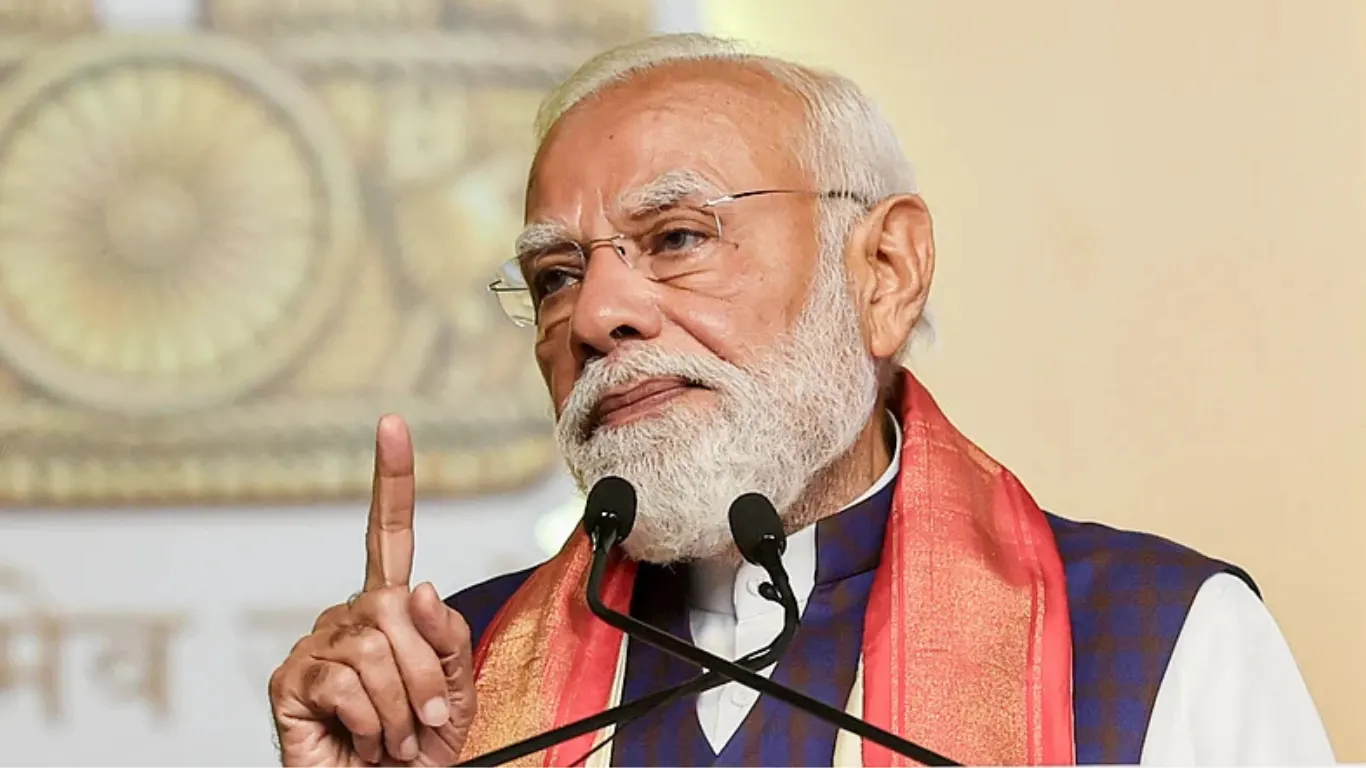
Prime Minister Narendra Modi chaired what was, by any measure, an unusually long cabinet meeting. Four hours. That is not routine. That is not a scheduled catch-up. When a PM Modi cabinet meeting runs that long, with presentations from ministries ranging from agriculture and labour to external affairs and power, something significant is being worked through behind closed doors.
The context matters here. The US-Iran war, which began with joint US-Israel strikes on Iranian nuclear facilities in early 2026, has since escalated into a full-blown conflict. Iran responded by closing the Strait of Hormuz, the narrow waterway through which roughly 20 percent of the world's oil passes. For India, which imports a substantial chunk of its crude oil from West Asia, that closure is not an abstract geopolitical event. It hits petrol pumps. It hits fertiliser plants. It hits kitchen budgets.
India has already raised fuel prices twice in response to rising crude oil prices. That alone signals how real the pressure is.
Why the Iran War Fallout Hits India Harder Than Most Countries
Think of the Strait of Hormuz as a door. A narrow one, barely 33 kilometres wide at its tightest point. Nearly every oil tanker heading out of the Persian Gulf passes through it. When Iran closes that door, global energy supply shrinks almost instantly.
India's situation is particularly exposed. The country depends heavily on West Asian oil imports, and no, switching suppliers quickly is not as simple as it sounds. Infrastructure, contracts, shipping routes, currency arrangements. All of it takes time. In the meantime, Indian energy security sits on shaky ground.
The government has been active on the diplomatic front. External Affairs Minister S. Jaishankar has held multiple phone calls with his Iranian counterpart, specifically on the safety of commercial shipping and India's energy security. Some stabilisation in the transit of Indian oil tankers has reportedly been secured. But the situation remains unpredictable.
PM Modi's 3 Big Messages: A Breakdown
Message 1: Speed Up Governance, Right Now
The Prime Minister was direct. Files should move faster. Decision-making should not get bogged down in bureaucratic delays. He asked for maximum productivity in minimum time. He called for simpler governance processes and a sharper focus on reforms. The underlying signal was clear: this is not the time for slow-moving administration when the country is navigating a global energy crisis.
Message 2: Viksit Bharat 2047 Is Non-Negotiable
Modi reiterated that Viksit Bharat 2047, the government's vision of transforming India into a developed nation by the centenary of independence, is not a political slogan. It is the guiding commitment of every ministry. Ministries that had scored lower in performance evaluations were specifically asked to course-correct. The message was that a global crisis does not pause national ambition. It tests it.
Message 3: Prepare for the Worst-Case Energy Disruption
This was perhaps the most consequential message. Ministers were explicitly asked to plan for the most severe possible disruption to India's energy supply. With the Strait of Hormuz still under strain, the power, petroleum, and fertiliser sectors were put on notice. The government is not assuming the situation will resolve easily.
Presentations were made by key ministries including Agriculture, Forest, Labour, Road Transport, Corporate Affairs, External Affairs, Commerce, and Power.
What This Means for Ordinary Indians
Fuel prices have already gone up twice. If the conflict prolongs and crude oil price continues to climb, a third hike is not out of the question. That affects transport costs, food prices, and inflation broadly. Fertiliser prices, which depend on energy costs, matter directly for farmers and therefore for food supply.
There are also approximately 9,000 Indian nationals currently in Iran. The Ministry of External Affairs has been working to ensure their safety, and some have already returned home through embassy assistance.
Read More: Google's REPLIQA Program: How Quantum AI and Life Sciences Are About to Change Medicine Forever
The Diplomatic Balancing Act India Is Walking
India's position in this conflict is quietly complex. PM Modi has spoken with Iranian President Masoud Pezeshkian and also with US President Donald Trump, expressing support for de-escalation and calling for the Strait of Hormuz to remain open for all. India is not taking sides. It cannot afford to. Its energy dependency on West Asia and its strategic relationship with the US both matter too much.
What the four-hour cabinet meeting made clear is that the government understands the stakes and is not treating this as a temporary disruption that will pass without consequence.
Closing Thoughts
Four hours is a long time to sit in a room and talk about governance and crisis management. But what came out of that room carries real weight. The three messages Modi gave his ministers were not procedural. They were signals, to the bureaucracy, to the economy, and to anyone paying attention, that India is adjusting its posture in real time. The Gulf War impact on India is not just a headline anymore. It is showing up in fuel prices, in diplomatic phone calls, and in marathon cabinet meetings that run well past schedule.
The question now is not whether India will be affected. It already is. The question is how effectively the government can absorb the shock while keeping its long-term ambitions intact.
Disclaimer: This article is based on information available across the web. Parchar Manch does not take responsibility for its complete accuracy, as the content could not be fully verified.
FAQs
What were PM Modi's 3 messages to ministers during the cabinet meeting?
Modi asked ministers to accelerate governance and remove delays, stay focused on the Viksit Bharat 2047 vision, and prepare their departments for the worst possible energy disruptions caused by the ongoing US-Iran war.
How is the US-Iran war affecting India?
The conflict has led to the closure of the Strait of Hormuz, disrupting global oil supply. India, which imports heavily from West Asia, has already raised fuel prices twice as crude oil costs have risen sharply.
What is the Strait of Hormuz and why does it matter for India?
The Strait of Hormuz is a narrow waterway between Iran and Oman through which roughly 20 percent of the world's oil supply passes. Its closure by Iran has directly disrupted global energy supply chains, including those serving India.
What is India doing to protect Indians in Iran?
The Ministry of External Affairs has been actively working with the Indian embassy in Tehran to ensure the safety of approximately 9,000 Indian nationals in Iran. Several students and others have already returned home.
Is there a risk of more fuel price hikes in India?
If the conflict in West Asia prolongs and crude oil prices remain elevated, further fuel price increases in India cannot be ruled out, as the government has already raised prices twice in response to the crisis.
What is Viksit Bharat 2047?
Viksit Bharat 2047 is the Indian government's long-term vision to transform India into a fully developed nation by 2047, the 100th anniversary of its independence.