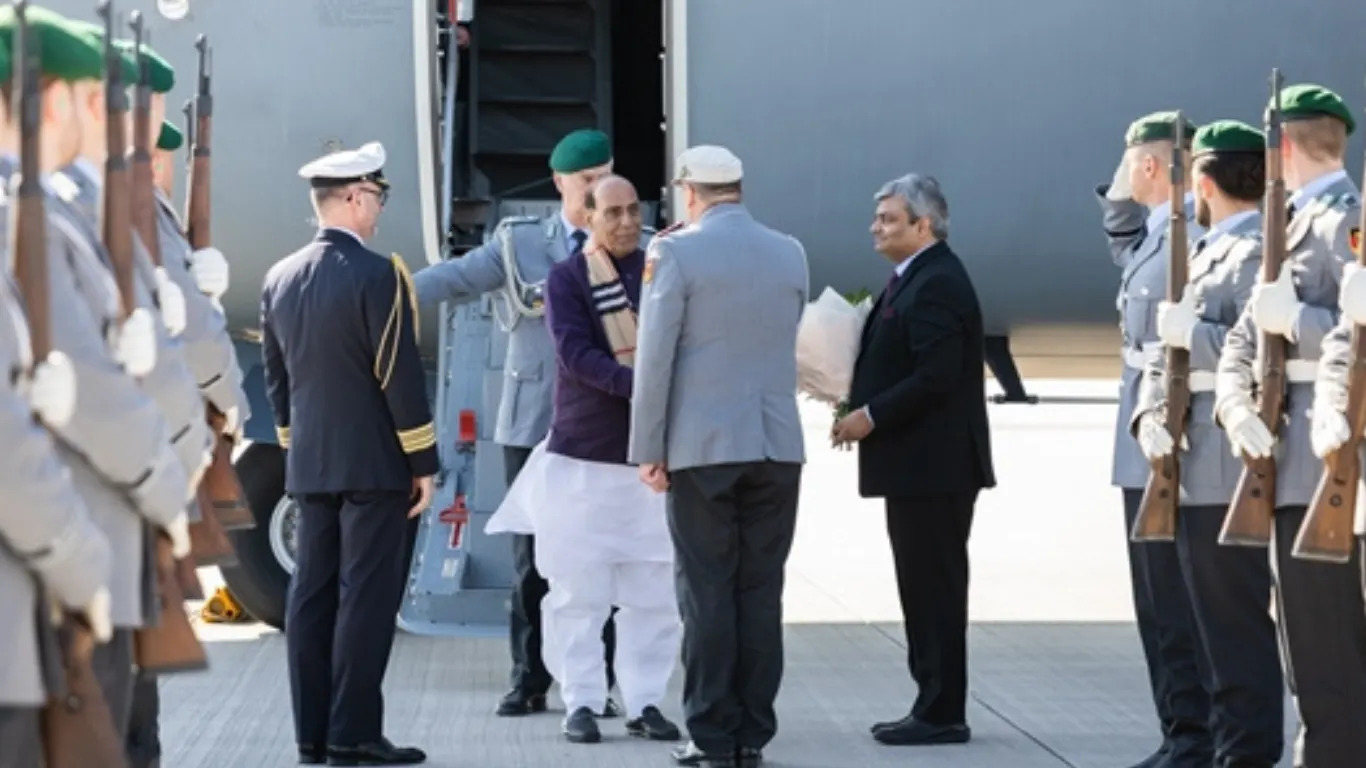
Rajnath Singh Arrives in Berlin for Defence Talks — A Quiet Visit With Loud Global Signals
It didn’t look dramatic, not the kind of moment that breaks the internet.
No crisis. No urgent press conference. Just a plane landing, a formal welcome, a few photographs , and yes, Rajnath Singh stepping into Berlin for what is officially described as a “defence talks” visit.
But here’s the thing , moments like this rarely announce their importance.
They unfold slowly.
Almost quietly.
And then, later, you realise, something shifted.
This article explores the full picture behind “Rajnath Singh arrives in Berlin for defence talks” , what’s happening, why now, what it means for India, Germany, and a world that, frankly, feels a little more uncertain than usual.
WHY This Visit Matters (More Than It First Appears)
Let’s start with something simple.
Countries don’t just “visit” each other for defence talks unless there’s, well, something at stake.
Right now, the global situation is, complicated. Conflicts in West Asia, rising tensions across regions, supply chain disruptions , it’s not one problem, it’s many overlapping ones.
And India knows this.
During his visit, Rajnath Singh actually pointed out that global conflicts , especially in West Asia , are no longer “regional issues” but have direct impacts on countries like India, particularly in areas like energy security and economic stability.
So this visit isn’t happening in isolation.
It’s happening because:
- The world is shifting strategically
- Defence partnerships are becoming essential, not optional
- Countries are looking for trusted allies , not just temporary agreements
And maybe most importantly,
India is trying to position itself not just as a buyer of defence equipment, but as a partner in building it.
That changes everything.
WHAT Exactly Happened in Berlin?
Alright, let’s slow down and look at the actual events , because details matter here.
When Rajnath Singh arrived in Berlin for defence talks, several key things unfolded:
1. A High-Level Official Visit
- The visit is a three-day official trip (April 21–23, 2026)
- Focus: strengthening India–Germany defence and strategic ties.
And not just symbolic ties , real, operational, industrial cooperation.
2. Military Honours and Strategic Signalling
Something was interesting, almost symbolic.
Rajnath Singh was:
- Escorted by German fighter jets
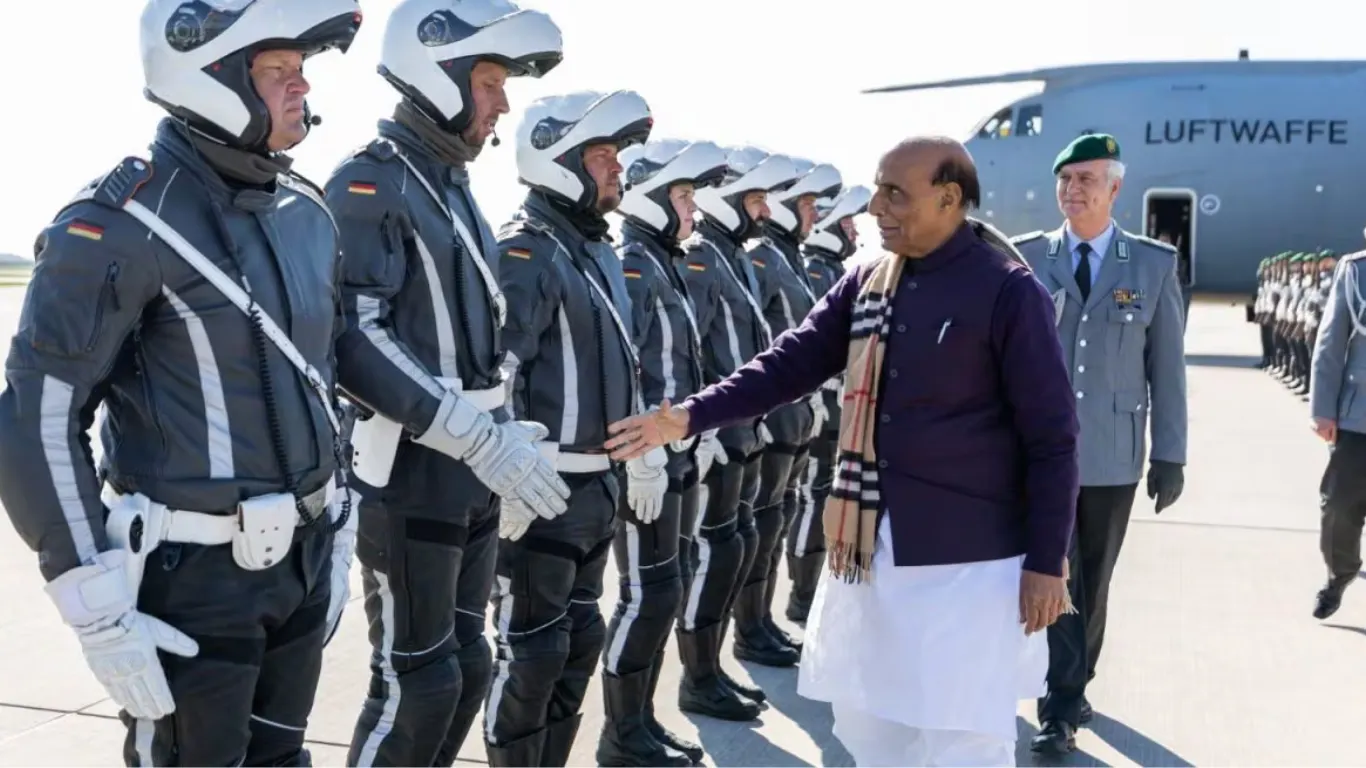
- Given military honours upon arrival in Berlin
Now, this might seem ceremonial , but in diplomacy, ceremony is communication.
It signals respect. Alignment. Importance.
3. Meetings With Key German Leadership
The visit includes talks with:
- German Defence Minister Boris Pistorius
- Senior government and defence officials
The agenda?
- Strengthening defence cooperation
- Expanding military and industrial collaboration
4. Defence Industrial Cooperation , The Real Core
Here’s where things get, serious.
India and Germany are focusing on:
- Co-development of defence systems
- Co-production of military equipment
- Technology sharing and industrial partnerships
And Rajnath Singh made it very clear:
India isn’t just buying anymore.
It’s inviting.
“Co-create, co-develop, co-innovate” , that’s the message.
5. Possible Major Defence Deals (Including Submarines)
There’s also a big , very big , project quietly sitting in the background:
- Project-75I, worth around ₹90,000 crore
- Focus: building advanced submarines for India’s navy
- Likely collaboration with German technology
This isn’t just procurement.
It’s capability building.
HOW This Visit Fits Into India’s Larger Strategy
Let me try to explain this simply,
India’s defence approach is changing.
Not suddenly , more like gradually, deliberately.
Earlier, the model was:
- Buy equipment from foreign countries
- Depend on imports
Now, it’s shifting toward:
- Build in India
- Collaborate globally
- Export eventually
This aligns with the broader initiative often referred to as self-reliant defence manufacturing.
But here’s the nuance , and it’s important:
India is not closing its doors.
It’s opening them differently.
Instead of:
“Sell to us”
It’s saying:
“Build with us”
That’s, a subtle but powerful shift.
Step-by-Step: What Happens Next?
It’s easy to read news like this and think , okay, meeting happened, done.
But actually, visits like these follow a process.
Here’s how it typically unfolds:
Step 1: Strategic Talks
- Leaders discuss priorities, risks, and opportunities
- Align on long-term goals
Step 2: Framework Agreements
- Defence cooperation roadmaps are signed
- Areas of collaboration are defined
Step 3: Industrial Engagement
- Meetings with defence companies
- Exploration of joint ventures
Step 4: Project-Level Negotiations
- Specific deals (like submarines, weapons systems) move forward.
Step 5: Implementation
- Manufacturing, training, and technology transfer begin.
This visit is somewhere between Step 1 and Step 3,
Maybe leaning into Step 4.
Real-World Examples of What This Could Lead To
Let’s make this less abstract.
Because “defence cooperation” can sound, vague.
Here’s what it actually looks like in practice:
Example 1: Submarine Development
- Germany provides advanced submarine technology
- India builds them domestically
- Result: stronger navy + local manufacturing
Example 2: Joint Weapons Production
- Components designed in Germany
- Assembled or manufactured in India
- Export potential increases
Example 3: Training & Peacekeeping Cooperation
- Joint training programs
- Collaboration in UN peacekeeping missions
Example 4: Technology Sharing
- AI, drones, defence electronics
- Future warfare capabilities
And suddenly, It’s not just about defence anymore.
It’s about technology, industry, and economy.
COMMON MISTAKES People Make When Reading This News
Let’s clear a few misunderstandings , because they happen often.
- “It’s just another diplomatic visit”
- → Not quite. The scale of industrial cooperation makes it significant
- “India is buying weapons again”
- → No, the focus is shifting toward co-production
- “Germany is the main beneficiary”
- → Actually, both countries gain , strategically and economically
- “This only affects defence”
- → It spills into technology, jobs, and global influence
Read More: Bombay High Court Hall Ticket 2026: Direct Download, Exam Details, and What You Must Not Miss
PRO TIPS: How to Understand Defence News Like This Better
If you want to read between the lines , and honestly, you should , keep these in mind:
- Look for words like “co-development” , they matter more than “purchase”
- Watch for long-term agreements, not just announcements
- Pay attention to timing , global tensions often influence such visits
- Notice which industries are involved, not just governments
And maybe this one matters most:
Don’t just read what’s said,
Notice what’s implied.
The Bigger Picture (And It’s, Interesting)
There’s something else happening here.
Quietly.
India is building defence relationships not just with one country, but across regions:
- United States
- France
- Russia
- Now Germany
It’s, diversified.
Strategic.
Almost like building a network instead of a dependency.
And Germany?
It brings:
- Strong engineering
- Advanced manufacturing
- Reliable industrial base
So the partnership feels, complementary.
Not overlapping.
Conclusion
So yes , Rajnath Singh arrives in Berlin for defence talks.
On the surface, it’s a visit.
A meeting.
A diplomatic event.
But underneath,
It’s about how nations prepare for uncertainty.
How do they build trust?
How they decide whether to depend, or collaborate.
And maybe , just maybe , it marks another step in India’s slow transformation from a defence importer to something else entirely.
A partner.
A builder.
A player in shaping the rules, not just following them.
It doesn’t happen overnight.
It never does.
But visits like this, they’re part of that story.
Read More: India Is Burning Early: What IMD's Heatwave Forecast Means for You This Summer
FAQs
Why did Rajnath Singh visit Berlin?
He visited Germany to strengthen defence ties, hold talks with German leaders, and explore industrial cooperation in defence manufacturing.
What is the main focus of the defence talks?
The focus is on co-development, co-production, and strengthening strategic defence partnerships between India and Germany.
What is Project-75I?
Project-75I is a major Indian defence project aimed at building advanced submarines, potentially with German collaboration.
How does this visit affect India?
It helps India strengthen its defence capa
Is this visit linked to global tensions?
Yes, global instability , especially in West Asia , has made defence partnerships more important than ever.