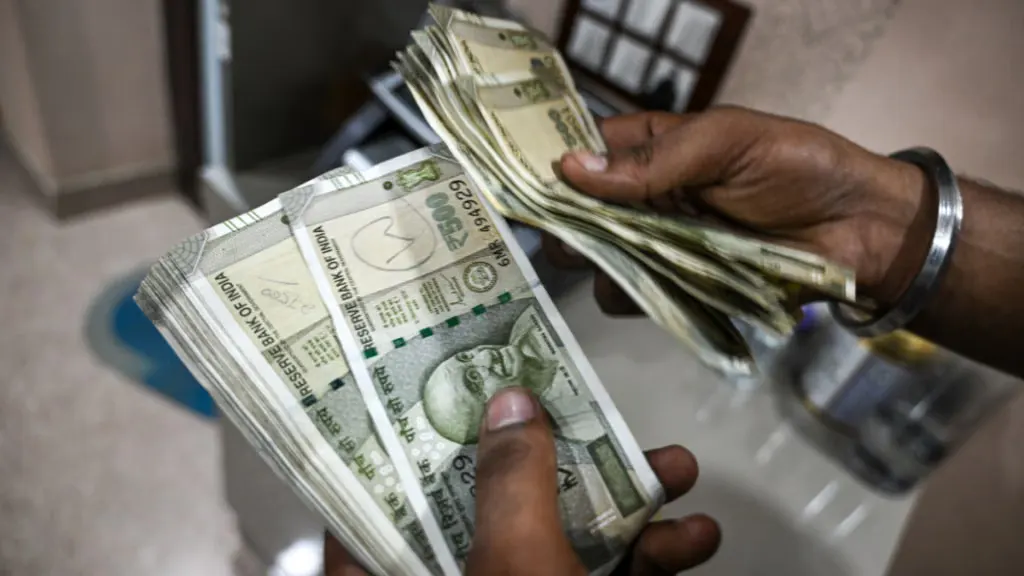
Rupee Gains Against Dollar: What's Really Behind India's Currency Catching Its Breath
Ninety six point eight four. That's the number that made headlines back in May, the record low the rupee touched against the dollar. Quietly, it's been climbing back since. Not in one dramatic leap, no, that's not quite right, let me rephrase, more like a slow, uneven crawl upward. The rupee gains against dollar story making the rounds right now is really about that crawl, and whether it holds.
As of early July 2026, the rupee has been hovering somewhere around 95 to 95.4 per dollar, a noticeable pullback from the 96.6 to 96.84 range it touched in mid to late May. That's roughly a 2 to 3 percent recovery. Small on paper. Meaningful in a currency market where daily moves are usually measured in decimal points.
Why This Actually Matters to You
Here's the honest answer to why you should care, even if you've never traded a currency in your life. The USD INR exchange rate touches almost everything, what you pay for imported electronics, how much your company's overseas contracts are worth, whether that US college fund or vacation abroad gets a little cheaper or a little more expensive. A weaker rupee makes imports costlier, especially oil, since India imports roughly 85 percent of what it uses. A stronger rupee eases that pressure, at least a little.
There's also a quieter signal buried in here. Currency strength often reflects investor confidence, whether foreign money is flowing into or out of a country's markets. So this isn't just a number on a ticker, it's a rough pulse check on how the world currently feels about India's economy.
Read More: Russia Launches Progress MS-34 Cargo Ship to the ISS, Delivering Over 2.5 Tonnes of Vital Supplies
What's Actually Driving the Rupee's Recovery
Think of the rupee's value like a tug of war rope, with the dollar on one end and a handful of domestic forces on the other. For most of the first half of 2026, the dollar side was winning, pulled by a 50 percent US tariff overhang on Indian exports, sustained foreign portfolio outflows, and an oil price spike tied to tensions around the Strait of Hormuz.
Then a few things shifted. Weaker than expected US jobs data in June cooled expectations of further Federal Reserve tightening, softening the dollar broadly. Brent crude also slipped below 71 dollars a barrel as talks between the US and Iran showed progress, easing India's import bill worries. And the Reserve Bank of India stepped in directly, selling dollars through state run banks near the 95.50 level to slow the slide, alongside a broader package of capital account reforms.
How the Recovery Has Unfolded, Step by Step
- The record low: USD/INR touched its all time high near 96.84 around May 19 to 20, 2026, driven by tariffs, oil, and capital outflows.
- RBI intervention begins: The central bank started selling dollars in both onshore spot and offshore forward markets to cushion further depreciation.
Read More: Shreyas Iyer on His Career: From BCCI Contract Snub to India's White-Ball Captaincy Race
- Capital account reforms: The government removed capital gains and withholding taxes on certain foreign investments in government securities, aiming to reverse roughly 13.7 billion dollars in foreign equity outflows recorded so far in 2026.
- External tailwinds appear: Softer US jobs numbers and falling crude prices gave the rupee outside help it couldn't generate alone.
- Partial recovery to the mid 90s: By early July, the rupee had firmed to around 95 to 95.4, still weaker than January's near 90 level, but well off its record low.
Real Numbers Worth Knowing
The rupee weakened from near 90 per dollar in January 2026 to its record low of 96.84 in May, then recovered roughly 2 to 3 percent to the mid 90s by early July. Over the past 12 months, it's still down more than 11 percent against the dollar. The Federal Reserve, under new chair Kevin Warsh, held its rate at 3.50 to 3.75 percent through June, its fourth consecutive hold, while turning more hawkish, a stance that limits how much further the rupee can strengthen without help from oil prices or a trade resolution.
Read More: Virat Kohli Becomes First Batter to Score 9000 Runs in IPL History: A Record Nobody Else Is Close To
Mistakes People Make Reading Currency News
The most common one is assuming a currency's direction is permanent. It rarely is. A two or three percent recovery sounds like a trend, but it can reverse within weeks if oil spikes again or the Fed turns hawkish further. Another mistake, ignoring the difference between short term RBI intervention and structural strength, the former buys time, it doesn't fix underlying pressures like the tariff overhang or import dependency.
Pro Tips If You're Watching the Rupee
If you're planning an international transfer or a big purchase in dollars, watch oil prices and Fed meeting dates rather than just the daily rupee number, those are the actual levers moving things. The next Fed decision lands July 28 to 29, and that alone could shift the rupee meaningfully in either direction.
Closing Thoughts
Currencies rarely tell one clean story. This one's stitched together from oil tankers near the Strait of Hormuz, a Federal Reserve meeting room in Washington, and a central bank in Mumbai quietly selling dollars to hold a line. The rupee's recent gain is real, but it's borrowed strength as much as earned strength, and that's worth remembering before anyone calls it a turning point.
Read More: WhatsApp Ending Support for Older Android Phones in September 2026: Is Your Device on the List?
Disclaimer: This article is based on information available across the web. Parchar Manch does not take responsibility for its complete accuracy, as the content could not be fully verified.
FAQs
Why is the rupee gaining against the dollar right now?
A softer US dollar following weak jobs data, falling crude oil prices, and RBI intervention have combined to pull the rupee back from its record low
What was the rupee's record low against the dollar?
Around 96.84 per dollar, reached near May 19 to 20, 2026.
Is the rupee's recovery expected to continue?
Most analysts see it staying range bound between roughly 94 and 96 in the near term, with oil prices and Fed policy as the key swing factors.
How does a stronger rupee affect ordinary consumers?
It can make imported goods and oil cheaper, easing inflation pressure, though the effect on daily prices is usually gradual, not immediate.
Should I make financial decisions based on rupee movements?
This article is for informational purposes only and isn't financial advice, currency markets are volatile, and decisions around transfers or investments are worth discussing with a qualified financial advisor.