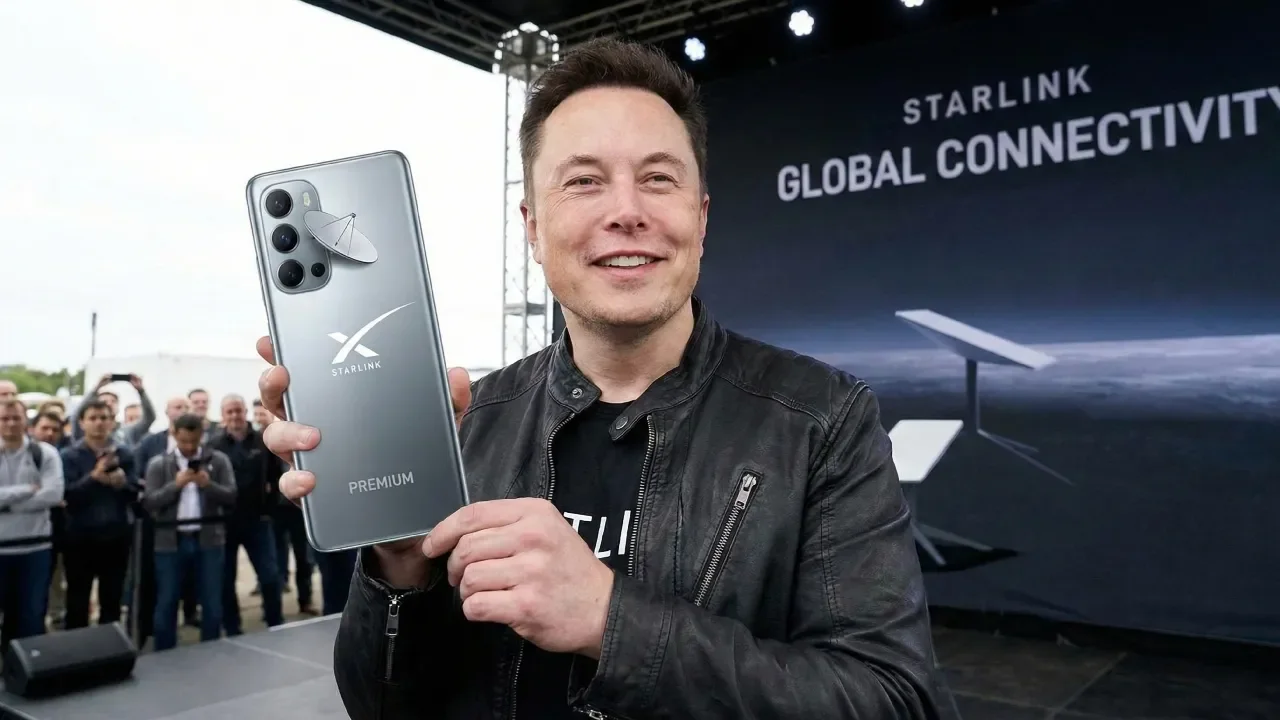
SpaceX AI Handset: Is Elon Musk Really Building an iPhone Killer?
There is a version of this story that starts with a leaked photo. This one does not. It starts with a denial. Elon Musk called the reports "utterly false" within hours of them landing, and yet, somehow, the story got bigger, not smaller. That tension right there... a company denying something while its stock drops seven percent on the same news is exactly why this SpaceX AI handset story is worth slowing down for.
Here is what we actually know. The Wall Street Journal reported that SpaceX showed investors and stakeholders a prototype handset like device, one designed to reshape how humans interact with artificial intelligence, shortly before the company's public market debut. Slimmer than an iPhone. A proprietary operating system. A Qualcomm chipset humming underneath. And, threaded through all of it, technology pulled from xAI, the AI company Musk folded into SpaceX back in February. Musk says none of this happened. The reporting says otherwise, and it keeps saying otherwise.
Why This Actually Matters
Think about who else is racing toward the same finish line. OpenAI has Jony Ive, Apple's former chief design officer, working on an AI device that Sam Altman has described as calmer, less demanding than a phone. If SpaceX is doing something similar, even in early prototype form, that changes the shape of the whole AI hardware race. It is no longer just software companies fighting over chatbots. It is companies with actual manufacturing muscle, Tesla's factories, SpaceX's supply chains, deciding they want a piece of the device you hold in your hand every single day.
And that matters to you, even if you never buy one of these things. Because when Apple, Google, OpenAI, and now possibly SpaceX are all building AI hardware, the phone in your pocket is going to change faster than it has in a decade. Understanding the SpaceX AI handset story now means you are not caught off guard later.
What It Really Is, Explained Simply
Picture your smartphone. Now imagine stripping away most of the apps and icons, and replacing that whole interface with one thing: a conversation. You talk, it listens, it acts. That is roughly the idea behind this new wave of AI devices, and reports suggest the SpaceX AI handset leans in that same direction, drawing on the kind of "everything app" concept Musk has floated before, something closer to China's WeChat than a traditional iPhone.
No, that comparison is not perfect let me rephrase. It is less "phone with an AI app" and more "AI system wearing the shape of a phone." Small difference. Big difference, actually, once you sit with it.
How It Works, Step by Step
Based on what has been reported so far, here is roughly how the pieces fit together.
- The hardware layer runs on a Qualcomm chipset, which is what handles the raw processing power on the device itself.
- The software layer is a proprietary operating system, meaning SpaceX built it from scratch rather than licensing Android or iOS.
- The intelligence layer comes from xAI, giving the device its actual reasoning and conversational ability.
- The interaction layer is the part still being figured out, how you would actually talk to it, touch it, or carry it.
Each layer depends on the one below it. Take away xAI and you just have a slim, oddly shaped phone. Take away the operating system and xAI has nowhere to live.
Real World Examples
Here is where it gets interesting. Analysts have pointed out that SpaceX, through Starlink Mobile, is already inching toward wireless service, positioning itself as something that could one day compete with Verizon or AT&T. Some have even suggested T-Mobile or AT&T could be acquisition targets down the line. A SpaceX AI handset paired with SpaceX's own network infrastructure would be a genuinely different animal than, say, a Rabbit R1 or Humane's AI pin, both of which struggled precisely because they had no network of their own to lean on.
Mistakes People Keep Making, and Why
The biggest one? Assuming a prototype equals a product. It does not. SpaceX itself reportedly told investors the design could still change, and there is no confirmed name, no release window, nothing close to a launch date. People see "Musk" and "AI device" in the same sentence and their brains fill in the rest. Understandable. Still worth resisting.
The second mistake is dismissing it entirely because Musk denied it. Companies deny things that later turn out to be true all the time, sometimes for competitive reasons, sometimes because the story genuinely got ahead of the facts. The honest answer here is: nobody outside SpaceX knows for certain yet.
Read More: Ram Temple Donation Fraud: How Scammers Are Exploiting Faith and What Devotees Need to Know
Pro Tips That Actually Help
If you are trying to actually track this story instead of just reacting to headlines, watch three things. First, Qualcomm's public statements, chip partnerships tend to leak details long before official launches. Second, any FCC filings under SpaceX or a related shell entity, hardware companies almost always have to register devices before they can legally ship them. Third, watch what happens to Starlink Mobile. If wireless expansion accelerates, that is a signal the AI hardware ambitions are real, not just an idea floated to test investor appetite.
Closing Thoughts
Maybe this device never leaves the prototype stage. Maybe it becomes the thing that finally makes Musk's "everything app" idea real. Both outcomes are plausible right now, and that is honestly the most interesting part. We are watching a moment where the story is still being written, where a denial and a leak are sitting in the same room, disagreeing with each other. Keep half an eye on it. Not the whole eye. Half is enough for now.
Read More: Twenty Rebel Trinamool Congress MPs to Merge with NCPI? The Political Buzz Raising Big Questions
Disclaimer: This article is based on information available across the web. Parchar Manch does not take responsibility for its complete accuracy, as the content could not be fully verified.
FAQs
Is the SpaceX AI handset confirmed to be real?
Not officially. The Wall Street Journal reported it citing people familiar with the matter, but Musk has publicly denied the reporting.
Does the device run Android or iOS?
No. It reportedly runs a proprietary operating system built specifically for it.
How is xAI involved?
xAI, which SpaceX absorbed in February, reportedly supplies the artificial intelligence technology inside the device.
When will it launch?
There is no confirmed launch date. The project is described as being in an early prototype stage where the design could still change.
Could this replace my smartphone?
Too early to say. If it follows the "everything app" concept Musk has mentioned before, it could function more like an AI-first companion device than a direct smartphone replacement.