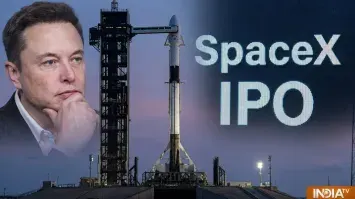
SpaceX IPO Surpasses Amazon in Market Value: What the $2.75 Trillion Milestone Really Means
Four days. That is all it took for SpaceX to surpass Amazon in market capitalization after the largest initial public offering in US history. The company that Elon Musk once privately estimated had only a 10 percent chance of surviving is now worth more than one of the most powerful retail and cloud computing empires ever built.
That is not a number you just absorb and move on from.
The SpaceX IPO: What Happened and How Fast It Moved
SpaceX went public on June 12, 2026, debuting on the Nasdaq at an IPO price of $135 per share. The offering raised $75 billion, shattering the previous record held by Saudi Aramco's $29 billion IPO in 2019. On day one, shares closed at roughly $161, a gain of nearly 20 percent, pushing the company's market capitalization past $2 trillion on its first trading day alone.
By June 16, just four days later, shares were trading above $215, more than 59 percent above the IPO price. At that level, SpaceX's market cap reached approximately $2.82 trillion, surpassing Amazon's valuation of $2.66 trillion. SpaceX became the fifth-largest public company in the United States by market value, trailing only the top three companies that each exceed $4 trillion.
Why SpaceX Surpassing Amazon Matters Beyond the Numbers
Amazon is not a small company struggling for relevance. It runs the world's dominant cloud computing platform in AWS, the largest e-commerce marketplace in the West, a growing logistics network, and an entertainment arm. Its market cap reflects decades of compounding revenue and profit growth.
SpaceX, by comparison, reported revenue of $18.67 billion in its last financial year and posted a net loss of $4.94 billion, partly after its merger with xAI, Elon Musk's AI company behind the Grok chatbot. A company with losses trading at roughly 107 times its revenue, while Amazon trades at a fraction of that multiple, is not a story about fundamentals. It is a story about expectation, ambition, and the kind of investor appetite that defies conventional financial logic.
One senior analyst at Swissquote Bank was blunt about it: "We can say with certainty that this valuation makes absolutely no sense today. People are buying SpaceX in the expectation that others will buy too and push the price higher. That is speculation."
That is probably true. And yet the momentum is real.
What SpaceX Actually Does, and Why Investors Believe in the Long Game
SpaceX operates in three distinct businesses that investors are pricing collectively. The first is its launch business, the original rocket company that disrupted the aerospace industry with reusable rockets through the Falcon 9 and Starship programs. The second is Starlink, a satellite internet constellation with over 10,000 active satellites, providing broadband connectivity globally and already generating substantial subscription revenue. The third, and newest, is the xAI merger, completed in February 2026, which brought the Grok AI platform and an emerging AI coding ambition into the SpaceX corporate structure.
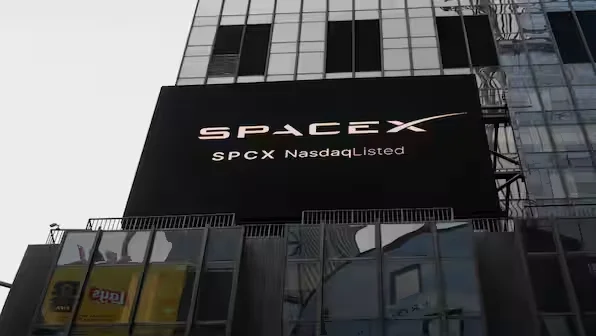
SpaceX has also announced the acquisition of Cursor, an AI coding tool, in an all-stock transaction, with the stated goal of "building the world's most useful AI models." The deal is expected to close in 2026.
So what investors are buying is not just rockets. They are buying satellites, broadband access, AI infrastructure, and the singular belief that Musk's long-term vision of making humanity multi-planetary has commercial and strategic value that has not yet been fully priced in anywhere.
Elon Musk Becomes the World's First Trillionaire
A consequence of the SpaceX IPO surge that received significant attention: Elon Musk crossed the trillion-dollar net worth threshold on paper following the listing, becoming the first individual in history to do so. His majority stake in SpaceX, combined with his Tesla and X holdings, placed his combined paper wealth at that level as shares climbed through the post-IPO days.
Closing Thought
The SpaceX market cap passing Amazon is the kind of event that forces a recalibration of what markets actually price. Whether the current valuation is justified by SpaceX's long-term revenue potential in satellite internet, launch services, and AI, or whether it reflects a speculative surge that will correct sharply, is the question serious investors are sitting with right now. What is not in question is that something has shifted. Space is no longer a government project or an adventure for billionaires. It is now a listed asset class, with all the volatility and irrational exuberance that comes with that.
Read More: The Hidden Walking Rule Nobody Knew Existed: Why Humans Naturally Turn Counterclockwise
Disclaimer: This article is based on information available across the web. Parchar Manch does not take responsibility for its complete accuracy, as the content could not be fully verified.
FAQs
When did SpaceX go public and at what price?
SpaceX debuted on the Nasdaq on June 12, 2026, at an IPO price of $135 per share, raising $75 billion in the largest IPO in US history.
How did SpaceX surpass Amazon in market cap?
Shares surged more than 59 percent in four days post-IPO, reaching above $215 per share. This pushed SpaceX's market capitalization to approximately $2.82 trillion, above Amazon's $2.66 trillion.
What is SpaceX's current revenue and is it profitable?
SpaceX reported revenue of $18.67 billion in its last financial year but posted a net loss of $4.94 billion, partly due to its merger with xAI.
Why is SpaceX valued so much higher than its revenue suggests?
Markets are pricing SpaceX on future potential across Starlink satellite internet, AI through xAI and the Cursor acquisition, and its dominant position in commercial space launch, not current earnings.
Is SpaceX's valuation considered rational by analysts?
Not universally. Some analysts have described the valuation as speculative, with buyers expecting further price gains rather than current fundamentals supporting the price. Others believe Starlink's long-term revenue potential justifies a premium.
Did Elon Musk become a trillionaire after the SpaceX IPO?
Yes. Following the IPO and share surge, Musk's combined net worth crossed the trillion-dollar mark on paper, making him the first individual in history to reach that threshold.