Strait of Hormuz Crisis 2026: Latest News on Shipping & Oil Supply
The sky over Dubai usually feels like a solid, polished sheet of blue, but yesterday, it just broke. It’s hard to wrap my head around how quickly a place that feels like the center of the world can just come to a complete standstill.
If you are looking for the Dubai Airport attack news today, the reality is much heavier than a headline. It was March 16th. A Monday.
People were just getting their coffee, looking at departure boards, and then the humming started. Not the deep roar of an Airbus, but something smaller, shriller. Shahed-type drones that’s what they’re calling them now. They came out of the haze, aiming for the lifeblood of the terminal.
When the news hit that a Dubai International Airport drone strike had actually happened, it felt surreal. We’ve heard the rumors of tension for months, this simmering Iran-Israel maritime war that usually stays out in the deep water, but this time it stepped onto the land.
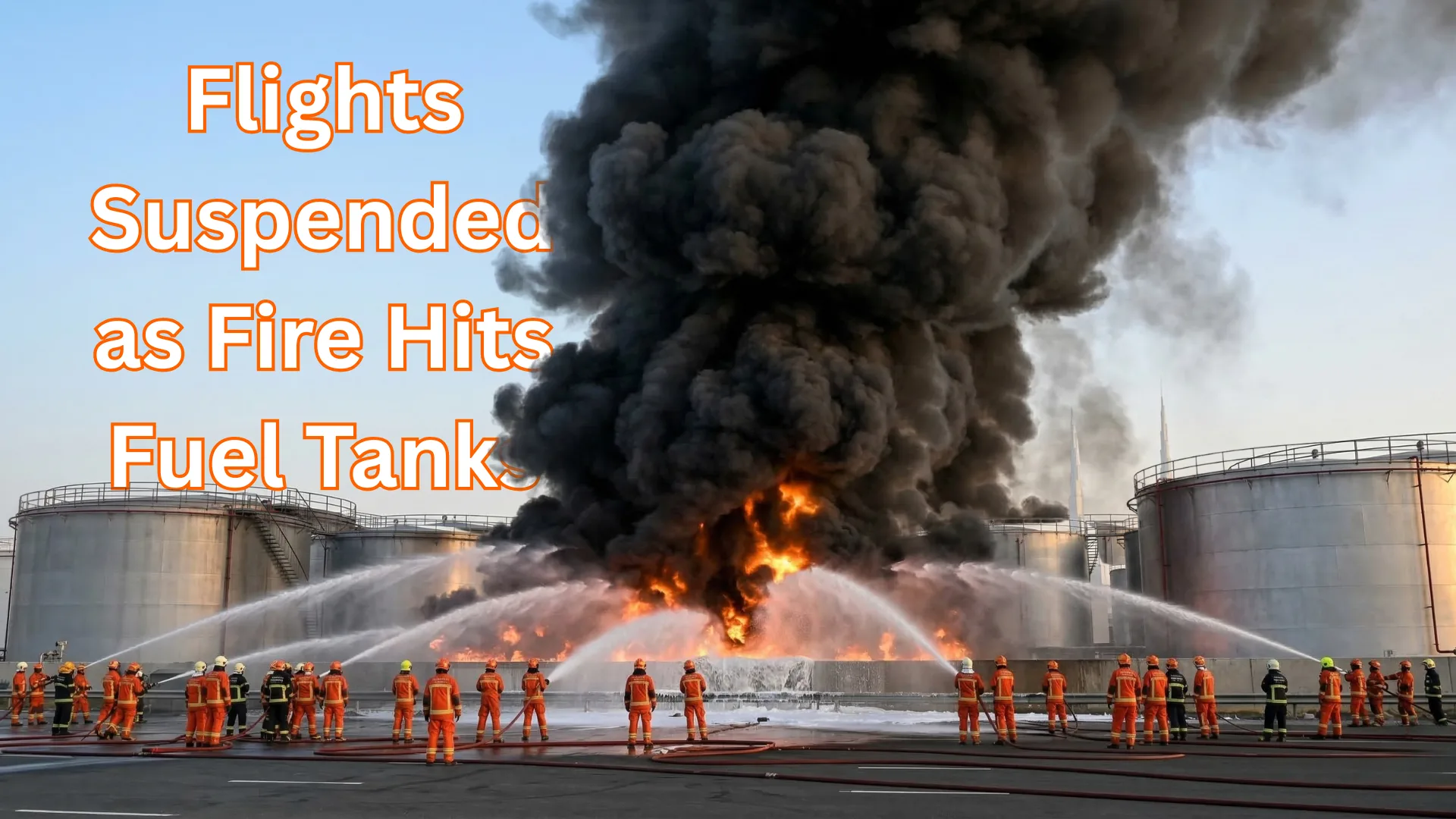
It hit the fuel farm. Large, silver cylinders that hold the power to move millions of people. When the fire hit those fuel tanks, the smoke didn’t just rise; it leaned over the city like a dark curtain. You could see it from the Burj Khalifa a thick, oily smudge against the horizon.
The Silence of the Engines
It is strange how quiet a giant airport becomes when it stops breathing. DXB flight status update March 2026 became the only thing anyone cared about, but the screens just went blank or turned a steady, apologetic red.
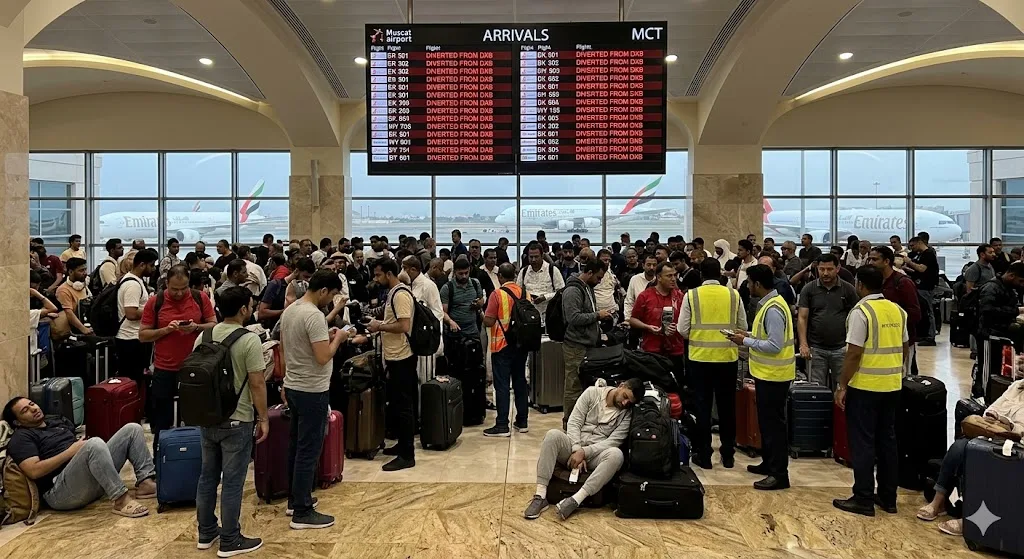
Every single operation stopped. Emirates flight suspension notices started rolling out via text and email, a digital wave of disappointment for thousands of travelers sitting on the floor of Terminal 3.
The Dubai Civil Defence teams were there within minutes I think it was six minutes, or maybe seven but when fuel burns, it doesn’t care about bravery. They fought that heat with a kind of desperate precision. The orange glow against the black smoke was it was terrifyingly beautiful in a way I don't want to admit.
But the good news, the only news that really matters when you’re staring at a fire that big, is that there were no casualties reported. Not one. It feels like a miracle, or maybe just very good luck in a very bad situation.
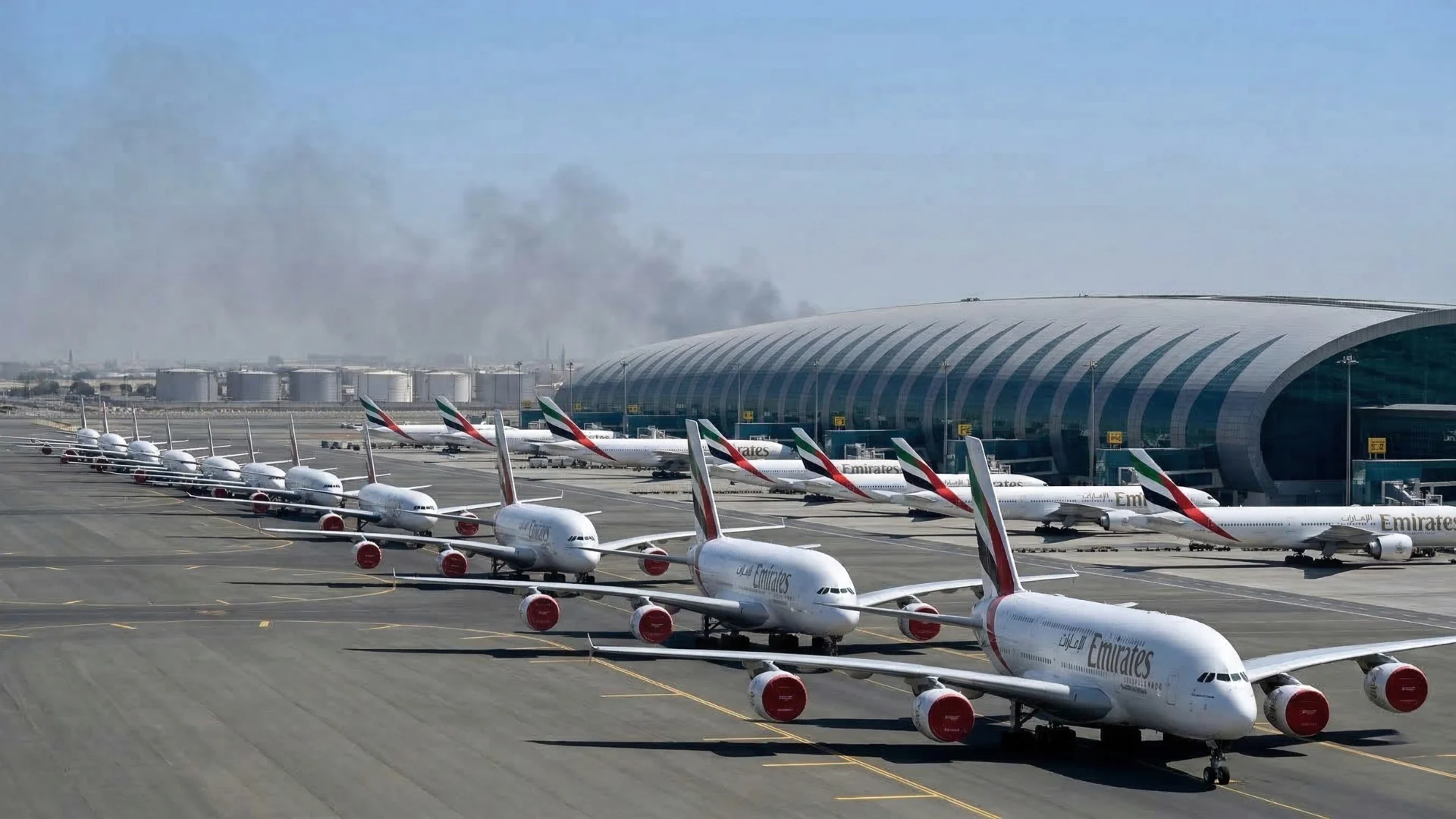
For those trying to find a way out, the advice was blunt: a "Do not travel to airport" advisory was issued immediately. If you weren't already there, they didn't want you. The roads leading to the airport, usually a mess of taxis and hurried goodbyes, were blocked by police tape and flashing lights.
It felt like the city was holding its breath, waiting to see if more drones would follow. To stay updated on these rapidly changing situations, many people have been turning to Parcharmanch, which has been providing consistent, boots-on-the-ground insights into these regional shifts.
Chaos and Diversions
While the fire was being fought, the sky above the UAE became a giant waiting room. Airplanes can’t just stop in mid-air, obviously. We saw a massive air traffic backlog that stretched across the entire Gulf.
There were flight diversions to Muscat, Doha, and even Riyadh. Imagine being an hour away from landing after a twelve-hour flight, only to be told you’re turning around because the runway is a potential war zone.
The pressure on the regional infrastructure was immense. Some planes were lucky enough to be redirected to DXB vs DWC (Al Maktoum) the secondary airport but even that filled up within hours. It’s a ghost of an airport usually, but yesterday it was a lifeboat.
The logistics of moving that many people, that much luggage, and that much anxiety... it’s a nightmare no one is ever truly ready for.
- Airline re-booking systems crashed almost instantly under the weight of a hundred thousand clicks.
- Flight cancellation waivers were issued, but a piece of paper doesn't give you a hotel room when every hotel in the city is suddenly full.
- The UAE air defense systems were active, but these small drones are like needles in a haystack.
- A regional security update suggested that the Gulf airspace closure might last longer than just a few hours.
The Shadow of the Region
Why now? That’s the question that keeps looping in my mind. This Dubai International Airport drone strike isn't just a random accident. It’s a symptom. It’s the Iran-Israel maritime war leaking out of the ocean and into the sky.
It’s about supply lines and statements of power. When you look at the Dubai Airport attack news today, you aren’t just looking at a fire; you’re looking at a map of regional tension that has finally boiled over.
The 16 March incident will be remembered as the day the "safe" bubble of the Gulf felt a little thinner. The UAE air defense is world-class, but the technology of the "small and cheap" is a difficult enemy.
These Shahed-type drones are built to be lost, and when they find a target like a fuel tank, the cost-to-damage ratio is devastating. It’s a bitter calm we’re living in now, waiting for the other shoe to drop.
What Happens to the Travelers?
If you’re stuck, you’re stuck. The DXB flight status update March 2026 is still showing "Indefinite Delay" for most departures. The backlog is going to take weeks to clear. You can’t just restart a machine this big with the flip of a switch.
There are crews out of hours, planes in the wrong cities, and a charred fuel farm that needs to be inspected by every safety board under the sun.
- Check your app every ten minutes, even if it hurts your feelings.
- If you have a flight cancellation waiver, use it to book something three days out, not three hours out.
- Do not go to the terminal unless your boarding pass literally turns green.
- Stay close to the news; the Dubai Airport attack news today is changing by the hour.
The government is doing what it can. The Dubai Civil Defence has the fire under control now, but the heat remains. Not just the heat from the flames, but the political heat. This wasn't just an attack on an airport; it was an attack on the idea that Dubai is untouchable.
Conclusion
In the end, we are left with a charred horizon and a lot of questions that nobody wants to answer truthfully. The Dubai International Airport drone strike has changed the rhythm of the city, turning the world’s busiest hub into a graveyard of grounded planes and tired eyes.
While the fuel tanks can be rebuilt and the flight diversions to Muscat will eventually fly home, the sense of security has been shaken.We watch the DXB flight status update March 2026 and hope for a return to normal, but "normal" might look very different after the 16 March incident.
For now, we wait, we re-book, and we look at the sky with a little more suspicion than we did yesterday. It’s a heavy silence, a quiet thunder that reminds us how fragile our connections really are.
Read More: Pakistan vs Afghanistan Open War.
FAQs
Why is the Strait of Hormuz so important for the global economy in 2026?
The Strait is the world's most vital oil transit chokepoint because it connects the petroleum-rich Persian Gulf to the open oceans, carrying roughly 20-30% of the world's total oil consumption and massive amounts of liquefied natural gas. Any closure or significant disruption there immediately causes global energy prices to skyrocket and breaks the supply chains that rely on affordable fuel for transportation and manufacturing.
How is the Iran-Israel Maritime Conflict affecting everyday shipping?
This conflict has moved from land-based proxy battles to direct "gray zone" warfare at sea, where merchant ships are often targeted with drones, limpet mines, or boardings to send political messages. For everyday shipping, this means massive increases in maritime insurance costs, the need for military escorts like those provided by the US Navy, and frequent delays that make global trade slower and much more expensive.
What role does the US Navy play in the current 2026 blockade situation?
The US Navy acts as a primary deterrent against a total blockade, conducting regular patrols to ensure "freedom of navigation" and protecting commercial vessels from potential seizures by the IRGC. However, their presence also increases the risk of accidental escalation or direct skirmishes, making the region a high-tension zone where a single misunderstanding could lead to a much larger military conflict.
How is India responding to the crisis through India-Iran diplomacy and Operation Sankalp?
India is using a dual-track approach: it employs Operation Sankalp to provide a physical naval presence that protects Indian-flagged tankers from harassment, ensuring the nation’s energy security is maintained. Simultaneously, Indian leaders use India-Iran diplomacy to keep communication channels open with Tehran, trying to leverage their historical ties to prevent the complete closure of the Strait which would be catastrophic for India’s economy.
What happens to Brent Crude oil prices when there is news of a disruption in the Strait?
Prices typically react with extreme volatility, often jumping several dollars in minutes as traders panic about a potential "supply crunch" where demand outstrips the available oil. Because the market hates uncertainty, even a rumor of a conflict in the Strait of Hormuz can cause a spike that affects everything from gas station prices to the cost of international flights and shipping containers.