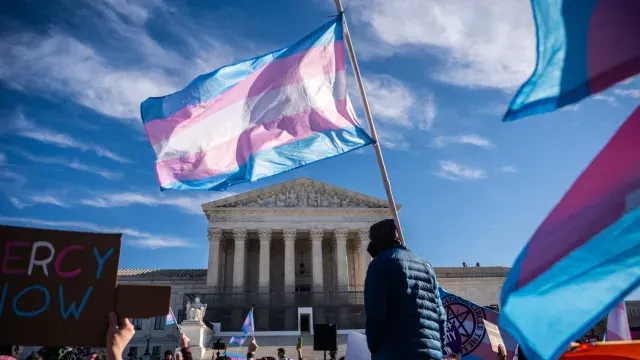
Supreme Court Transgender Athletes Ruling: What The 6-3 Decision Actually Means For Girls' Sports
Somewhere in West Virginia, a middle schooler who's been running track since third grade just found out the highest court in the country ruled against her staying on the team. That's not a headline exaggeration. That's literally what happened on June 30, 2026, when the Supreme Court transgender athletes ruling came down, and it's worth sitting with that for a second before we get into the legal mechanics.
Why This Ruling Actually Matters, Beyond The Politics
This isn't just a culture war scoreboard update. It's a decision that directly shapes whether a transgender teenager can try out for her school's track team, or whether a college student can compete in club soccer instead of varsity. Real schedules, real friendships, real kids. That's what's underneath all the legal language.
What The Case Was Actually About
The Supreme Court combined two cases, West Virginia v. B.P.J. and Little v. Hecox, both challenging state laws that bar transgender girls and women from competing on female sports teams. West Virginia's Save Women's Sports Act, passed in 2022, kept a middle schooler named Becky Pepper-Jackson off her girls' track team. Idaho's Fairness in Women's Sports Act, the first law of its kind back in 2020, blocked Lindsay Hecox, a Boise State University student, from trying out for the women's track and cross country teams.
Think of it like two separate lawsuits asking the exact same underlying question: can a state legally say girls' sports teams are only for biological girls, even if that excludes transgender athletes who've socially and medically transitioned?
Read More: Awarapan 2 Teaser Out: Emraan Hashmi Returns As Shivam Pandit After 19 Long Years
How The Justices Actually Ruled
The court split 6-3 along the usual ideological lines on the big constitutional question. Justice Brett Kavanaugh wrote the majority opinion, reasoning that the laws classify based on biological sex rather than gender identity, and that this kind of classification survives constitutional review. His exact words carried weight: states may determine eligibility for women's and girls' sports based on biological sex, and neither the Constitution nor Title IX requires an overhaul of women's and girls' sports nationwide.
Here's the twist though, and it's an important one. On a separate question, whether Title IX, the federal law banning sex discrimination in schools, prohibits these bans, the court ruled unanimously against the challengers. Even the liberal justices agreed on that narrower point. Justice Sonia Sotomayor, joined by Kagan and Jackson, dissented sharply on the constitutional piece, arguing the majority wrongly closed the door on transgender athletes even bringing equal protection claims at all.
Read More: Mountain Lions in California Preserve: How One Predator Quietly Rewired an Entire Ecosystem
What This Means For States Across The Country
Roughly half of US states already have similar bans on the books. This ruling means those laws are almost certainly safe from further constitutional challenge, at least on the grounds argued here.
- States that already passed bans like Idaho and West Virginia's can keep enforcing them without fear of a Title IX lawsuit succeeding.
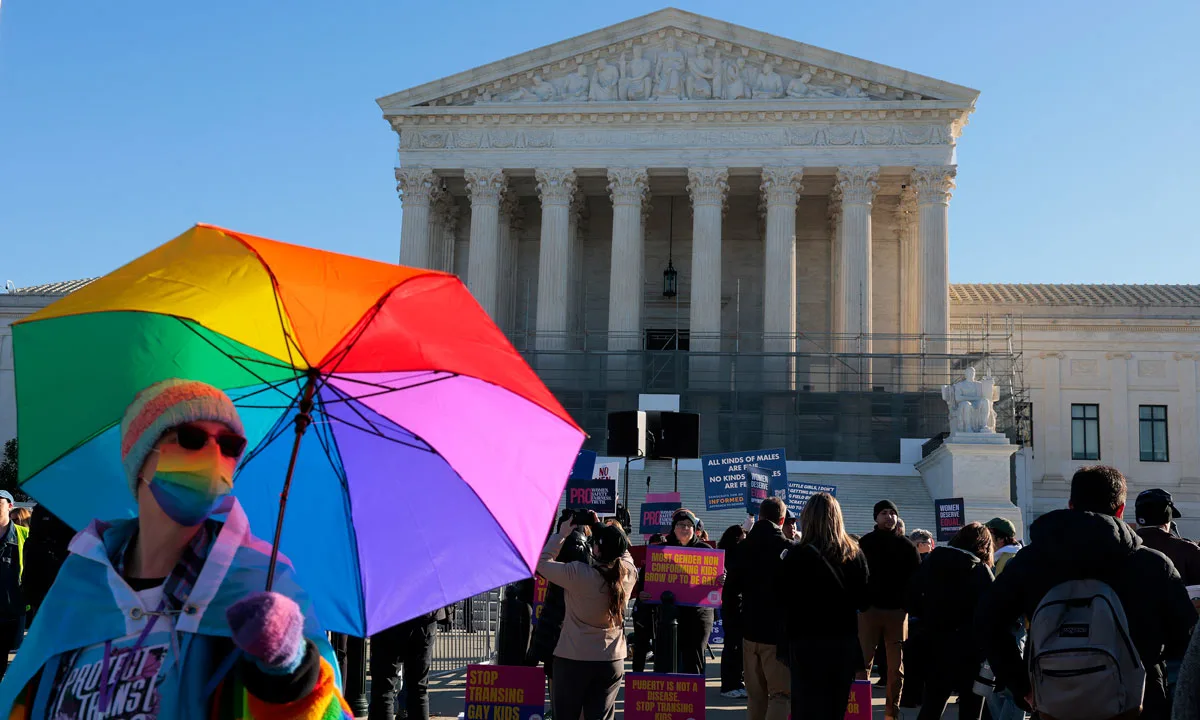
- States without such laws remain free to pass them, and some conservative lawmakers are already pushing for a federal version, including a proposed national bill named after activist Riley Gaines.
- Questions about younger kids, grammar school sports, and recreational or club leagues remain unresolved. This ruling focused narrowly on varsity level competition.
Mistakes People Keep Making In This Debate
A common mistake is assuming this ruling settles everything about transgender rights broadly. It doesn't. Legal analysts, including Georgetown's Steve Vladeck, have pointed out the court applied a higher level of scrutiny than expected, meaning other forms of alleged discrimination against transgender individuals, in areas like bathrooms or military service, could still be argued differently in future cases.
Pro Tip For Understanding Where This Goes Next
Watch state legislatures more than Congress right now. Federal bills like the Riley Gaines Act face a tougher path, but statehouses in the roughly two dozen states without existing bans are the more immediate battleground following this ruling.
A Quiet Closing Thought
Kavanaugh ended his 29 page opinion on an oddly gentle note, acknowledging that most of the teenagers and young adults caught in these disputes deserve respect regardless of outcome. That's a strange thing to sit next to a ruling that closes doors for some of them. Both things can be true at once, and maybe that discomfort is exactly where this debate stays for a while.
Read More: Akanksha Chamola Confirms Split From Gaurav Khanna: What Really Happened on Lock Up 2
Disclaimer: This article is based on information available across the web. Parchar Manch does not take responsibility for its complete accuracy, as the content could not be fully verified.
FAQs
What did the Supreme Court actually decide?
The court ruled 6-3 that state laws barring transgender athletes from girls' and women's sports teams do not violate the Constitution's equal protection clause, and unanimously that they don't violate Title IX either.
Which two cases were involved?
West Virginia v. B.P.J. and Little v. Hecox, involving a West Virginia middle schooler and an Idaho college student respectively.
Does this ruling ban transgender athletes nationwide?
No. It upholds existing state bans and allows other states to pass similar laws, but it doesn't create a nationwide federal ban.
Are younger children affected by this ruling?
The decision focused on school and college level varsity sports. Questions about grammar school and recreational leagues remain unresolved.
Can this decision still be challenged in the future?
The specific constitutional and Title IX arguments used here are largely settled now, but legal experts say other forms of transgender discrimination could still be challenged under different legal theories.