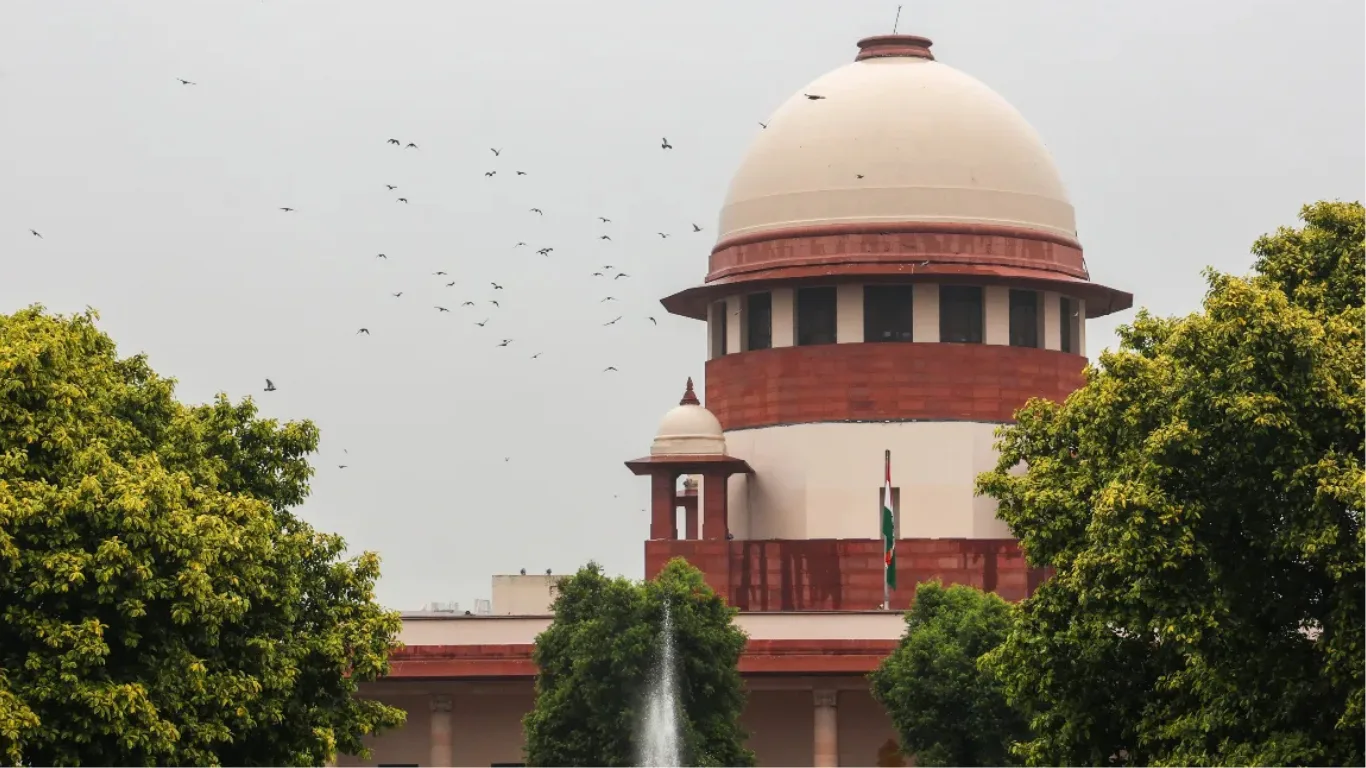
Supreme Court's 3-Month Deadline for High Court Judgments: What It Means and Why Every Indian Should Care
A judgment that has been reserved but never delivered is one of the quietest cruelties of India's justice system. Families wait. Accused persons sit in uncertainty. Victims live without closure. The legal process grinds forward in the courtroom and then simply stops at the finish line.
The Supreme Court of India has now stepped in to fix exactly that. Invoking its extraordinary power under Article 142 of the Constitution, the Supreme Court has issued a landmark directive to all High Courts in India: pronounce reserved judgments within three months. And for bail orders, the deadline is sharper still. One day.
Why This Supreme Court Judgment on High Court Delays Is a Defining Moment
The problem of judicial pendency in India is not new. Millions of cases sit undecided across courts at various levels. But there is a specific kind of delay that this ruling targets: cases where hearings are done, arguments are heard, and the judge reserves the matter for a final verdict. That verdict then sometimes never comes, or comes years later.
This is not a hypothetical scenario. It happens regularly. A reserved judgment means both parties have already presented everything. The delay at that stage is not about evidence or hearings. It is about output. And the Supreme Court has decided that output must have a deadline.
Read More: Your Chrome Browser Has Critical Security Holes , Here Is What Google Just Did About It
What Article 142 Is and Why Its Use Here Matters
Article 142 is often called the "complete justice" power of the Supreme Court. It allows the court to pass any order necessary to do complete justice in any matter before it, even if no specific law covers that situation. It is used sparingly, which is what makes its use here significant.
By invoking Article 142, the Supreme Court is not merely advising High Courts. It is issuing enforceable directions. The force behind this ruling is constitutional, not merely administrative.
The Specific Directions Issued to High Courts
The Supreme Court's directions are pointed and practical.
High Courts must pronounce judgments within three months of reserving a verdict. This applies nationwide and covers all categories of cases.
For bail matters, the timeline is far more urgent. Bail orders must be pronounced within one day of being reserved. This is not a suggestion. It is a judicial mandate, and it recognises something important: a person's liberty cannot sit in an administrative queue.
The Supreme Court also noted that no unfixed bail cases should remain pending at the principal seat of any High Court.
Read More: Sundar Pichai Just Redefined Google Search, and It Was Over a Pint
What Judicial Pendency Looks Like in Real Life
Consider a case where someone has been arrested. Their bail application is heard in a High Court, arguments are made, and the judge reserves the order. Under the old unregulated pattern, that order could come days, weeks, or even longer later. The accused remains in custody during that wait.
The Supreme Court's direction changes this. Once a bail order is reserved, it must come the next day.

For civil matters, property disputes, service cases, and criminal appeals, the three-month window provides a firm outer limit that did not exist in any binding form before.
Read More: Cockroach Janta Party Founder Abhijeet Dipke Faces Caste Attacks After Revealing Dalit Identity on X
What Happens When Courts Do Not Comply
The Supreme Court, invoking Article 142, has set these as binding judicial directions. Non-compliance by a High Court is not simply an administrative oversight. It becomes a matter of constitutional concern. High Court Chief Justices are expected to enforce these timelines within their respective jurisdictions and ensure monitoring mechanisms are in place.
IIT experts, in the broader context of judicial reform, have increasingly been consulted in designing court management systems. The expectation is that digital tools and administrative reforms will support these timelines rather than rely on goodwill alone.
Why This Ruling Matters Beyond the Courtroom
Justice delayed is a phrase India knows well. This ruling gives that phrase a legal counterpoint. For anyone with a case in a High Court, this direction means their wait for a verdict after final arguments should now have a known outer boundary.
The three-month rule will be tested. But its existence changes the conversation entirely.
Read More: Google's REPLIQA Program: How Quantum AI and Life Sciences Are About to Change Medicine Forever
Disclaimer: This article is based on information available across the web. Parchar Manch does not take responsibility for its complete accuracy, as the content could not be fully verified.
FAQs
What does it mean when a judgment is "reserved"?
When a court says it is "reserving" a judgment, it means hearings are over, arguments are done, and the judge will deliver the decision at a later date. Before this ruling, there was no fixed deadline for when that decision had to come.
What is Article 142 of the Indian Constitution?
Article 142 gives the Supreme Court the power to pass any order necessary to do complete justice in a case before it, even beyond what existing laws provide. It is a special constitutional power used in significant situations.
Does this ruling apply to all High Courts in India?
Yes. The Supreme Court's direction applies nationwide to all High Courts and is binding on all of them under constitutional authority.
What happens to bail applications under this new directive?
Bail orders that are reserved must be pronounced within one day. This is to prevent accused persons from remaining in custody while waiting for a decision that has already been argued and heard.
Will this ruling actually be enforced?
The Supreme Court has invoked Article 142, which makes these directions constitutionally enforceable. High Courts are expected to monitor compliance. It is now a matter of institutional accountability, not voluntary compliance.
Can a litigant do anything if their case's reserved judgment is not delivered within three months?
A litigant can approach the Supreme Court if a High Court is in default of these directions. The invocation of Article 142 means there is constitutional backing for any follow-up action.