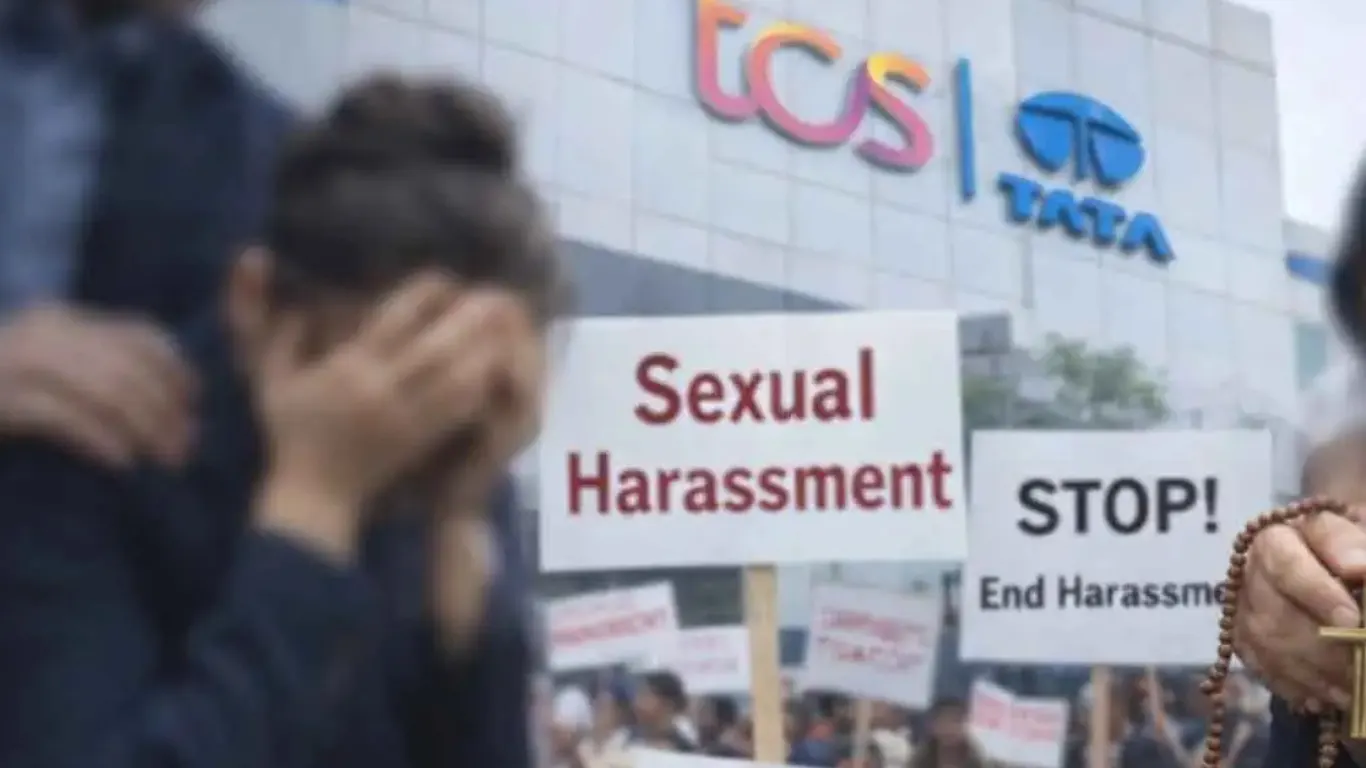
TCS Nashik Scandal Explained: Sexual Harassment, Forced Conversion Claims, SIT Probe and What It Means for Workplace Safety in India
Something happened inside a BPO office in Nashik that , when it finally came out , shocked the country. Not just because of who was involved, or the scale of it, but because of how long it allegedly went on. And how many people knew, or should have known, and did nothing.
This is the TCS Nashik harassment and forced religious conversion case , a story that began with one woman going to the police, and has since grown into a full-blown Special Investigation Team (SIT) probe, nine FIRs, multiple arrests, and a national conversation about what workplaces in India actually owe their employees.
What Is the TCS Nashik Case , And Why Does It Matter?
Tata Consultancy Services (TCS), one of India's largest and most respected IT companies, is at the centre of a deeply disturbing workplace scandal at its BPO unit in Nashik, Maharashtra. The case began with a complaint from a single woman employee and has expanded into at least nine FIRs, with multiple victims coming forward with similar allegations involving several staff members, including HR officials.
The allegations are serious , sexual harassment, mental abuse, workplace coercion, and attempts to pressure employees into religious conversion. These are not vague claims. They are backed, according to investigators, by evidence including CCTV footage, internal communications, and undercover police operations.
The reason this case matters beyond just the company or the city is simple: it raises questions that every working person in India should be asking. Do POSH Act protections actually work? What happens when HR , the very body meant to protect you , is allegedly part of the problem? And who do you go to when your own complaint gets buried?
Why Did This Happen , The Background
Authorities believe the accused may have worked together as a coordinated group
and targeted financially vulnerable recruits, including those facing family or economic difficulties. That detail matters. It wasn't random. If investigators are right, the people allegedly doing this knew exactly who to target , people who needed their jobs, people who couldn't easily walk away.
Police officials say some victims initially hesitated to report the alleged harassment due to fear of losing their jobs or facing retaliation at the workplace. That fear is real, and it is not unique to Nashik. It's a fear felt by junior employees across industries , that speaking up will cost them more than staying silent.
The allegations reportedly span a period from July 2022 to March 2026, which means this wasn't a single incident. The charges range from inappropriate touching, stalking and obscene remarks to more serious accusations of sexual exploitation, coercion, and even forced religious conversion. Nearly four years of alleged misconduct. Inside a major tech company. With an HR department in place.
For more context, you can view the related Instagram post here
How the Case Came to Light , The Investigation
In a significant development, the case was partly uncovered through a covert police operation. Acting on a tip-off regarding unusual religious practices of an employee, police deployed constables, including women officers, disguised as housekeeping staff inside the office. The undercover operation, conducted over nearly two weeks, reportedly revealed patterns of harassment, coercion, and attempts to influence employees' religious practices. Based on these findings, the first FIR was registered at the Deolali police station in March.
After that first FIR, more women came forward. Then more. Eight women employees at TCS Nashik BPO came forward with allegations of sexual harassment, mental abuse, and attempts to force religious conversion. The complaints led to the formation of a Special Investigation Team (SIT), with police registering multiple FIRs and arresting seven accused.
The SIT then began digging into digital evidence. Police found that Ashwini Chainani, the arrested AGM, was in contact with the prime accused, Tausif Atar, on at least 38 occasions over two years and maintained regular communication with other accused individuals, including Danish Shaikh and Raza Memon. The SIT is currently analysing 78 suspicious emails received through official company servers.
The scale of the digital trail alone , 78 suspicious emails, call records, CCTV , suggests investigators are dealing with something far more organised than spontaneous misconduct.
The HR Failure , The Most Alarming Part
If there is one element in the TCS Nashik case that cuts deepest, it is this: the HR department, the very mechanism put in place to protect employees, allegedly became part of the problem.
The arrested official, an Assistant General Manager (AGM) named Ashwini Chainani, was part of the company's Internal Committee under the Prevention of Sexual Harassment (POSH) Act. She has been accused of abetting sexual harassment by allegedly ignoring repeated complaints made by a female employee against two colleagues. She was arrested by the SIT from her Pune residence on
April 10 and remanded to police custody.
Read More: Why Iran and Israel are at War: 2026 Conflict & Operation Epic Fury Explained

According to the police, despite being part of the POSH Committee, the HR manager allegedly asked victims to drop the matter and failed to take appropriate action.
This is not just a corporate failure. This is a structural one. The POSH Act was passed in 2013 specifically to create internal accountability. When the person sitting on that committee is herself allegedly part of the cover-up, the entire mechanism collapses.
Meanwhile, Nida Khan, the company's HR manager, continues to remain absconding. Police are reportedly making active efforts to trace her.
A Real Example , What the Victims Allegedly Experienced
The accounts emerging from the TCS Nashik BPO case are detailed and specific. The alleged incidents involve repeated sexual harassment, inappropriate remarks, coercive behaviour and attempts to pressure employees regarding religious practices. Complainants alleged they were pressured into romantic relationships or encouraged to alter aspects of their lifestyle and beliefs.
One case involves an accused named Danish Shaikh, who allegedly entered into a relationship with a woman colleague on the false promise of marriage.
There were also public demonstrations. A 'Ranragini Jan Akrosh' bike rally was held in Nashik, where participants raised concerns over the reported incidents. The TCS Nashik controversy had moved from the courtroom into the streets.
Politically, it escalated fast. Allegations of forced religious conversion and sexual exploitation at the Nashik branch of TCS triggered a major political controversy in Maharashtra, with leaders across party lines calling for a thorough investigation. Shiv Sena spokesperson Sanjay Nirupam described the allegations as "serious and alarming."
TCS Response , What the Company Said and Did
To its credit, TCS moved quickly , at least publicly. A TCS spokesperson said: "TCS has a long-standing zero-tolerance policy towards harassment and coercion of any form. We have always ensured the highest standards of safety and well-being of our employees at the workplace. As soon as we were made aware of the matter in
Nashik, we took swift action. The employees being investigated have been suspended pending an enquiry. We are cooperating with the local law enforcement authorities."
Tata Sons Chairman N Chandrasekaran said the matter is being treated "with the utmost seriousness," calling the allegations "gravely concerning and anguishing." He added that a detailed internal probe is underway under the leadership of TCS COO
Aarthi Subramanian to establish accountability, with strict action promised against those found guilty.
TCS directed its Nashik staff to shift to remote work, citing employee safety and convenience. Sources told ANI the move was purely precautionary, aimed at ensuring safety while investigations continue.
Read More: Why Going to the Movies Still Matters for Gen Z in the TikTok Era
Whether this response is sufficient , or whether it came too late, given that the alleged conduct reportedly began in 2022 , is a question the investigation will have to answer.
The Mistakes That Allowed This to Go On
There are several layers of failure visible in this case, and they matter because the same failures exist in organisations far beyond TCS Nashik.
- Complaint suppression: Victims say earlier complaints were dismissed or discouraged. Police say some victims initially hesitated to report due to fear of losing their jobs or facing retaliation. When organisations create cultures of silence, misconduct thrives.
- POSH committee compromise: A committee member allegedly being part of the problem represents the single worst outcome possible under the POSH framework. The law assumes internal committees will act in good faith. That assumption clearly cannot always be trusted.
- Targeting of vulnerable employees: Authorities believe the accused may have targeted financially vulnerable recruits, including those facing family or economic difficulties. This speaks to a predatory awareness of power dynamics , and an organisation that perhaps did not protect its most junior, most financially pressured workers.
- Delayed escalation: The allegations span nearly four years. That gap alone , between the first alleged incident and the first FIR , tells a story about how long systematic harassment can persist when internal mechanisms fail.
Pro Tips , What Every Employee and Organisation Should Know
If you are an employee:
- Know your rights under the POSH Act 2013. You have the legal right to file a complaint with the Internal Committee (IC) within three months of an incident.
- If the IC fails you or is itself compromised, you can approach the Local Complaints Committee (LCC) set up by the district officer , this exists precisely for cases where the internal mechanism fails.
- Document everything , messages, emails, dates, witnesses. Digital evidence, as this case shows, is often the backbone of a successful investigation.
- You are protected from retaliation for making a complaint. Threats of job loss in response to a harassment complaint are themselves illegal.
If you are an organisation:
- Your Internal Committee must be independent, trained, and genuinely empowered to act. A committee member with ties to the accused is worse than having no committee at all.
- Annual POSH compliance reports are mandatory. Treat them seriously , not as paperwork, but as accountability tools.
- Build a culture where junior employees, especially those in financially precarious positions, feel safe to speak. That is not optional. It is the entire point.
Conclusion , Workplace Safety Is Not a Policy Document
The TCS Nashik case is not just a corporate scandal. It is a mirror. It reflects what happens when HR systems become shields for wrongdoers instead of protections for victims. When policies exist on paper but not in practice. When the most vulnerable employees have nowhere to turn.
The formation of an SIT, the arrest of seven accused, including a senior HR official, the analysis of 78 suspicious emails and nearly four years of alleged misconduct , all of these point to a failure that runs deeper than any single bad actor.
Workplace harassment in India's IT sector is not new. What is new, perhaps, is the willingness of victims to come forward, the intervention of law enforcement, and the national attention that is forcing companies to do more than issue statements.
The controversy has triggered broader discussions within India's technology sector about workplace safety and accountability. Industry body NASSCOM has also emphasised that the IT sector operates under strict governance frameworks. But frameworks only work if the people within them take them seriously.
Every company , not just TCS, not just in Nashik , needs to ask itself honestly: if a woman in our office is being harassed today, does she have a real path to safety? Or just a policy document?
Read More: Shaheed Diwas : The Story of Bhagat Singh, Sukhdev & Rajguru
FAQs
What is the TCS Nashik case about?
It involves allegations of sexual harassment, mental abuse, and attempts at forced religious conversion against women employees at TCS's BPO centre in Nashik, Maharashtra. The case began with one complaint in March 2026 and has expanded to nine FIRs.
How many people have been arrested?
Seven accused have been arrested so far, including a senior HR manager named Ashwini, who was also a member of the company's Internal Committee under the POSH framework.
What is a POSH Committee, and why is it important?
The POSH (Prevention of Sexual Harassment) Act 2013 requires every workplace with 10 or more employees to have an Internal Committee to receive and investigate harassment complaints. It is the primary legal mechanism for workplace protection against sexual misconduct.
What did TCS do after the allegations came out?
TCS directed its Nashik staff to work from home as a precautionary step and confirmed that all named employees have been suspended pending investigation.
What should I do if I face workplace harassment?
Document all incidents, report to your Internal Committee, and if that fails or is compromised, approach your district's Local Complaints Committee. You are legally protected from retaliation for filing a complaint under the POSH Act.
Is TCS's HR head, Nida Khan, arrested?
Nida Khan, the company's HR manager, remains absconding. Police are actively working to trace her.