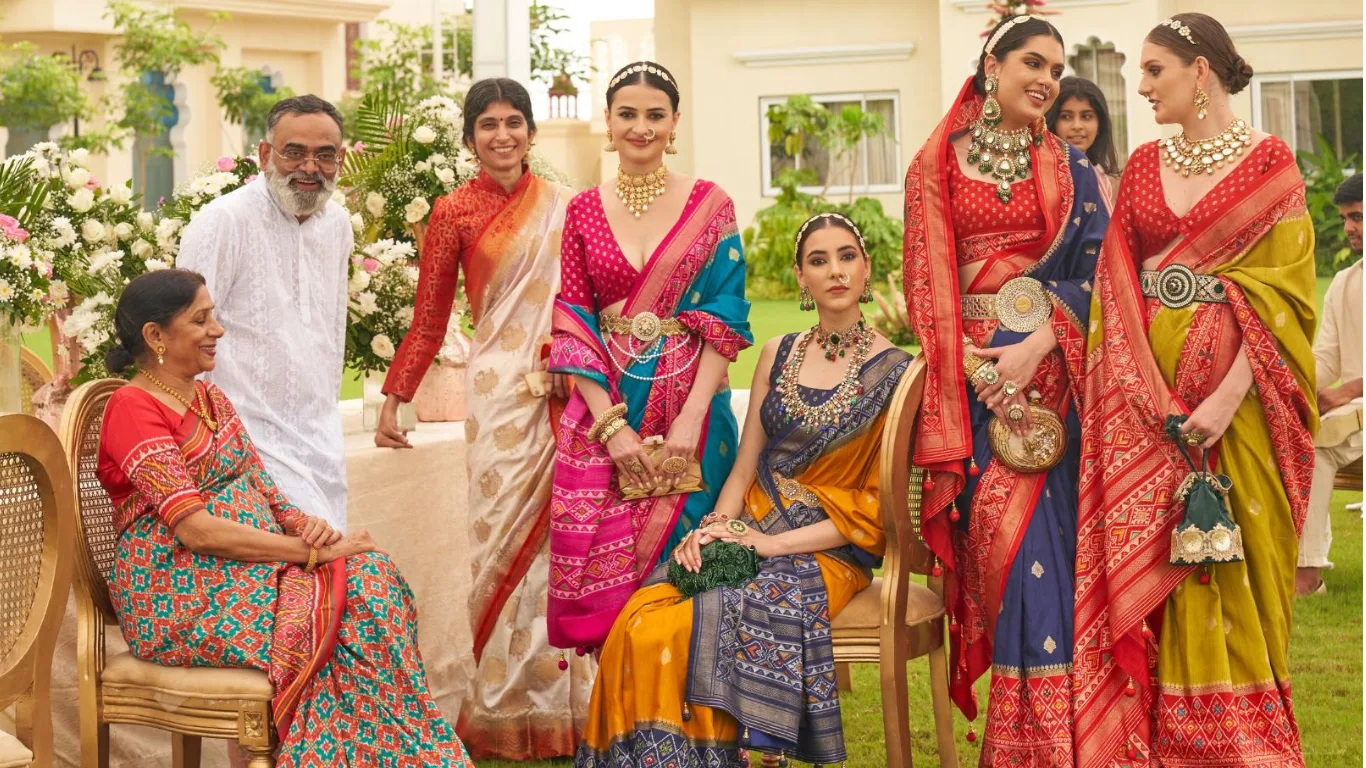
Traditional Saree Draping Styles: 10 Regional Looks You Should Know
There's a time in nearly every Indian household -An aunt, grandmother, or even a neighbour- who is tying pleats at the waist using a type of muscle memory that isn't taught by any tutorial video. When you witness this, it's easy to see that a saree is not just six yards of fabric. It's an actual map. Every fold will tell you the place where a person is located.
It's the most important thing to understand the saree's draping traditions that are not just fashion trends, but a living, regional history that continues to be a part of everyday life.
Why This Actually Matters
Here's the truth. The majority of people think of the saree solely in the sense of "the Indian dress" -it's a single silhouette that is worn in a single manner. This is... wrong and incorrect. The drape across states is completely changed. The pleats shift. The pleats shift from front to back, and sometimes between the legs, as in the dahoti.
Understanding the various traditional saree drapes can alter how you view the saree as a garment. It is no longer one thing and turns into perhaps ten, twenty, or more -- each with its own story of occupation, climate, and even community. If you're thinking of a wedding gown, exploring your roots, or are bored of wearing the identical saree with a nivi drape every time, this is more important than you think.
What It Really Is (Concept Explained Simply)
Imagine a saree in the same way you'd imagine the word "sale. The same words with different punctuation and totally different meaning. That's draping. The length of the fabric isn't much different between five and nine yards. However, the way it's folded, tied and pinned transforms it into the Bengali style or a Maharashtrian style, or an Indian look, or a Tamil style. Every region reads this sentence in the same way.
The most popular traditional style of draping a saree is the Nivi drape from Andhra Pradesh, and honestly, this is probably the first thing that is in your thoughts when you think of "a saree" at all. Pleats in the front, and a pallu on one shoulder. The simple and elegant look, forever repetitive in Bollywood.
Must read: Different Ways to Drape a Dupatta: Stylish Draping Ideas for Every Occasion
How It Works -- Step by Step
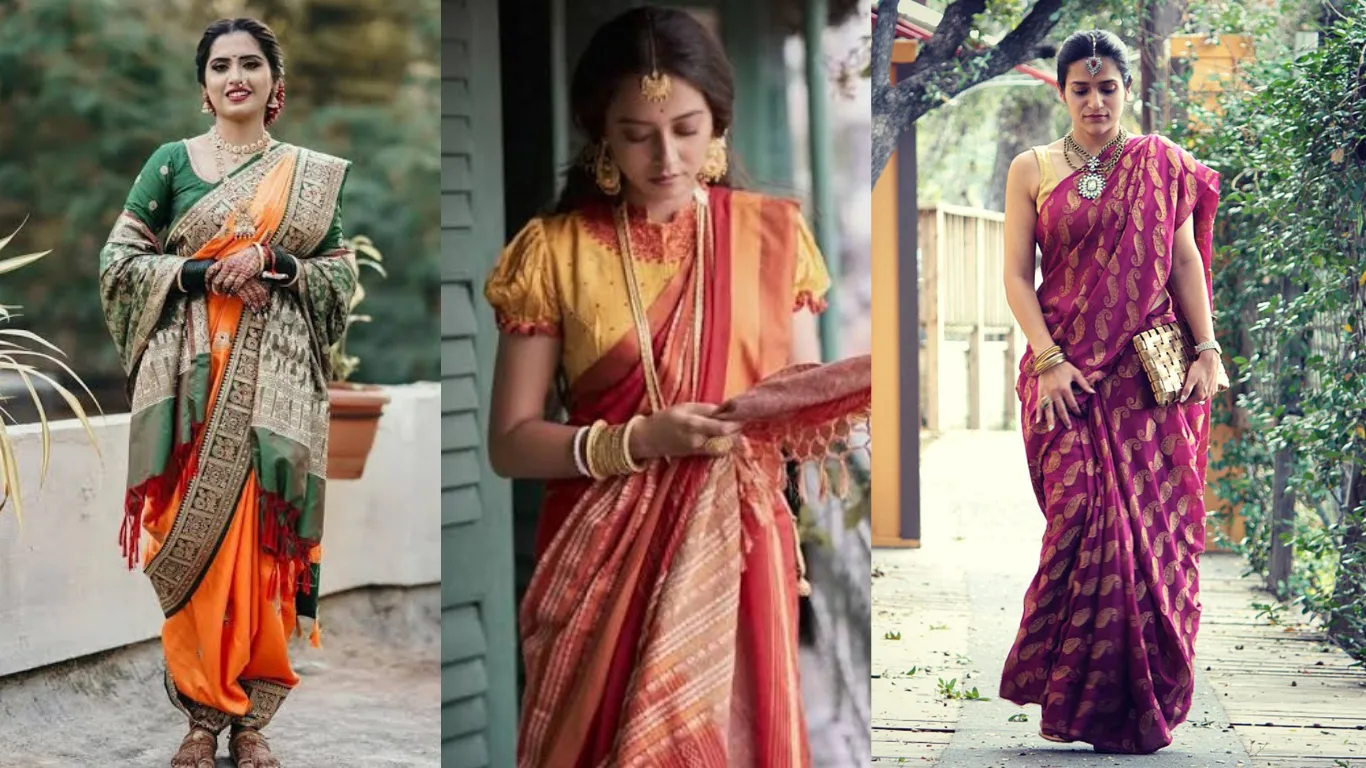
Let's look at a few of them, since looking at drapes with no mental picture is similar to reading a recipe that you'll never be able to cook.
- Nivi Drape (Andhra Pradesh): Tuck the plain part of the waistline, wrap around once, then make five to seven pleats, tie them around your navel. Wrap them again and then drape the pallu over your left shoulder. This is the basis for the majority of tutorials on draping saree material available online -It's the one that is taught first, nearly all the time.
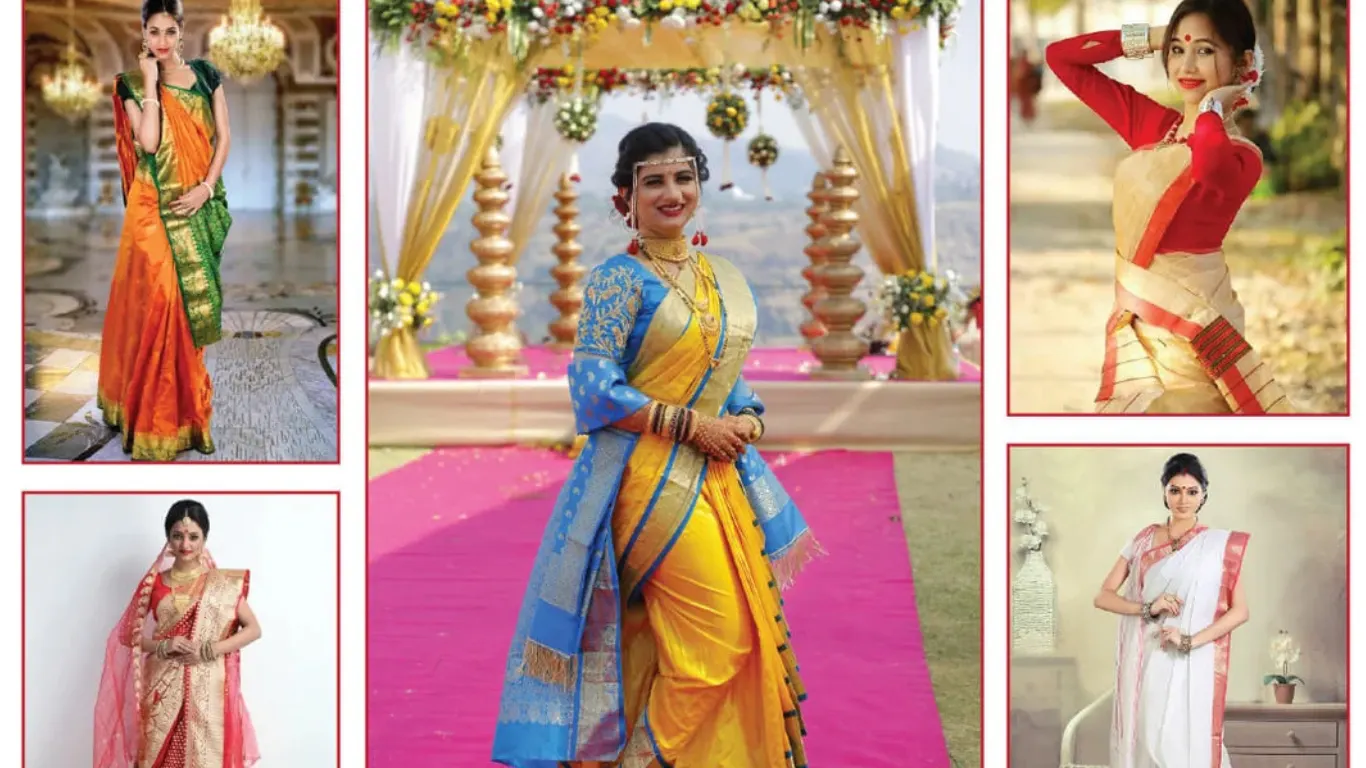
- Bengali Fashion Sarees Draping: There aren't any pleats in the front whatsoever here. The saree is wrapped across the opposite side, and the pleats are tied to the right side, and the pallu is carried twice around, and is often decorated with a plethora of keys that are tied at the end, which is a symbol of a woman's status as a household keeper. Bengali-type saree draping appears heavier, more formal, like a royal.
- Gujarati, also known as the Seedha Pallu. It is a pleat that stays at the top like Nivi, but the pallu moves from front to back on the right shoulder, not the left shoulder. A small change. Completely different silhouette.
- Maharashtrian Nauvari: 9 yards with no petticoats needed as the material is pulled between the legs, similar to the Dhoti. It was designed originally for women who rode horses or worked in fields. Practicality covered in silk.
- Tamil Madisar: Most often worn by Iyer as well as Iyengar women in rituals, this one can be worn between the legs but has a tighter and more defined finish designed to allow for movement during prayers and cooking.
Real-World Examples
A bride from Kolkata with a red and white Bengali-style saree draped in a draping manner on her wedding day isn't picking it solely for its looks; it's the tradition of the region echoed through the fabric. A Maharashtrian farmer's wife wearing the nauvari saree a century back wasn't dressed for a photo shoot either. She had to climb to bend, bend, and work. Different ways of wearing the saree were not random. They were born from the complexities of labour, geography and religious beliefs well before it was deemed "fashion."
Must read: Best Local Boutiques in Mohali for Custom Wedding Outfits
Mistakes People Keep Making (And Why)
The biggest question? If we assume that every region has it in the same way, but decorated differently. But the mechanisms themselves alter, not just the border or print. The pleats are also rushed by people, and the pleats that are uneven ruin even the best silk. Another common mistake is omitting the underskirt fit. A loose petticoat will ruin an excellent traditional saree drape attempt in less than one hour.
Pro Tips That Actually Help
Lightly smudge your saree prior to draping regional styles such as Nauvari or Madisar, as stiffness helps the fabric keep its shape between your legs. To make Bengali drapes, try the double wrap pallu before the mirror several times prior to the day. Muscle memory aids in this. If you're following instructions for draping sarees on the internet, stop and go through the pleating part in a slow manner -- that's the place most people stumble first.
Closing Thoughts
In all this tucking and pleating, there's a gentle reminder that clothing is not separate from the rest of the world. It moved with the people and adapted to their jobs and their prayer, as well as their climate. When you next notice someone draped in a saree, pay attention to how the pallu is draped. This is a clue if you're paying attention.
Must read: Best Traditional Punjabi Suits Shops in Mohali/Chandigarh
FAQs
What is the simplest draped saree style for novices?
The Nivi drape is often regarded as the most straightforward starting point with fewer steps and softer pleats.
What are the most traditional draping styles of sarees within India?
Estimates vary between historians, but they estimate more than 100 regional variations, although ten to 15 remain in use to this day.
Do I have the ability to wear a Bengali-style saree without prior training?
Yes, though it's helpful to go through a slow saree-draping tutorial to begin, since the pallu wrap is different from the more well-known Nivi method.
Do all traditional saree styles require a petticoat?
Not always. Designs such as the Maharashtrian Nauvari are draped without a petticoat and rely on the fabric for structure.
Do you know the one "correct" way to drape the Saree?
No single correct method is available. There are many ways to wear the saree based on regional identities, but there is no right or wrong approach.