Trump Meets Xi in Beijing: High-Stakes US–China Summit and Global Implications
A handshake in Beijing. Cameras everywhere. And behind the smiles, two of the most powerful men on the planet are negotiating a relationship that, depending on how it goes, could reshape global trade, Middle East diplomacy, and the fate of a small island called Taiwan.
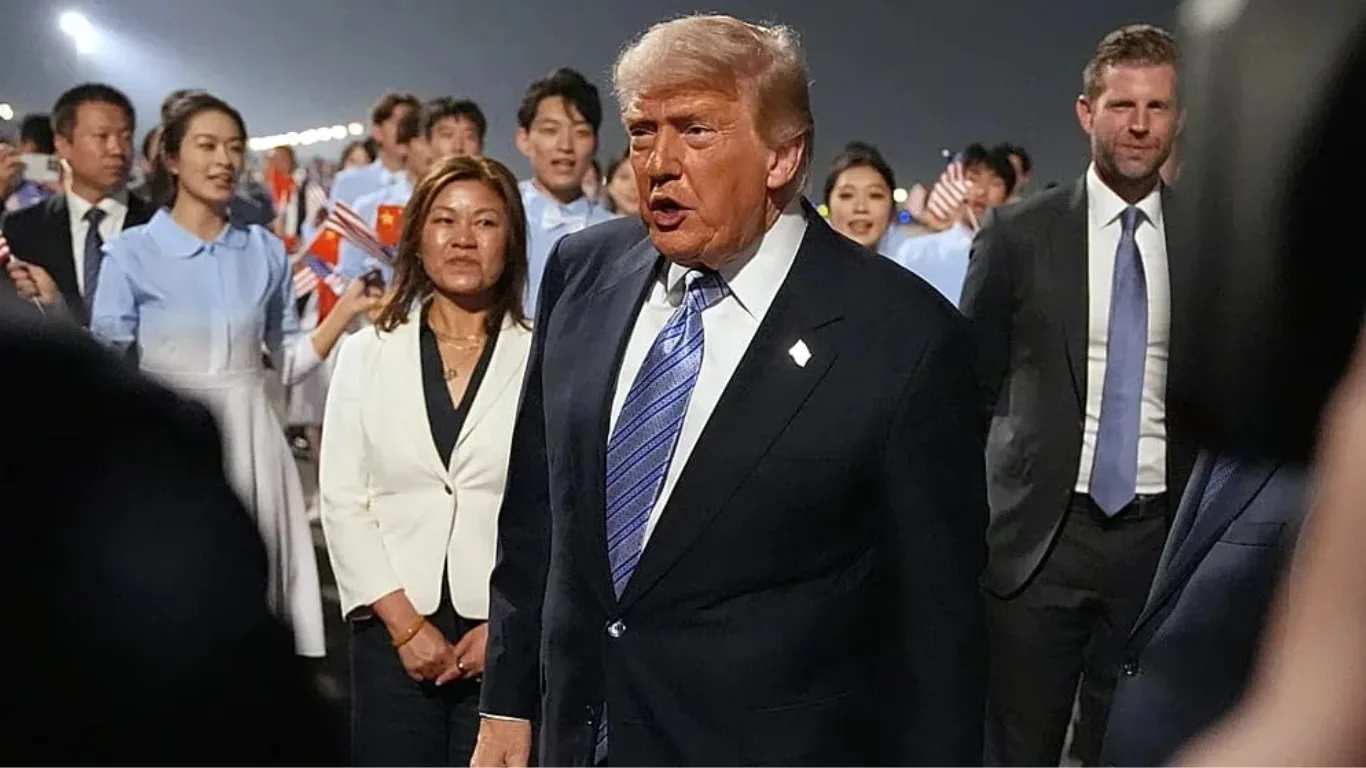
US President Donald Trump arrived in Beijing for a two-day summit with China's Xi Jinping at the Great Hall of the People, describing it as possibly the "biggest summit ever" following a pomp-filled reception. That kind of language is very Trump. But strip away the superlatives, and what is actually happening here is genuinely consequential.
This is the Trump-Xi Beijing summit 2026, and the world is watching.
Why This US-China Meeting Could Shape the Rest of the Decade
Trump's visit to China marks the first trip by a US president to the country since 2017, when Trump visited in the early days of his first term. Nine years is a long time. A lot has changed. A trade war. A global pandemic. A war in Ukraine. A war with Iran. And somewhere in the middle of all of it, a US-China relationship that has lurched between fragile truce and open hostility.
Trump enters the talks with a weakened hand. US courts have hemmed in his ability to levy tariffs at will on exports from China. The Iran war has also boosted inflation at home and escalated the risk that the Republican Party will lose control of one or both legislative branches in November's midterm elections.
That context matters. A lot. Because it tells you who has more to prove here, and who is walking in with the stronger position.
Read More: Core Member Sandeep Pathak's Exit from AAP Hits Party the Most , And Here Is Why
What the Trump-Xi Summit Is Actually About: Trade, Taiwan, and Iran
Three words keep coming up in every analysis of this meeting. Trade. Taiwan. Iran. No, that is not a slogan. Those are the three fault lines that define the entire US-China relationship right now, and each one carries the weight of a potential crisis.
On trade: Washington and Beijing were locked in an acrimonious trade war last year, with much of the strife centred on Trump's aggressive tariff policies and China's retaliation. Tensions cooled following talks between US and Chinese trade negotiators in the fall. The summit aims to consolidate that calm. The two leaders will discuss a US-China trade board and agreements on aerospace, agriculture, and energy, though aides say no comprehensive deal is on the table.
On Taiwan: This is where the summit gets genuinely tense. Xi told Trump that Taiwan was the most important issue in US-China relations and that if handled poorly, it could lead to conflict and an extremely dangerous situation. That is a direct warning from the leader of the world's second-largest military. Xi was not being casual.
Chinese Foreign Minister Wang Yi, in a call with US Secretary of State Marco Rubio last month, described Taiwan as "the biggest risk in the China-US relationship." China wants the US to slow or stop arms sales to Taiwan. The US is legally bound to help Taiwan defend itself. That tension is not going away this week, and everyone knows it.
On Iran: Trump is engaged in an unpopular war with Iran that has stretched past an initial six-week timeline and sent gas prices soaring. China has its own complicated ties to Tehran. The US wants Beijing to pressure Iran toward a ceasefire. Beijing has strategic reasons to keep Iran as a partner. That conversation is happening in the background of every other conversation at this summit.
Who Has the Upper Hand: Xi or Trump?
Here is something that does not get said enough in Western coverage of this summit. Xi has long told cadres that "the East is rising and the West is declining" and that "time and momentum" are on China's side. His confidence further strengthened last year when he successfully beat back Trump's unprecedented trade escalation, which pushed tariffs past 140 per cent, by wielding China's "break glass" tool of rare earth minerals and magnets.
Rare earths. That is the hidden lever. China controls a massive portion of the global supply of materials used in semiconductors, electric vehicles, and military systems. When Xi threatened to restrict those flows, Trump backed down. That happened twice in 2025.
China aims to buy more time to consolidate its technological and industrial position and reignite its faltering economy. The US aim is probably to secure symbolic wins rather than more meaningful structural reforms to China's economic model.
The best-case outcome for Trump is leaving Beijing with headlines about soybean deals and aerospace agreements. That is nothing. But it is also not the kind of structural shift that fundamentally rebalances the relationship.
What to Expect in the Coming Days
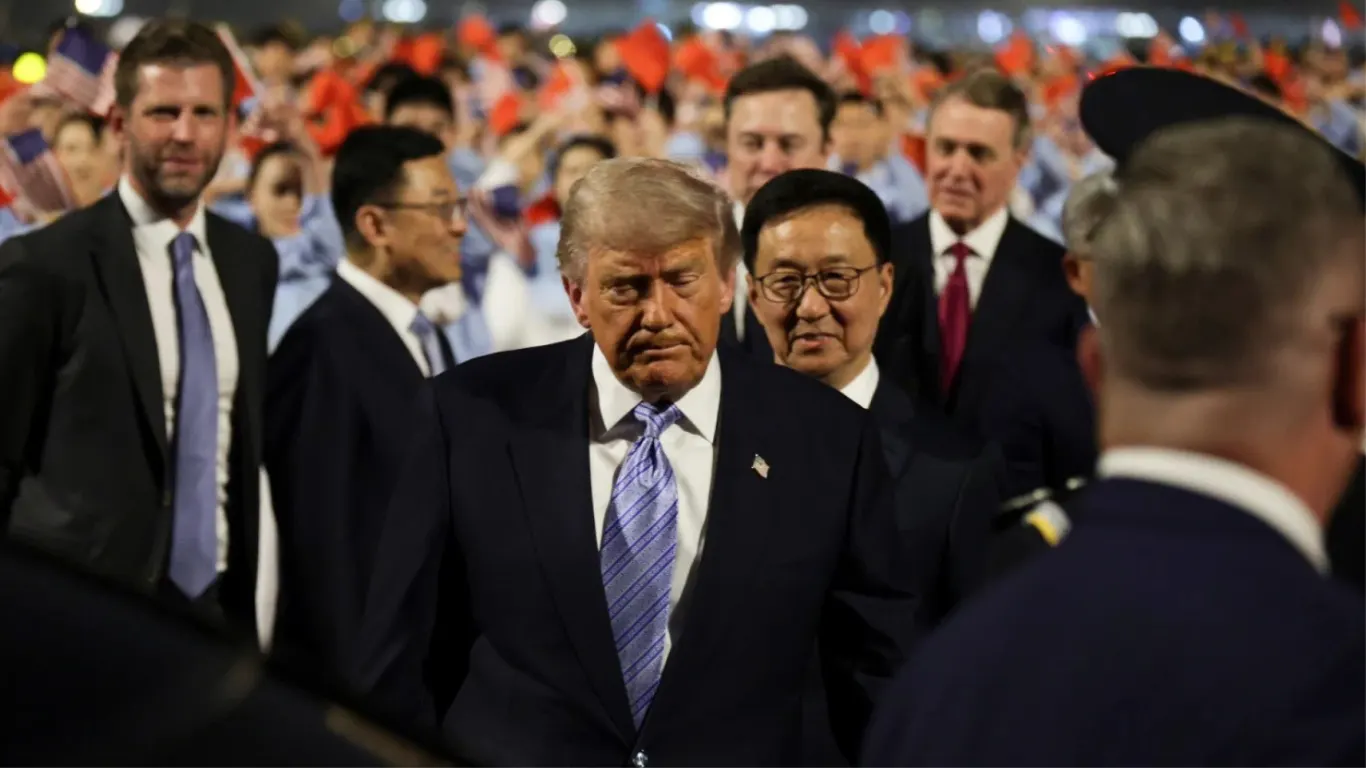
Some US companies are hoping to parlay the Trump-Xi summit into new purchasing agreements. Top executives, including Tesla chief Elon Musk, Apple CEO Tim Cook, Larry Fink of BlackRock, and Nvidia CEO Jensen Huang, attended as part of a US business delegation. Their presence signals that the private sector sees opportunity here, even when the politics are complicated.
Beijing is probably willing to buy Boeing aircraft and American soybeans for stability, and to announce a trade board and investment board already sketched out in previous working-level talks. Expect those announcements to dominate headlines over the next two to four days, presented as breakthrough moments even if the underlying tensions remain exactly where they were.
Xi also has a reciprocal visit to the United States tentatively planned for later this year. That would be his first visit to the United States since Trump retook office in 2025.
Read More: Modi in Gangtok: What Sikkim's 50 Years of Statehood Really Means for India's Smallest State
What Ordinary People Should Actually Watch For
Forget the ceremony. Forget the handshakes. The real signals are in the details.
Watch what Trump says, or does not say, about Taiwan. Watch whether the rare-earth agreement gets extended. Watch whether any concrete language on Iran emerges. And watch how gas prices and global markets respond in the days after the summit closes. That response will tell you more than any official readout.
The US-China relationship is not fixed by summits. It is shaped by them, slowly, imperfectly. A good meeting this week does not mean tensions are resolved. But a bad one could accelerate a rivalry that most of the world genuinely cannot afford.
That is the quiet urgency beneath all the ceremony in Beijing right now.
Disclaimer: This article is based on information available across the web. Parchar Manch does not take responsibility for its complete accuracy, as the content could not be fully verified.
Read More: Mamata Banerjee Refuses to Resign After West Bengal Election Defeat: Is Democracy Under Threat?
FAQs
What is the Trump-Xi Beijing summit about?
It is a bilateral meeting between US President Donald Trump and Chinese President Xi Jinping focused on trade, the Taiwan dispute, rare-earth mineral agreements, and the ongoing Iran war. It is the first US presidential visit to China since 2017.
What is the Taiwan issue at the US-China summit?
China considers Taiwan part of its territory and wants the US to reduce arms sales to the island. The US is legally required to help Taiwan defend itself and has not committed to any concessions. Xi warned Trump directly that mishandling Taiwan could lead to conflict.
What trade deals could come out of the Trump-Xi summit?
Possible agreements include Chinese purchases of US soybeans and Boeing aircraft, a bilateral trade management board, and an investment coordination forum. No comprehensive trade deal is expected.
Why do rare-earth minerals matter in US-China talks?
China controls much of the global supply of rare earths used in semiconductors, electric vehicles, and defence systems. In 2025, when China threatened to restrict exports, the US backed down on tariffs. This gives Beijing significant leverage in negotiations.
Who else is attending the Trump-Xi summit?
A US business delegation that includes Elon Musk, Apple CEO Tim Cook, Nvidia CEO Jensen Huang, and BlackRock's Larry Fink joined Trump in Beijing, indicating significant corporate interest in stabilising US-China trade relations.