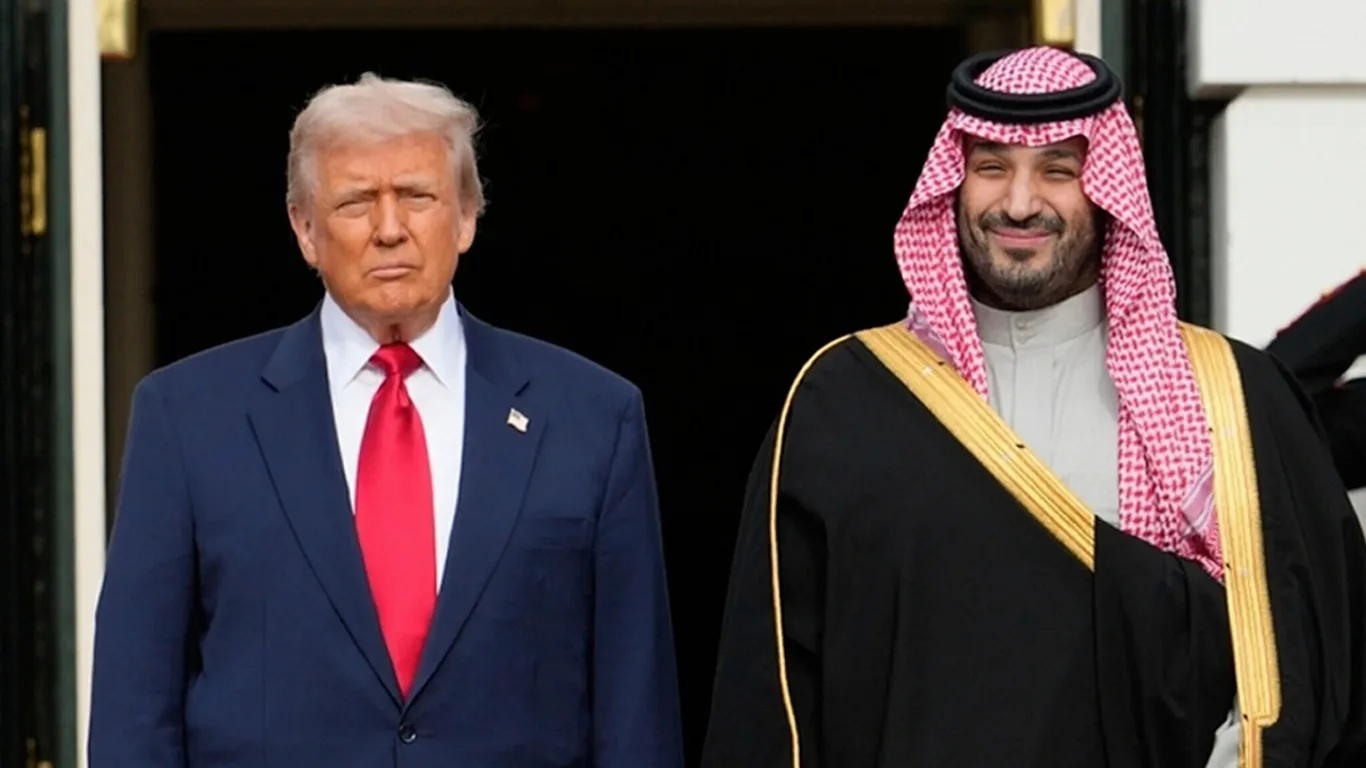
Trump's "Mandatory" Demand: Why Saudi Arabia and Qatar Must Now Choose Between Iran and Israel
There was silence on the phone line. And then Donald Trump asked, reportedly with a joke, if they were still there.
That moment, described by a US official and reported by Axios, captures something important about what happened on Monday, May 25, 2026. Donald Trump's Abraham Accords expansion push caught some of the most powerful leaders in the Muslim world completely off guard.
What Trump Actually Said And Why It Matters
On Saturday, Trump held a call with leaders from eight Muslim-majority and Middle Eastern nations. The stated purpose was to discuss the ongoing US-Iran nuclear negotiations. But Trump turned the conversation into something far larger.
He told the leaders of Saudi Arabia, Qatar, Pakistan, Turkey, Egypt, and Jordan that joining the Abraham Accords was not just a good idea. It was, in his word, "mandatory."
"After all the work done by the United States to try and pull this very complex puzzle together, it should be mandatory that all of these countries, at a minimum, simultaneously, sign onto the Abraham Accords," Trump wrote afterward on his Truth Social account.
He then asked his representatives to formally begin the process of bringing these nations into the accords a direct diplomatic move with real-world consequences.
What Are the Abraham Accords? A Quick Explainer
If you have never heard the term before, here is the simplest way to understand it.
The Abraham Accords are a set of agreements brokered during Trump's first presidency in 2020. They normalised diplomatic and economic relations between Israel and several Arab nations the United Arab Emirates, Bahrain, Sudan, and Morocco. These were historic deals. For decades, most Arab countries refused to recognise Israel as a state. The accords broke that wall.
Read More: Marco Rubio India Visit: Why This Four-Day Trip Could Reshape the US-India Relationship
Think of it this way: two neighbours who have not spoken for 50 years, who actively avoided each other, suddenly agreeing to share a fence and trade goods. That is what normalisation means official recognition, embassies, trade, and sometimes security cooperation.
The UAE and Bahrain were already on the call with Trump. They are already signatories. Egypt and Jordan have had peace deals with Israel since 1979 and 1994 respectively. The holdouts the countries Trump is now pressing are Saudi Arabia, Qatar, Pakistan, and Turkey.
Why Is This Linked to the Iran Deal?
This is the part that makes the situation genuinely complex. Trump's Iran deal push and the Abraham Accords are now directly connected in his strategy.
The US and Iran have been in ongoing nuclear negotiations. Trump is working toward a framework — the broad outlines of a deal — that would prevent Iran from developing nuclear weapons in exchange for relief from sanctions. Several Muslim nations, including Pakistan, have been acting as informal mediators.
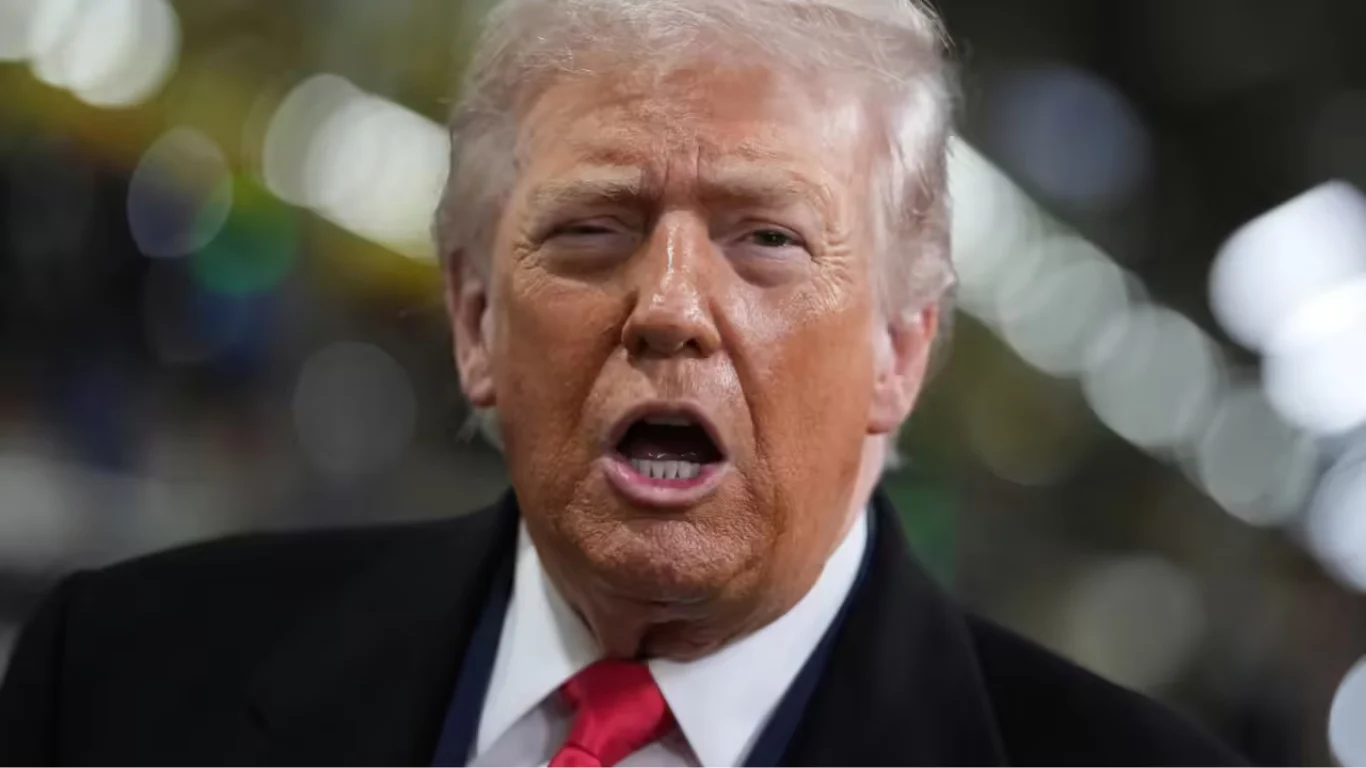
Trump's position is now clear: if you want to be part of this diplomatic breakthrough, if you want credit for helping broker peace with Iran, you also need to normalise ties with Israel. The two are packaged together.
He even went a step further, suggesting that if Iran ultimately signs an agreement, it too should eventually be welcomed into the Abraham Accords. "They would be honored, as soon as our Document is signed, to have the Islamic Republic of Iran as part of the Abraham Accords," Trump posted.
That is a significant statement. Iran and Israel have been open adversaries for decades.
Read More: Your Chrome Browser Has Critical Security Holes , Here Is What Google Just Did About It
How Did the Targeted Countries Respond?
Pakistan was the only country to respond publicly and immediately with a firm rejection.
Pakistan's defence minister called the request "not acceptable to us." Officials stated Pakistan is "under no compulsion to adhere" to Trump's demand. There is an added awkward dimension here: Trump invited Pakistan's Army Chief, General Asim Munir, to the call, rather than Prime Minister Shehbaz Sharif a diplomatic slight that drew attention across South Asian media.
Saudi Arabia's position is the most watched. Riyadh has consistently insisted that normalisation with Israel requires a "credible path" toward a Palestinian state. That condition has not been met, especially given the ongoing war in Gaza. No immediate public response came from the Saudi side.
Qatar, Turkey, Egypt, and Jordan have also not issued public statements following Trump's post.
Read More: She Went to the Salon, Came Back Home, and Never Woke Up: The Twisha Sharma Case That Has Shaken India
Why Saudi Arabia Is the Real Prize
Of all the nations on Trump's list, Saudi Arabia is the one that would change the landscape of the Middle East most dramatically. It is the largest Arab economy, home to Islam's holiest sites, and seen as a symbolic leader of the Muslim world.
If Riyadh were to normalise relations with Israel, it would carry enormous weight political, religious, and economic. It would also effectively signal to other Muslim-majority nations that peace with Israel is acceptable.
That is exactly why Saudi Arabia has been cautious. The Palestinian issue remains deeply important domestically and across the Arab world. Any Saudi king or crown prince who normalises ties with Israel without a clear resolution for Palestinians faces significant internal and regional criticism.
The Larger Picture
Trump is trying to stack multiple diplomatic achievements at once: an Iran nuclear framework, an expansion of the Abraham Accords, and a broader Middle East settlement all before a potential re-election campaign context shapes his legacy.
Whether or not this succeeds, the move signals that Middle East normalisation is no longer just a background policy goal. It has become the central condition of American diplomacy in the region right now.
The silence on that phone call may have lasted only a few seconds. But the conversation it started is going to take much longer to resolve.
Read More: Sundar Pichai Just Redefined Google Search, and It Was Over a Pint
Disclaimer: This article is based on information available across the web. Parchar Manch does not take responsibility for its complete accuracy, as the content could not be fully verified.
FAQs
What are the Abraham Accords?
The Abraham Accords are US-brokered agreements signed in 2020 during Trump's first term that normalised diplomatic relations between Israel and the UAE, Bahrain, Sudan, and Morocco.
Which countries did Trump ask to join in May 2026?
Trump directed his request at Saudi Arabia, Qatar, Pakistan, Turkey, Egypt, and Jordan. He noted the UAE and Bahrain were already members.
Did any country agree to Trump's demand?
No country has agreed so far. Pakistan was the only nation to formally reject the request. Others have not yet issued public responses.
Why is Saudi Arabia so important to this process?
Saudi Arabia is the largest Arab economy and holds enormous symbolic authority in the Muslim world. Its joining the accords would signal a major shift in regional politics.
What is the connection between the Abraham Accords and the Iran deal?
Trump has made joining the Abraham Accords a condition tied to participation in the Iran nuclear agreement he is negotiating. Countries that want credit for the Iran peace process must also normalise ties with Israel, according to his position.
What is Saudi Arabia's main condition for joining?
Saudi Arabia has consistently demanded a credible path toward a Palestinian state before it will normalise diplomatic and commercial relations with Israel.