US Waives Iran Oil Sanctions for 60 Days: The Biggest Shift in Energy Diplomacy in Decades
Something that has not happened since the 1990s just happened.
On June 22, 2026, the US Treasury Department issued a 60-day general licence authorizing the production, delivery, and sale of Iranian oil sanctions waiver coverage for crude oil, petroleum products, and petrochemicals through August 21. The licence also permits payments in US dollars and opens the door for the United States itself to import Iranian crude, a prospect that had been effectively impossible for more than three decades.
This is not a minor policy adjustment. It is a structural reversal of one of the longest-running economic pressure campaigns in American foreign policy history.
Why the Iran Oil Sanctions Waiver Changes the Global Energy Picture
To understand why this matters, consider what the previous arrangement looked like. Almost all of Iran's crude oil was going to China, sold at steep discounts because no other major buyer would touch it without risking US secondary sanctions. Iran was effectively trapped in a bilateral dependence, unable to access dollar-denominated markets, shut out of mainstream shipping and insurance networks, and selling its most valuable resource at a price penalty just to move it at all.
"The shackles are off Iran's oil sales," said Edward Fishman, a former State Department official involved in drafting sanctions legislation against Iran. "Previously, Iran was exporting all of its oil to China at steep discounts. Now it will be able to sell oil to many other countries at market prices."
That change, if it holds, does not just benefit Tehran. It restructures the competitive dynamics of global oil supply.
Brent crude prices dropped over 3.5 percent to $77.7 per barrel on the news. The market understood immediately what this could mean for supply.
What the Licence Actually Covers and What It Does Not
The 60-day general licence, issued by the Office of Foreign Assets Control within the Treasury Department, is notably broad in scope. It covers not just the oil itself but the full range of ancillary financial services, including banking, insurance, and shipping transactions, that enable oil trade to function.
Previous Iran-related waivers often created dangerous ambiguity around whether service providers facilitating oil transactions were themselves exposed to secondary sanctions risk. That ambiguity had been enough to keep European financial institutions and mainstream shipowners out of Iranian trade even when commodity-level permissions existed in theory. This licence attempts to remove that barrier explicitly.
However, the underlying US sanctions architecture on Iran remains intact. This is a temporary 60-day window, not a permanent removal. Transactions involving North Korea, Cuba, and Russian-occupied Ukraine remain explicitly excluded. And the waiver does not signal that broader sanctions programmes are about to be dismantled without a final diplomatic agreement.
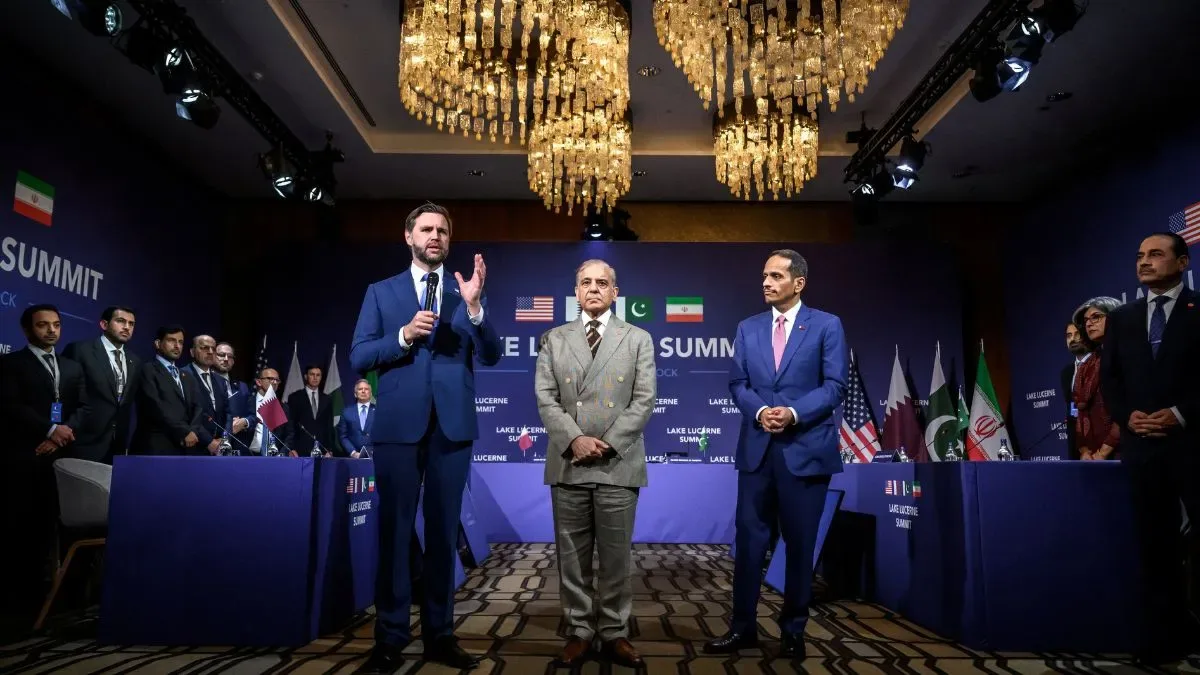
The licence also flows directly from the memorandum of understanding signed between Washington and Tehran on June 17, which established a 60-day ceasefire framework and set the terms for these negotiations. The oil waiver was a condition baked into that agreement, not a separate concession.
Read More: From a Beijing Apartment to $92.8 Billion: How Zhang Yiming Just Overtook Mukesh Ambani
The Strait of Hormuz Connection That Makes This All Fragile
US Treasury Secretary Scott Bessent, announcing the waiver, tied it directly to Iranian commitments. Iran has committed to "free and open transit in the Strait of Hormuz" and to permit IAEA inspectors back into the country, he said. The oil waiver is the reward for those commitments, not a gift given in advance.
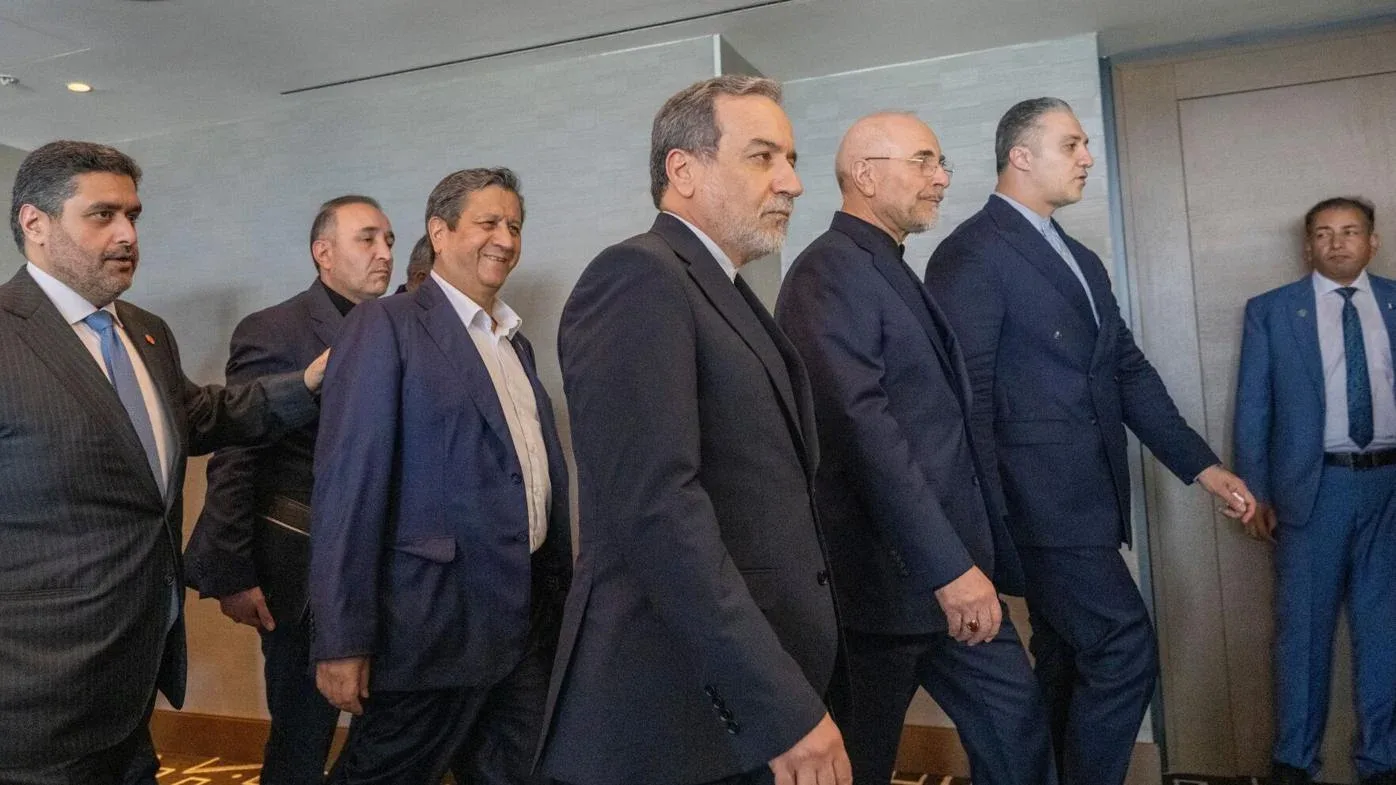
This conditionality matters enormously. The Strait of Hormuz handles roughly 20 percent of global oil supply every day. When Iran blockaded the strait earlier in 2026 following the outbreak of hostilities in late February, oil prices surged sharply. The waiver is partially designed to create an economic incentive for Iran to keep that waterway open, giving Tehran something concrete to lose if the situation deteriorates.
Analysts, however, are cautious about overstating the near-term practical impact. Richard Nephew, a senior research scholar at Columbia's Center on Global Energy Policy, said the effect "is still probably going to be pretty muted," citing lingering EU sanctions, financial logistics, and the reality that China and possibly India remain the most realistic near-term destinations for most Iranian crude exports.
India purchased its first cargo of Iranian oil since 2019 during the war, a detail that signals how quickly the ground shifted even before this formal waiver was issued.
What This Means for Iran Domestically
Iran's economy had been under severe stress. Years of sanctions had driven sharp Iranian currency depreciation, eroded household incomes, and contributed to widespread anti-government protests in the months before the February 2026 conflict began.
Oil export revenue is Tehran's primary source of hard currency for government operations. Access to dollar-denominated markets and legitimate global buyers represents genuine economic relief for Iranian leadership, not just a diplomatic symbol. That relief is exactly why the Trump administration is also facing domestic criticism, including from some Republicans, who argue the waiver gives Iran "an economic lifeline" that could indirectly fund regional proxies.
That tension is real. But it is also the nature of any negotiated exit from a war. Both sides are getting something. The question the next 60 days will answer is whether what each side is getting is enough to build a permanent deal.
Closing Thoughts
The Iran oil sanctions waiver is not a peace deal. It is not even a guarantee that one is coming. It is a 60-day window, deliberately constructed with an expiration date, inside which negotiators are expected to do the hard work of resolving a nuclear programme, a war in Lebanon, a hostage-taking dynamic, and decades of accumulated distrust. The foundation, as JD Vance put it, has been laid. The house has not been built. And the clock started ticking on June 22.
Disclaimer: This article is based on information available across the web. Parchar Manch does not take responsibility for its complete accuracy, as the content could not be fully verified.
FAQs
What does the US Iran oil sanctions waiver actually allow?
The 60-day general licence issued by the US Treasury Department on June 22, 2026, authorizes the production, delivery, and sale of Iranian crude oil, petroleum products, and petrochemicals through August 21, 2026. It also covers banking, insurance, shipping, and US dollar payments associated with those transactions. The US can now also import Iranian crude, which had not been meaningfully permitted since the 1990s.
Does this mean all Iran sanctions are lifted?
No. The broader US sanctions architecture on Iran remains fully intact. This is a temporary 60-day general licence tied to the memorandum of understanding signed on June 17, 2026. Permanent sanctions removal would require a binding final diplomatic agreement or separate executive or legislative action.
Why did oil prices fall after the waiver was announced?
Markets anticipated that more Iranian crude could re-enter global supply, reducing concerns about a supply squeeze, particularly given the disruption caused by Iran's earlier blockade of the Strait of Hormuz. Brent crude fell over 3.5 percent to $77.7 per barrel on the announcement.
Who benefits most from the Iran oil sanctions waiver?
Iran benefits most immediately, gaining access to dollar-denominated markets and the ability to sell oil at market prices rather than at steep discounts to China. Countries that were significant buyers of Iranian oil before 2018, including India, South Korea, Japan, and some European nations, can now legally resume purchases. China's exclusive pricing leverage over Iranian barrels may also weaken.
What happens when the 60-day licence expires on August 21?
The outcome depends entirely on how the US-Iran negotiations progress during the window. If a final deal is reached, additional licences or permanent sanctions relief may follow. If talks collapse, the sanctions architecture can be fully reimposed. The 60-day structure was deliberately designed as a time-limited incentive, not an open-ended concession.
Is this the first time the US has authorized Iranian oil sales?
This is the most significant authorization in decades. While narrow, temporary waivers existed in earlier periods, the June 2026 licence is structurally broader, explicitly covers ancillary services like banking and shipping, and is tied to a formal diplomatic agreement. The last time the US recorded meaningful imports of Iranian crude was in the 1990s, before successive rounds of sanctions progressively severed the economic relationship.