What Does Coalition Government Mean? Meaning, Examples and How It Works
The results of elections do not necessarily grant one party enough seats to run on its own. Sometimes, several parties have to join forces, come to the same plan, and create an administration. The simple act of forming a government can alter how a country is managed for a number of years.
Then, what exactly is a coalition government? It is a form of government that occurs when a coalition of at least two political groups come together in order to gain enough support to run the government. This is a common practice in parliamentary democracies like India.
Understanding the nature of coalition politics in India is crucial, as the outcome of elections is not solely about which party gets more seats. The most important thing to consider is how many parties have enough numbers to create a majority-party government with a single party or require partners. This is where the importance of alliances in government is crucial.
What Does Coalition Government Mean in Simple Words?
Let's answer the primary question in a clear manner. What does "coalition government" mean when someone uses the word in politics?
The term "coalition government" refers to a government formed when no one party, or even one of the parties that is deciding to govern on its own, has the legislative support. A coalition government is formed when two or more political parties decide to join forces and create an official government.
Imagine it as an ongoing project in a group. One person could take on the largest responsibility, but they are not able to complete the task on their own. Other people join in, the responsibilities are split, and everyone has to reach an agreement on the ultimate direction. It is evident that politics is more complicated, but the basic concept is the same.
The concept of the alliance government is in close connection with the alliance's meaning. A coalition can be formed prior to an election or after the results of an election are released. If the parties that are allied create and manage the government, it is a coalition government.
This is at the core of the concept of coalition government. Refer to. Different parties, a single government, sharing the responsibility.
Why Does Coalition Government Matter to Voters
What is the answer? What is the meaning of coalition government impacts ordinary citizens more than it appears at first.
A single-party majority government is able to make decisions with more autonomy due to the fact that one party holds enough seats on its own. However, a coalition typically requires discussions and consensus with the other partners.
This is the reason the politics of coalition in India can have an impact on the government's decisions, cabinet positions, and the policy agenda. Smaller parties can gain a voice; their backing is required for the maintenance of the government.
The significance of the alliance government will help the public know why the parties competing independently in certain situations might later join forces. Politics can involve negotiation. The numbers matter. Local interests matter, too.
When you look at examples of coalition government in India, the significance is much clearer.

How Does a Coalition Government Work?
Once you have a clear understanding of what the concept of coalition government actually means, the next step is straightforward: how exactly does it function?
The process usually follows a general structure:
- The results of the election are announced, and the parties are counted for their seats.
- If there isn't a majority of a single party, parties may start discussions.
- Parties that have enough seats are able to agree to the formation of a government.
- They can select a common program with major policy goals.
- Cabinet posts can be divided with coalition partners.
- The government will continue to operate only if it has enough support from the legislature.
This is the point where the politics of coalition in India is an actual exercise in equilibrium. A larger political party could be the one to be the leader of the government; however, smaller groups can have influence.
The coalition government: The meaning of the alliance government is not just about the friendship between political groups. It's about an agreement to collaborate politically, usually despite differences.
This is a crucial aspect of what a coalition government really means that is often missed by people.
Must read: How Policy Analysis 2026 Guides Investors, Citizens, and Policymakers
What Does Coalition Government Mean in India? Real Examples
The most effective way to comprehend what coalition government really mean is to study the past.
India has seen several important coalition governments at the national scale. The Janata Party government after the 1977 elections saw different political groups joining together. The following governments, led by the National Front, the United Front, as well as the National Democratic Alliance and the United Progressive Alliance, showed different types of coalitions.
These are often talked about as examples of coalition governments in India, as they demonstrate that a democratic government doesn't necessarily depend on a single party having all the power.
The National Democratic Alliance, or NDA, is a coalition of various parties in a larger political alliance. In addition, the United Progressive Alliance, or UPA, has also brought a variety of political parties in its time. These instances of a coalition government in India demonstrate how alliances influence national policy and leadership.
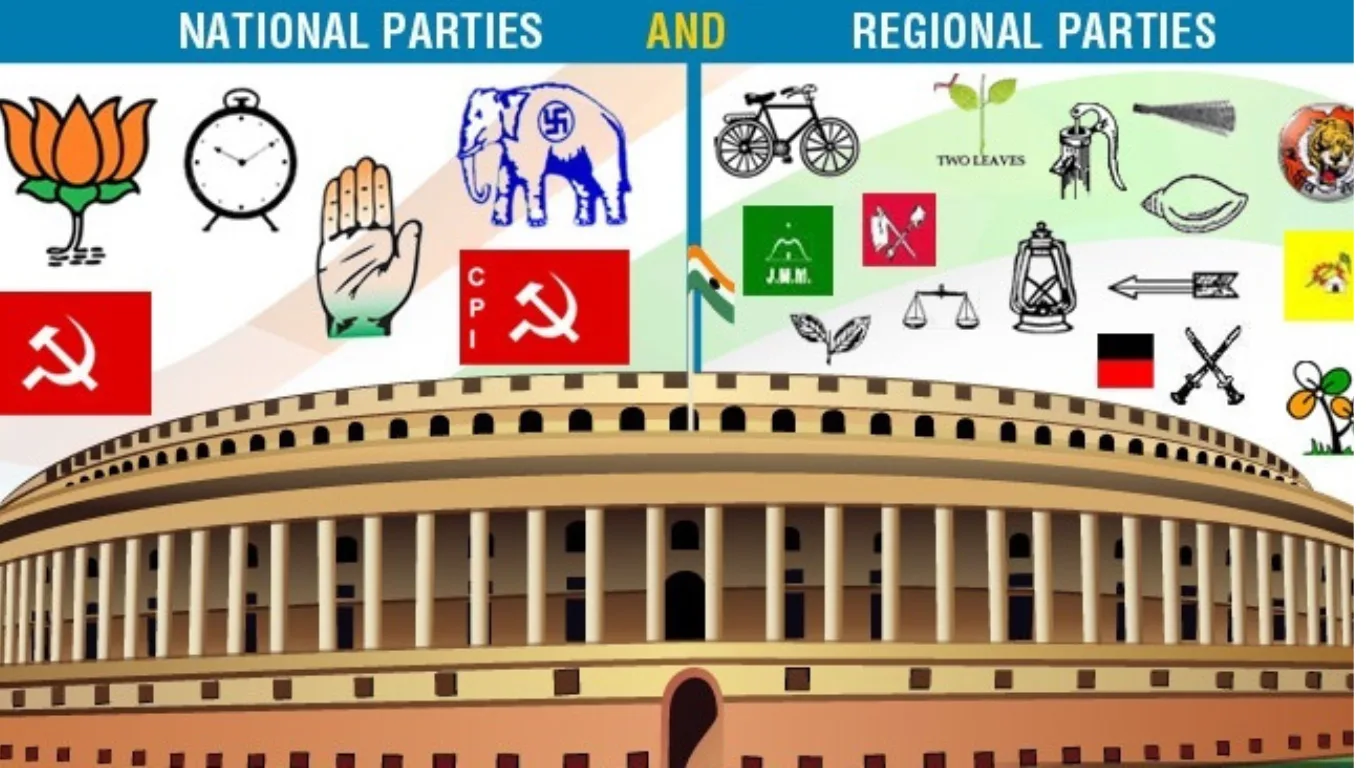
This is the same reason that explains the rise of the coalition politics of India. India has a strong national party. However, regional parties could also be influential in the electoral process.
The question is, what is coalition government for the Indian context? It is often a reference to national interests being matched with regional ones on the same level.
Coalition Government vs Single Party Majority Government
A one-party majority government and a coalition government operate in different ways.
A one-party majority government is able to make decisions without official approval from all coalition partners in the government. A coalition usually has to maintain an agreement between different parties.
It is not a guarantee that one system is superior to the other.
A one-party majority government can provide faster decision-making and clearer accountability. However, coalition governments may be more diverse in regional and political concerns.
In Indian politics, which is a coalition, it is commonplace for compromise to not be an option. One party might want an urgent policy while another might ask for changes before offering their assistance.
Negotiation is an aspect of coalition government. The sharing of power is a requirement for shared decisions.
Must read: Public Administration 2026: Governance Challenges, Reforms, and Citizen Services
Common Mistakes About What Coalition Government Means
One mistake that is common is thinking that an alliance government is always weak. Not necessarily. Certain coalitions have been stable throughout their entire term when members had clear agreements and good coordination.
Another error is to confuse an alliance for elections with the concept of a coalition government. The coalition government definition could refer to parties that work together before elections; however, the term "coalition government" specifically refers to parties who are in coalition with or leading the government.
Many also believe that the coalition political system in India can be unique. India has a long-standing history of coalitions, which makes it a crucial element of understanding modern political systems.
Additionally, it is important to note that not every government that has external support is identical. The particulars are important.
What Does Coalition Government Mean for Political Stability?
An effective way to comprehend what coalition governments refer to is to consider the broader range of participants.
Stability is contingent on trust and leadership, as well as seat numbers and whether members can come to a consensus on the most important issues. Strong coordination will aid in the effective functioning of a coalition. Constant disagreement can make governing difficult.
This is why examples of coalition government in India are extremely useful. Different coalitions have had different outcomes because the political context was different.
Similarly, instances of coalition government in India at the state level, in which regional parties could play a significant role. Looking at these examples of coalition governments in India can help explain how political partnerships can be created, altered or even broken.
The most important aspect is this: if the possibility of forming a one-party majority government is not feasible, coalition arrangements may be a viable alternative to forming the government.
Must read: Global Summits 2026: Leaders’ Decisions, Climate Goals, and Strategic Talks
FAQs
What is the meaning of coalition government?
What is coalition government? It is when two parties or groups work together and support each other to form a government.
What is the alliance government's significance?
The term "alliance government" is a term used to describe parties that cooperate politically. When these parties join forces to create or back an arrangement for government, it could be referred to as an alliance government.
Is the politics of coalitions in India commonplace?
Yes. The politics of coalitions in India has played a crucial role both at the state and national level, particularly when a party cannot run the state.
What are some examples of a coalition government in India?
Some of the most significant examples of coalition governments in India are the governments that were associated with the UPA, the Janata Party, the National Front, the United Front, NDA and UPA at various times.
What's the distinction between a coalition government and one-party majority government?
A one-party majority government has the legislative strength to rule on its own, whereas the coalition government relies on the support of multiple political parties.
Can a stable coalition government be achieved by a?
Yes. A coalition is stable when the members have sufficient trust, coordination, and an agreement on the major priorities of governance.