
Women's Reservation Bill in Lok Sabha 2026: Everything You Need to Know (The Real Story, Simply Explained)
There's a law that was passed in 2023 with nearly everyone voting for it , 454 votes in the Lok Sabha, 214 in the Rajya Sabha, not a single vote against. And yet, as of today, not one woman has been elected to Parliament under its provisions. That is the strange, frustrating, and politically charged story of the Women's Reservation Bill in Lok Sabha , a promise two years old, still waiting to be kept.
Now, in April 2026, Parliament is back in a special session, three new Bills have been tabled, and the debate is louder and more complicated than ever. Let's break all of it down , clearly, simply, and honestly.
What Is the Women's Reservation Bill? (And Why Does It Exist)
The Constitution (One Hundred and Sixth Amendment) Act , also known as the Nari Shakti Vandan Adhiniyam , was introduced in Lok Sabha on September 19, 2023, during a special session of Parliament. It seeks to allocate 33 per cent of the seats in the directly elected Lok Sabha, State Legislative Assemblies, and Delhi Legislative Assembly for women.
This is a big deal. India is a democracy of 1.4 billion people, roughly half of them women , and yet, women constitute only about 14% of MPs in the Lok Sabha, and India ranks below many countries in terms of women's parliamentary representation. That number has barely moved in decades, despite elections after elections. The gap between women as voters and women as lawmakers is enormous, and the Women's Reservation Bill is an attempt to close it.
The WHY is really straightforward when you sit with it. Policies made without women's voices in the room tend to miss women's actual needs. Budgets, healthcare systems, safety laws, education funding , all of these carry the fingerprints of who was in the room when they were written. There has been growing apprehension regarding the underrepresentation of women in legislative bodies, and this democratic deficiency poses a significant hindrance to the attainment of rapid economic development.
So, yes, there is a genuine, non-political reason for this law. Whether it has been implemented with that spirit in mind is a different question.
Read More: Key Parliament Updates 2026: Bills Passed, Debates Held, and Policy Decisions Explained
The 27-Year Wait: A History Worth Knowing
The idea of reserving seats for women in Parliament is not new. It has been around since 1996. The bill was debated in 1996, 1997, and 1998, but each time the Lok Sabha dissolved or there wasn't enough consensus, it lapsed. The 2023 Act is the possible culmination of a legislative debate that had been ongoing for 27 years, including the lapsed Women's Reservation Bill of 2010, due to the lack of consensus among political parties.
That's 27 years of "yes, we support it, but" politics. Twenty-seven years is a long time for half the population to wait to be represented.
What the 2023 Law Actually Says
The Nari Shakti Vandan Adhiniyam passed in September 2023 has some very specific provisions:
- 33% of all Lok Sabha seats will be reserved for women
- 33% of all State Assembly seats will also be reserved
- It includes a mandatory sub-quota for women within the seats already reserved for Scheduled Castes (SC) and Scheduled Tribes (ST)
- The specific constituencies reserved for women will be rotated after each subsequent delimitation cycle.
- The reservation comes with a "sunset clause" , it is valid for an initial period of 15 years, though Parliament retains the authority to extend it through legislation.
There is, however, a catch. A very large catch. The law says it will only come into force after a new Census is conducted and a delimitation exercise is completed. And that , that single condition , is what has turned a near-unanimous law into a political battleground.
The Big Problem: Why Hasn't It Been Implemented Yet?
Here is the real question most people are asking in 2026. Although the law was passed in 2023, it has yet to come into force because it was tied to a fresh delimitation exercise.
The Census, which was originally supposed to happen in 2021, was delayed due to COVID-19. The reference date for the ongoing Census is March 1, 2027. That means the Census isn't even finished yet. After it concludes, a Delimitation Commission has to be set up, which redraws all constituency boundaries , and only then would the Women's Reservation kick in.
Considering that the next Lok Sabha elections will be held in 2029, it is unlikely that a delimitation exercise based on the 2027 Census will be completed before the 2029 elections. This would imply that reservations for women will not apply to the 2029 Lok Sabha election.
In other words , if nothing changes, women's reservation could effectively be pushed to 2034 or beyond. That is what set the stage for the special session in April 2026.
The 2026 Special Session: Three New Bills Explained
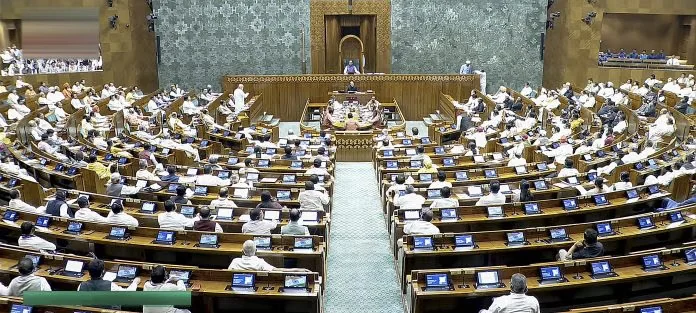
The Union government has introduced three key Bills, including the Constitution (131st Amendment) Bill, 2026, to operationalise 33% reservation for women in the Lok Sabha and State Assemblies.
Here is what each Bill does:
1. The Constitution (131st Amendment) Bill, 2026
This Bill increases the maximum number of seats in Lok Sabha from 550 to 850, with up to 815 members from states and up to 35 from Union Territories. In practical terms, Lok Sabha seats will be increased to a maximum of 850 from the current 543 to "operationalise" the women's reservation law before the 2029 parliamentary polls, following a delimitation exercise based on the 2011 Census.
Read More: How Political Party Developments in 2026 Influence Policy Decisions and Voter Behaviour
2. The Delimitation Bill, 2026
It replaces the Delimitation Act of 2002 and empowers the Central Government to constitute a new Delimitation Commission. This body will be headed by a Supreme Court judge and will include the Chief Election Commissioner and State Election Commissioners, with powers equivalent to a civil court.
Crucially, this Bill provides that the latest published Census as on the date of the constitution of the Delimitation Commission will be used, which implies the 2011 Census will be used for the next delimitation, rather than waiting for the 2027 Census.
3. The Union Territories Laws (Amendment) Bill, 2026
This Bill aims to implement the proposed amendments to the women's quota law in the Union Territories of Delhi, Puducherry, and Jammu and Kashmir.
How the Implementation Would Work (Step by Step)
The HOW matters as much as the WHAT. Here is how women's reservation would actually reach the ground, if all three Bills pass:
- Parliament passes all three Bills , the Constitutional Amendment Bill requires a two-thirds majority and ratification by at least half the States
- A new Delimitation Commission is set up using the 2011 Census data
- Constituencies are redrawn; seats are expanded toward the 850 cap
- The impending delimitation exercise will officially trigger the implementation of the Nari Shakti Vandan Adhiniyam, mandating that one-third of all seats in the Lok Sabha and State Assemblies be reserved for women
- The seats reserved for women in the Lok Sabha and State Legislative Assemblies shall be allotted by rotation to different constituencies in a state or Union Territory.
- The government's target: fast-track implementation of women's reservation by 2029
Real Example: What This Means for Actual Constituencies
If Lok Sabha continues to have the current strength, Tamil Nadu's seats will come down from 39 to 32, and Kerala from 20 to 15 , while Uttar Pradesh will see an increase from 80 to 89, Bihar from 40 to 46, and Rajasthan from 25 to 30.
This is where the argument gets harder to ignore. The delimitation is not just a technical exercise , it is a political redistribution. States that have performed better on population control (largely southern states) end up losing seats, while more populous northern states gain them. For southern states, this is not an abstract concern. It is a direct reduction in their political voice at the national level.
That is why leaders like Tamil Nadu CM M.K. Stalin have been vocal. DMK MP Dayanidhi Maran said, "They are disguising the bill as a bill for women's quota, but it's not a bill for a women's quota. It is for delimitation."
Read More: Iran-Israel War LIVE: Middle East Tensions & Global Stability
The Opposition's Concerns (Fair Ones, Worth Understanding)
Most opposition parties , Congress, TMC, DMK, SP, NCP , say they support women's reservation in principle. Their objections are specific:
- Women's groups want the 33% quota implemented immediately within the current 543-seat Lok Sabha, arguing delimitation should be treated separately and not used to delay representation.
- They have also raised concerns about the absence of a sub-quota for OBC and minority women, arguing that without it, the benefits may be skewed towards more privileged groups.
- Congress MP Prabha Mallikarjun said MPs received the Bill only two days before introduction, leaving little time for debate.
- Samajwadi Party leader Akhilesh Yadav argued the Bills are designed to avoid a caste census, which would require caste-wise reservation data to be published.
PM Modi strongly defended women's reservation in Parliament, urging parties not to politicise the issue, and described the legislation as an opportunity to "add a new chapter to Vikas Bharat."
Both sides are speaking past each other a little, which is frustrating when the actual goal (more women in Parliament) is something everyone claims to agree on.
Common Mistakes People Make When Understanding This Bill
Mistake 1: Thinking the 2023 law already applies to elections
It does not. The law was passed, but its implementation was tied to the census and delimitation. No seats have been reserved yet.
Mistake 2: Assuming this is only about the Lok Sabha
The reservation applies to State Assemblies too. This is a sweeping change across India's entire legislative architecture, at the national and state levels.
Mistake 3: Believing OBC women are included
They are not , not yet, at least. There is no OBC sub-quota in the current law, which is a genuine gap that several parties and women's rights groups have loudly flagged.
Mistake 4: Thinking 33% means 33% of all women will be MPs
It means 33% of the total seats in Parliament will be reserved for women candidates. The seats rotate after each delimitation cycle, so different constituencies will be reserved each time.
Pro Tips: How to Read the News on This Topic Without Getting Confused
- Whenever you see "131st Amendment Bill," know it is about expanding Lok Sabha seats and amending the women's quota trigger
- Whenever someone says "delimitation," they mean redrawing constituency boundaries , it is the process, not just a political tactic
- When the opposition says "implement now without delimitation," they mean use the existing 543 seats and reserve 181 of them for women right away
- When the government says "link it to delimitation," they mean the expansion to 850 seats will create new seats, and those new seats will accommodate women's reservation more cleanly
- The 2011 vs. 2027 Census debate matters because using the older 2011 Census data can be done sooner, while waiting for 2027 Census data would delay everything until potentially 2034
Why This Moment Matters Beyond Politics
Somewhere underneath all the Parliamentary theatre and political accusations is a real issue. India's Parliament has always been shaped by men , their priorities, their comfort, their assumptions about what governance looks like. Experts argue that without legislative intervention, progress toward gender parity in politics would remain slow and uneven.
Countries like Rwanda, New Zealand, Sweden, and Iceland didn't stumble into better women's representation accidentally , they legislated it. India, with 27 years of delay already on the books, is choosing this moment to either act or stall again. Which one it actually is will become clear once the votes are counted.
The Constitutional (131st Amendment) Bill was introduced with 251 members in support and 185 members opposing the introduction. That margin suggests passage is not guaranteed. The Bill requires a two-thirds special majority , and the ruling NDA government currently lacks that margin. The passage will depend on opposition support or abstention.
Conclusion
The Women's Reservation Bill in the Lok Sabha is one of the most important and most stalled pieces of legislation in Indian democratic history. The core idea , that one-third of Parliament should be women , passed with historic unanimity in September 2023. What followed was a delay mechanism built into the law itself: the implementation of the census and delimitation, and suddenly, a 2023 law might not actually take effect until 2034.
The 2026 special session is an attempt to cut that wait short , to use the 2011 Census, expand Lok Sabha to up to 850 seats, complete delimitation faster, and get women's reservation operational by 2029. Whether that attempt succeeds depends on whether enough MPs vote for it. And whether it is the right approach depends on whether you believe fixing it faster is worth the trade-offs , a changed seat balance between states, no OBC sub-quota, and a process that many feel was rushed without adequate consultation.
What is clear is this: India cannot keep having the same conversation about women in Parliament for another 27 years. The Nari Shakti Vandan Adhiniyam was a beginning. What happens in the coming weeks will determine whether 2029 is when the promise finally lands , or whether a new excuse finds its way in.
Read More: Strait of Hormuz Crisis 2026: Latest News on Shipping & Oil Supply
FAQs
What is the Women's Reservation Bill in simple terms?
It is a constitutional law that reserves 33% of seats in the Lok Sabha and State Assemblies for women. It was passed in September 2023 but has not yet been implemented because its activation is linked to a new Census and delimitation exercise.
When will women's reservation actually come into effect?
The government's current target is the 2029 Lok Sabha elections. However, if the new Bills fail to pass Parliament, the implementation could be pushed to 2034 or later, depending on when the Census and delimitation are completed.
What is delimitation, and why is it connected to women's reservation?
Delimitation is the process of redrawing electoral constituency boundaries after a Census. The 2023 law says women's reservation will only kick in after a new delimitation. The 2026 Bills aim to use the 2011 Census to speed this process up.
Are OBC women included in the Women's Reservation Bill?
No. There is currently no sub-quota for OBC women in the law. This is one of the major criticisms from opposition parties and women's rights activists.
Why is the opposition protesting if they support women's reservation?
The opposition broadly supports women's reservation but objects to linking it with delimitation. They want it implemented in the current 543-seat Lok Sabha immediately. They also fear that the delimitation process could reduce the political representation of southern states.
How many seats will be reserved for women if the Bill passes?
Out of a maximum of 850 Lok Sabha seats, approximately 273 seats would be reserved for women , up from zero today.