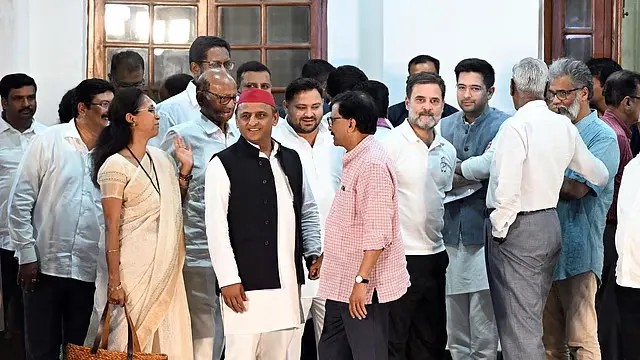
23 Parties Will Attend INDIA Bloc's "Janbandhan" Meeting: Congress Confirms, But Cracks Are Hard to Ignore
The INDIA bloc meeting was never going to be simple. Not after everything that has happened over the past several months. And yet, on June 8, 2025, the opposition coalition called its parties back to Delhi, insisting the alliance is still alive, still unified, still fighting.
Congress confirmed that 23 opposition parties would attend what is now being officially called the "INDIA Janbandhan" meeting, held in the national capital. That rebranding alone tells you something. When a coalition renames itself, it is usually trying to reintroduce itself to a public that has started losing faith in it.
Why the INDIA Bloc Meeting Matters More Than It Looks
This is not just another political gathering. The Indian National Developmental Inclusive Alliance, better known as the INDIA bloc, was formed in 2023 with one core purpose: to present a credible, united front against the ruling BJP ahead of the 2024 general elections. That goal had a mixed outcome. The alliance performed better than many predicted in the Lok Sabha polls, but it fell short of forming a government.
Since then, things have gotten more complicated. DMK, the powerful Tamil Nadu party led by M.K. Stalin, formally ended its alliance with Congress. Trinamool Congress, led by Mamata Banerjee, has faced its own internal storm, with MLAs and MPs reportedly looking to jump ship. These are not minor tremors. They are the kind of fault lines that can split a coalition entirely.
So the question the June 8 meeting has to answer is simple: can the INDIA bloc survive its own internal drift?
Read More: Manoj Bajpayee Calls Ramayana and Varanasi Budget Hype a "PR Tactic" , And He Has a Point
What the June 8 Meeting Is Actually About
The meeting, scheduled at 12 PM in Delhi, had 23 parties confirming attendance, according to Congress. That is a meaningful number, given the recent desertions and electoral setbacks the bloc has faced.
Mamata Banerjee of TMC arrived in Delhi ahead of the meeting, even meeting AAP chief Arvind Kejriwal beforehand. Uddhav Thackeray of Shiv Sena (UBT) was reported to join virtually, with Sanjay Raut confirming his participation.
However, two prominent names were conspicuously absent from the confirmed list. DMK and AAP were expected to skip the meeting entirely. DMK's position is clear: its spokesperson declared the alliance with Congress is over, calling it a "divorce with no scope for reunion," at least in the context of Tamil Nadu local body elections. That is a sharp statement, and it carries weight.
Read More: RBI Holds Repo Rate at 5.25%: What the June 2026 MPC Decision Really Means for Your Money
The Agenda: What Was on the Table
According to multiple reports, the meeting was set to cover several issues the opposition bloc considers urgent. These included the NEET exam controversy, what parties called "anti-democratic attitudes" by the current government, and broader questions of coalition strategy going forward, especially with the Monsoon Session of Parliament looming on the horizon.
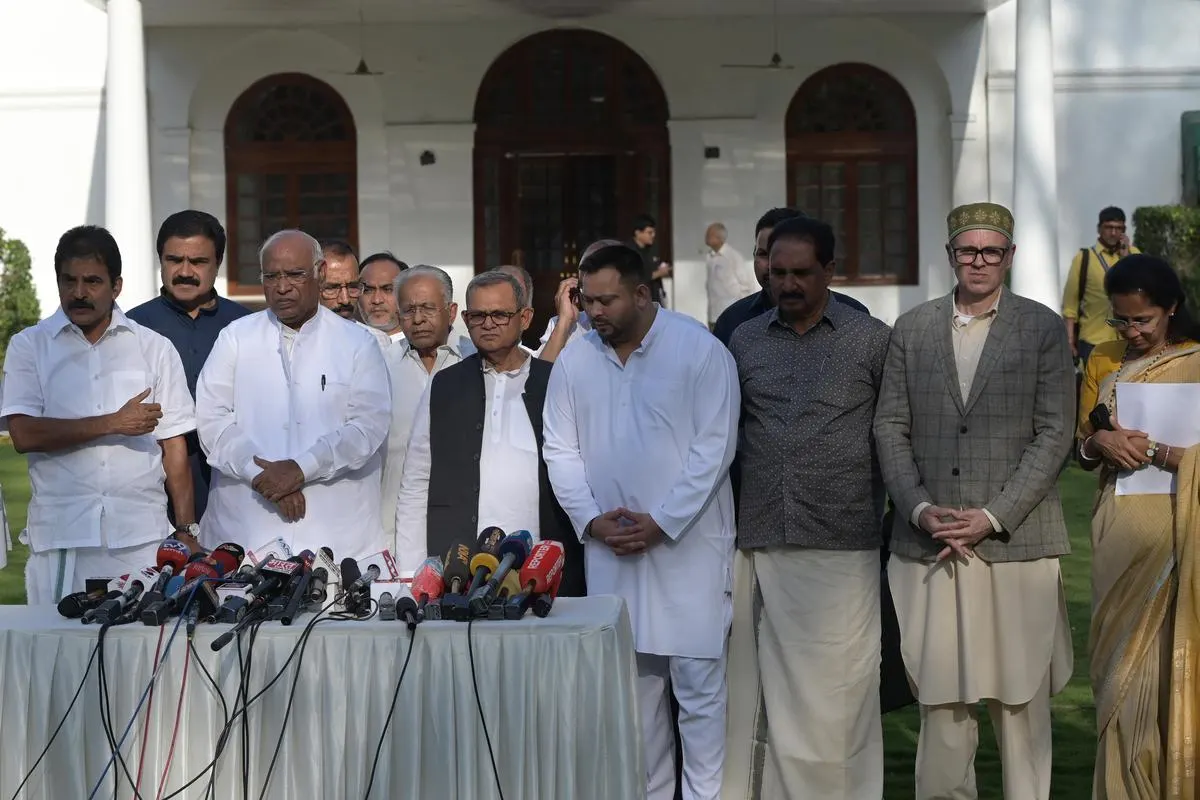
CPI(M) sent its representative E.M. Sudarsana Natchiappan Brittas but separately flagged that it was still waiting for Congress's response on allegations of BJP collusion in Kerala. JMM also raised concerns. These are internal frictions that the party leadership cannot simply talk over.
The Real Test: Can They Hold Together?
Here is where it gets honest. The INDIA bloc internal rift is not a media invention. TMC's troubles are real. The DMK break is real. Vijay's newly formed TVK in Tamil Nadu was also unlikely to attend, raising further questions about the regional arithmetic.
And yet, there is also this: Congress insists the alliance remains united. Mamata Banerjee showed up in person, which is not nothing. Parties like NCP (Sharad Pawar faction), Shiv Sena (UBT), CPI, CPI(M), SP, RJD, JMM, and others confirmed their presence.
A coalition with 23 parties, even a strained one, is not a dead coalition. It is a contested one.
What This Means Going Forward
The opposition unity strategy heading into state elections and the upcoming Parliament session depends heavily on whether this meeting produces more than just a joint statement. The INDIA bloc's survival will be measured not by how many parties attend a meeting in Delhi, but by whether those parties can coordinate on the floor of Parliament and on the ground in key state battles ahead.
Posters surfaced in Delhi before the meeting, dredging up old attacks by bloc allies on Rahul Gandhi. That kind of noise, deliberately timed, suggests someone wants this meeting to fail before it even begins.
Whether it succeeded is a question June 8 will answer.
Read More: Kuku Technologies Files Confidential IPO: What the Rs 3,500 Crore Listing Really Means
Disclaimer: This article is based on information available across the web. Parchar Manch does not take responsibility for its complete accuracy, as the content could not be fully verified.
FAQs
What is the INDIA bloc?
The INDIA bloc (Indian National Developmental Inclusive Alliance) is a coalition of opposition parties in India formed in 2023, primarily to contest elections against the ruling BJP-led NDA government.
Which parties skipped the June 8 INDIA bloc meeting?
DMK and AAP were among the notable parties expected to skip the meeting. DMK had previously announced the end of its alliance with Congress, at least at the state level in Tamil Nadu.
Why did the INDIA bloc rebrand its meeting as "Janbandhan"?
The term "Janbandhan" roughly translates to "people's bond." The rebranding appears to be a communication effort to reposition the alliance around a broader public identity, especially after recent electoral setbacks.
What issues were discussed at the meeting?
Key agenda items included the NEET exam controversy, concerns over democratic processes, and planning around the upcoming Parliament Monsoon Session.
Is TMC still part of the INDIA bloc?
Yes, as of this meeting. Mamata Banerjee traveled to Delhi personally to attend, signaling TMC's continued participation, despite the internal crisis within the party over potential defections.
What happens if the INDIA bloc splits further?
A further fracture would significantly weaken the parliamentary opposition, making it harder to challenge government legislation and reducing the bloc's bargaining power ahead of future state and national elections.