RBI Holds Repo Rate at 5.25%: What the June 2026 MPC Decision Really Means for Your Money
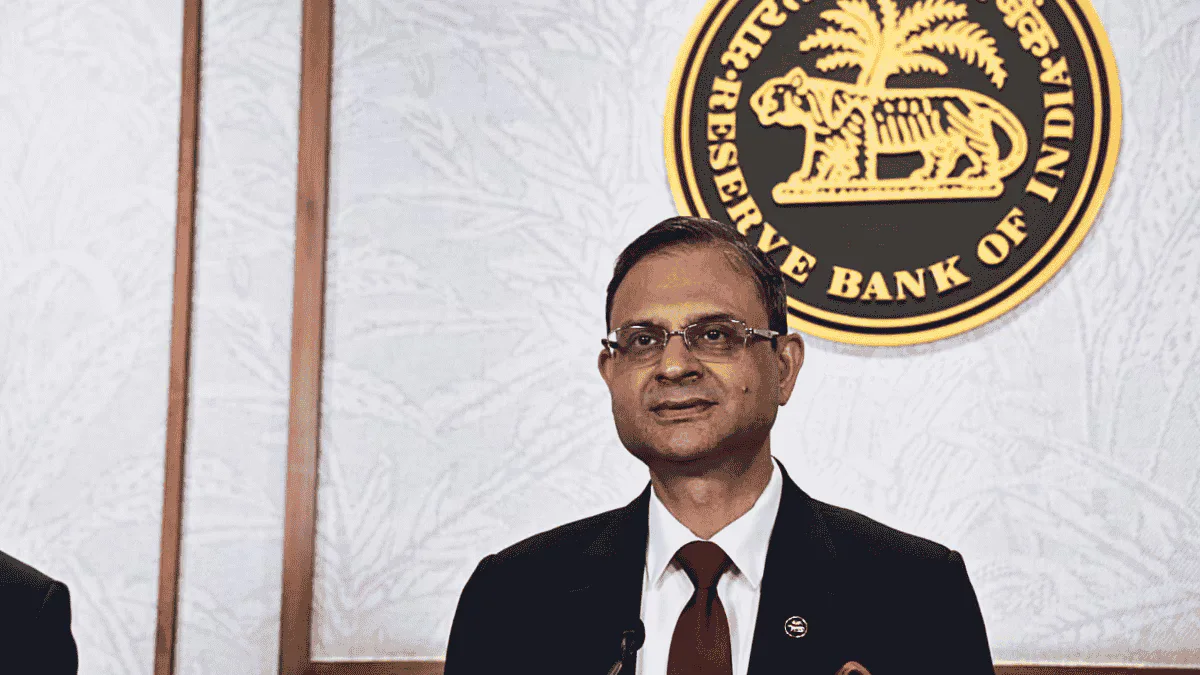
RBI repo rate unchanged , that was the headline that came out of the Reserve Bank of India's Monetary Policy Committee meeting on June 5, 2026. Governor Sanjay Malhotra announced the decision, and the six-member MPC voted to keep the policy repo rate steady at 5.25% while maintaining a "neutral" stance. Not a rate cut. Not a hike. A deliberate pause , and the reasons behind it matter more than the number itself.
Why the RBI Chose to Stand Still , and Why It Actually Makes Sense Right Now
The easy assumption is that holding rates means nothing is happening. That would be wrong.
The RBI is watching at least three uncomfortable things pile up at the same time: rising inflation, global turbulence from the Middle East crisis, and a rupee facing currency pressure from capital flows and crude oil costs. When you are balancing three moving plates at once, standing still is not indecision , it is caution with intention.
The Monetary Policy Committee also revised India's FY27 real GDP growth forecast downward , from 6.9% earlier to 6.6% now. That is a meaningful cut. And the inflation forecast was revised upward to 5.1%, up from earlier projections, partly because of the risk that rising oil prices could pass through to fuel and transport costs across the economy.
Read More: The Iran-US Peace Deal Is Almost Here — But Israel's War in Lebanon Could Still Unravel Everything
What Is the Repo Rate , Explained Simply
Think of the repo rate as the interest rate at which commercial banks borrow money from the RBI overnight. When this rate goes up, banks pay more to borrow from the central bank. They pass that cost onto you , your home loan EMIs rise, your personal loan becomes more expensive, businesses cut back on expansion. When it comes down, borrowing becomes cheaper and the economy tends to pick up.
At 5.25%, the repo rate is neither aggressively tight nor loosely accommodative. It sits in a zone the MPC calls "neutral" , meaning the RBI is not trying to actively slow the economy down, nor is it injecting fuel into it. It is watching. Measuring. Waiting.
The Full MPC Decision , What Was Announced on June 5, 2026
Here is exactly what the RBI's MPC decided:
Repo rate: Kept unchanged at 5.25% for the second consecutive meeting.
Monetary policy stance: Neutral. This means the next move could go either way , a hike or a cut , depending on incoming data.
FY27 GDP growth forecast: Revised down to 6.6% from 6.9%. Not alarming, but a sign that global headwinds are biting.
Inflation forecast: Raised to 5.1% for FY27. The RBI flagged three specific risks , oil price pass-through if crude remains elevated, monsoon uncertainty affecting food prices, and Middle East geopolitical tensions keeping currency markets on edge.
Impact on EMIs: With the repo rate unchanged, your existing home loan or car loan EMI stays the same for now. No immediate change.
Why Inflation Is the Real Story Here
The RBI's mandate is price stability. If inflation crosses a certain threshold, the central bank is expected to act , typically by raising rates. At 5.1% projected inflation, India is not in crisis territory, but it is not comfortable either.
The core inflation concern is that oil price movements can quietly spread across the economy , higher fuel costs mean higher transport costs, higher transport costs mean higher vegetable and goods prices, and before long, what started as a Middle East conflict becomes slightly more expensive groceries in Delhi and Mumbai.
Add to that the monsoon risk. A weak or delayed monsoon raises food prices significantly in India, since agricultural output affects the cost of everything from pulses to cooking oil. The MPC knows it cannot control monsoons, but it has to price in the possibility.
What This Means for Borrowers and Investors
If you have a floating rate home loan, your EMI stays where it is. That is the immediate relief. But the neutral stance and the upward inflation revision mean rate cuts , which had been quietly hoped for by many borrowers , are off the table for now.
For investors, a neutral stance with a downward GDP revision often creates short-term uncertainty in rate-sensitive sectors , banking stocks, NBFCs, real estate companies, and auto manufacturers , all of which move in relation to how interest rates are expected to move.
Gita Gopinath, the former IMF chief economist, noted that any future rate hike by the RBI would depend entirely on incoming inflation data. That signals the central bank is data-dependent, not pre-committed , which is actually a healthy sign.
Common Misreading: "Unchanged Rate Means No Change"
People often hear "rate unchanged" and stop paying attention. That is the mistake.
The real signal is always in the language around the decision , the stance, the revised forecasts, the risks highlighted. A neutral stance with rising inflation forecasts and a cut to growth estimates is the RBI quietly saying: the next move is live, and it could go either way. That is not a non-event. That is a conditional warning.
The SBI chairman also noted that a pause could help stabilise growth amid inflation, suggesting that the banking sector itself is not pushing for hikes either.
Read More: From a Beijing Apartment to $92.8 Billion: How Zhang Yiming Just Overtook Mukesh Ambani
What to Watch Next
Keep your eye on three indicators in the coming months. First, CPI inflation data , if it crosses 5.5% or moves toward 6%, a rate hike becomes genuinely likely. Second, crude oil prices , particularly how the Middle East situation evolves and whether oil stays elevated. Third, monsoon progress , the India Meteorological Department's updates through July and August will directly feed into how the RBI thinks about food inflation.
The next MPC meeting will give much clearer signals, especially if any of these three shift significantly.
Closing Thought
There is a certain kind of policy decision that is harder to make than it looks , the decision to do nothing in a noisy room. The RBI's June 2026 call was exactly that. Not a headline rate cut, not a dramatic hike. Just a calibrated pause from a central bank that has decided watching carefully is, right now, the most responsible thing it can do. Whether that patience pays off depends on factors the RBI itself cannot control. But at least it knows that.
FAQs
What is the current RBI repo rate after the June 2026 MPC meeting?
The repo rate remains unchanged at 5.25%, as decided by the Monetary Policy Committee on June 5, 2026.
Will my home loan EMI change after this RBI decision?
No. Since the repo rate was kept unchanged, there is no immediate change to floating-rate home loan EMIs.
Why did the RBI not cut rates despite slower growth?
Because inflation , projected at 5.1% for FY27 , remains elevated, and risks from oil prices, Middle East tensions, and the monsoon make a rate cut premature at this stage.
What does "neutral stance" mean in RBI's monetary policy?
It means the MPC has no pre-set direction for the next move. Rates could go up or down depending on how inflation and growth data evolve.
How does the Middle East crisis affect India's monetary policy?
Ongoing tensions in the Middle East push oil prices higher. Higher crude costs raise fuel prices in India, which increases transportation and goods costs , feeding into overall inflation and adding pressure on the rupee.
What is the revised GDP growth forecast for India in FY27?
The RBI has revised its FY27 real GDP growth forecast downward to 6.6%, from the earlier estimate of 6.9%.