Bhojshala Declared a Hindu Temple: What the MP High Court Verdict Really Means for India's Most Contested Site
There is a structure in Dhar, Madhya Pradesh, that has made grown men argue for centuries. Not just argue petition, protest, stand outside with policemen nearby, pray differently on different days of the same week. The Bhojshala complex has carried that weight for a long time. And on May 16, 2025, the Madhya Pradesh High Court finally put a verdict on record: Bhojshala is a Hindu temple dedicated to Goddess Saraswati. Not a mosque. Not a shared space. A temple.
That is the headline. But behind it is a story that deserves more than a headline.
Why the Bhojshala Verdict Is Being Compared to Ayodhya
India has seen religious-site disputes before. The Ayodhya verdict in 2019 changed how courts look at these cases particularly how historical, archaeological, and literary evidence gets weighed against community practice. The Bhojshala-Kamal Maula Mosque dispute has now followed a similar path.
The verdict, delivered by a division bench of Justices Vijay Kumar Shukla and Alok Awasthi at the Indore bench of the MP High Court, runs deep. It does not just declare ownership. It reshapes who can pray there, how the site is managed, and what happens to an ancient idol sitting in a London museum right now.
The Muslim side has already indicated it will challenge the ruling in the Supreme Court. The ripples are already spreading.
What Exactly Is Bhojshala? Understanding the Dispute from Scratch
If you have never heard of Bhojshala before today, here is what you need to know.
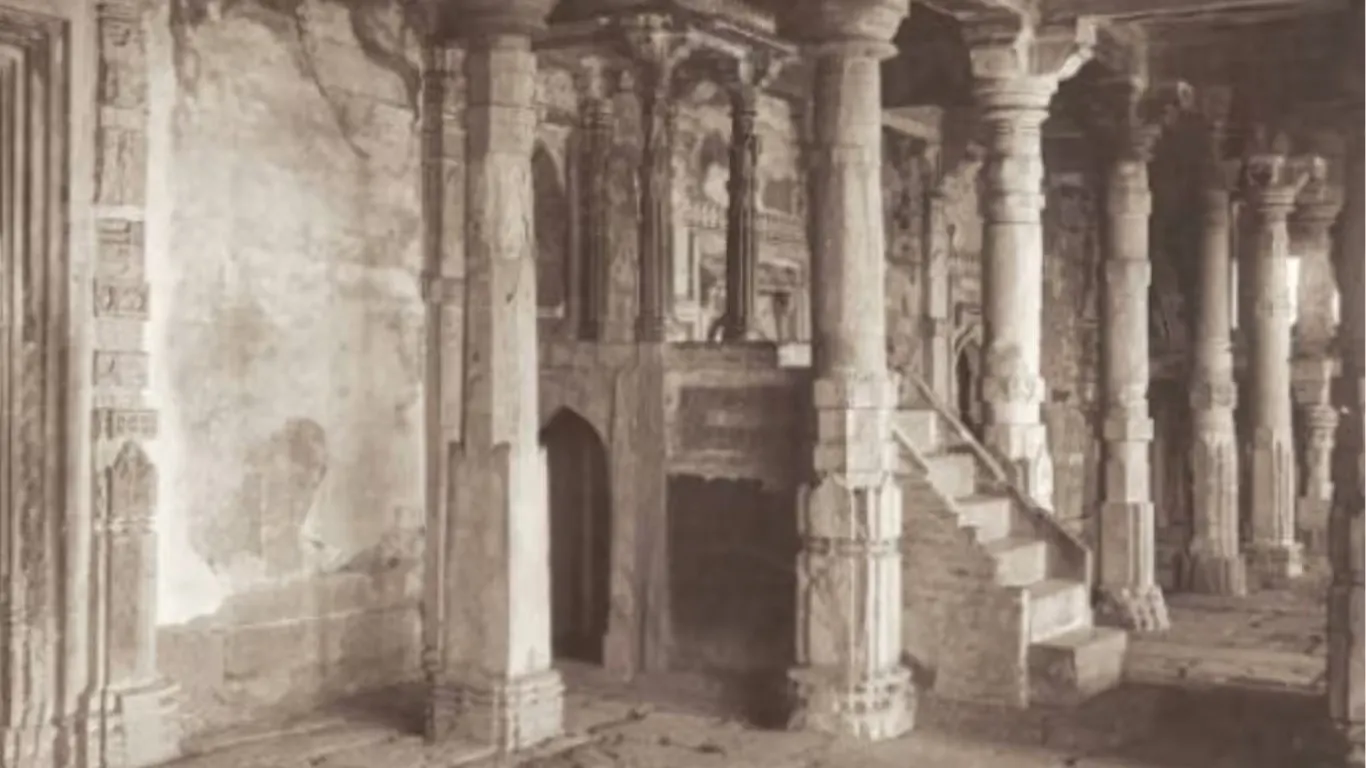
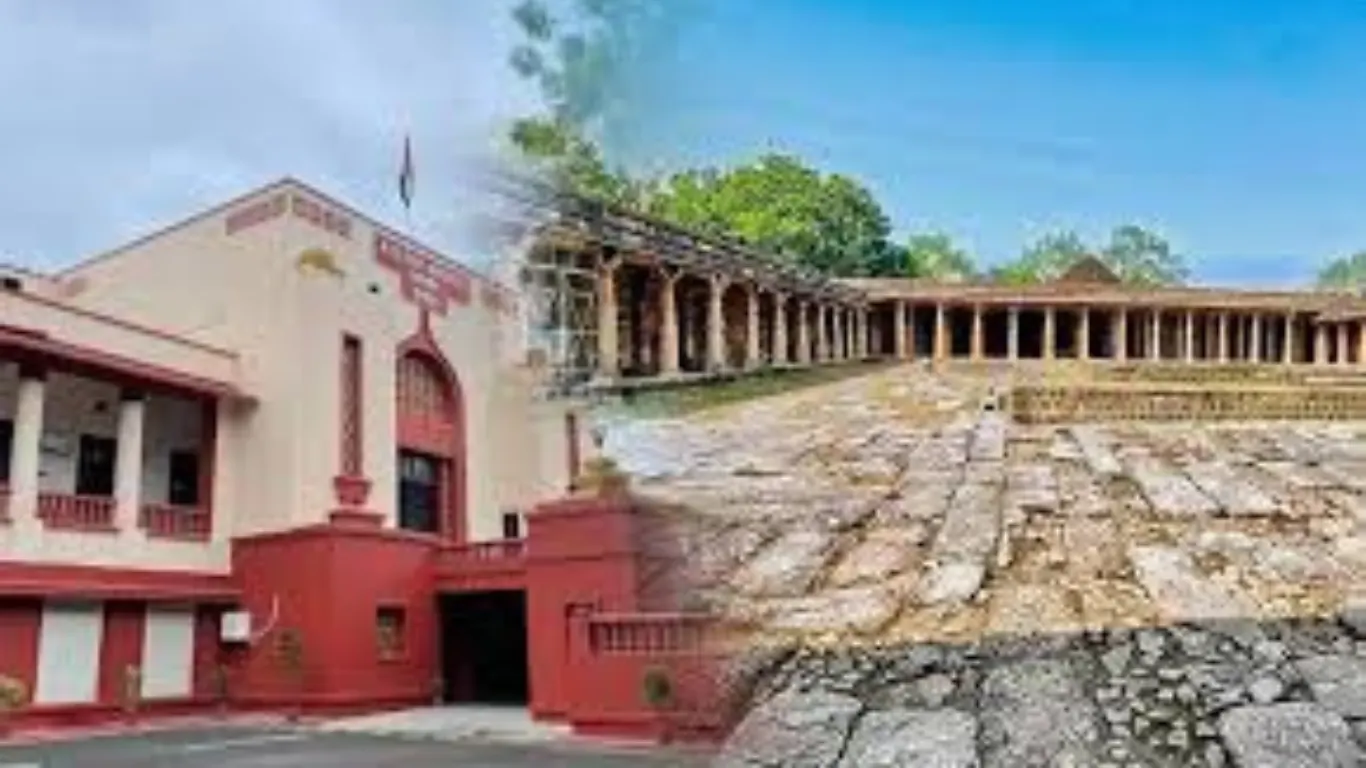
The site is an 11th-century monument in Dhar district, protected by the Archaeological Survey of India (ASI). It was built during the reign of Raja Bhoj of the Paramara dynasty, somewhere between 1010 and 1055 AD. Historically, it functioned as a renowned centre for Sanskrit learning a kind of royal university, if you will. The name "Bhojshala" itself refers to the hall of Bhoj.
For the Hindu community, this is a temple of Goddess Vagdevi, another name for Saraswati, the deity of learning and language. For the Muslim community, the same structure is the Kamal Maula Mosque, where Friday prayers have been offered for generations. A third claimant from the Jain community argued the site had features common to medieval Jain temples and that an idol found there belongs to the Jain goddess Ambika.
In 2003, the ASI issued an arrangement: Hindus could worship every Tuesday, and Muslims could offer namaz every Friday. For over two decades, that uneasy truce held the site together barely.
Read More: Tamil Nadu Hung Assembly 2026: Why Vijay's Historic Win Is Hanging by a Thread
What the MP High Court Actually Said: The Key Findings
The court's ruling rests on several arguments, some of which are worth understanding clearly.
The bench found that historical literature, inscriptions, and archaeological references consistently establish Bhojshala as a site connected to Goddess Saraswati. The court observed that "the continuity of Hindu worship at the site has, over time, never been extinguished," which became a significant line in its judgment.
The 1904 ASI report played an important role. It had identified the idol of Vagdevi, which was removed from the site and is now housed in the British Museum in London. The Hindu petitioners used this as evidence that a consecrated deity once existed here.
The court also found that the structure lacked essential architectural features of a mosque. The Muslim side, represented by senior advocates Salman Khurshid and Shobha Menon, had challenged the ASI survey findings and argued that Khilji-period historical records make no mention of any temple being destroyed at Dhar. Those arguments were not accepted.
What happened to the 2003 ASI arrangement? It has been scrapped. The court set aside that order entirely. Only Hindu worship will now take place at the complex.
The ASI Survey: 98 Days and a 2,000-Page Report
Much of the legal weight in this case came from an ASI scientific survey ordered by the court itself and completed in 2024. The survey lasted 98 days. The final report ran to approximately 2,000 pages.
Read More: Mamata Banerjee Refuses to Resign After West Bengal Election Defeat: Is Democracy Under Threat?
The Muslim community had challenged the survey in the Supreme Court, which initially stayed it. Eventually, the Supreme Court laid down a time-bound process to unseal the report, give copies to all parties, and take objections at the final hearing. The High Court said it did not fully rely on the ASI survey report but the survey's findings clearly informed the broader picture it painted of the site's religious character.
What Happens Next: Supreme Court, London Idol, and the Mosque Question
Three things stand out from the judgment's directions.
First, the Central government and ASI have been directed to decide how Bhojshala will be administered as a temple going forward. The ASI retains overall custodianship of the protected monument.
Second, the court addressed the question of the Goddess Saraswati idol sitting in the British Museum. It directed the government to consider representations already made by petitioners seeking the idol's return and its possible reinstallation at Bhojshala. This is not a binding order for repatriation, but it gives the demand formal judicial acknowledgement for the first time.
Third, on the mosque question, the court suggested that if the Maulana Kamaluddin Welfare Society applies for land in Dhar district to build a mosque, the state government may consider that request. It is a recommendation, not a direction — but it signals the court's awareness that the Muslim community needs an alternative.
Common Misunderstandings People Have About This Case
A lot of people assume that these heritage disputes are recent inventions of political convenience. The Bhojshala case predates the current political climate by decades. The dispute over this site has roots going back to the colonial period, with an ASI notification under the Ancient Monument Preservation Act of 1904.
Another misunderstanding is that the ASI survey was conducted secretly or without the Muslim side's participation. The process was supervised under Supreme Court directions, with copies of the report given to all parties before the final hearings.
Some have also asked whether the Places of Worship Act of 1991 applies here. AIMIM chief Asaduddin Owaisi raised exactly this point, calling the judgment unconstitutional and saying the Act was being ignored. The Act freezes the religious character of places of worship as they existed on August 15, 1947, with the exception of the Ram Janmabhoomi site. Whether the Bhojshala site falls within or outside that protection is a question the Supreme Court may now have to settle.
What This Verdict Means Beyond the Legal Argument
It would be too simple to read this as just another religious site ruling. Bhojshala sits at the intersection of archaeology, colonial-era records, living religious practice, and contemporary identity politics. The fact that the court drew on Raja Bhoj a figure from the 11th century to establish the site's Hindu character tells you how far back these arguments have to go to find solid ground.
The question of the London idol adds something quietly poignant to this. The Vagdevi statue, carved during Bhoj's reign, was removed during British administration and has been in the British Museum ever since. Petitioners have asked for it back many times. The court has now formally acknowledged that request. Whether London responds is another matter entirely.
For now, about 1,200 police personnel stood guard in Dhar on the day of the verdict a Friday, the very day of the week when Muslims had offered prayers here for over two decades. That is the context in which this ruling landed.
Closing Thoughts
These disputes are uncomfortable to sit with. They ask very difficult questions about who gets to use a piece of history, who holds authority over sacred spaces, and what exactly "continuity of worship" means across centuries of conquest, colonial administration, and democratic governance.
The MP High Court has given its answer. The Supreme Court may yet give another. But Bhojshala, that 11th-century hall of learning that Raja Bhoj built beside the banks of time, will keep being argued over perhaps long after any verdict forgets to matter.
Disclaimer: This article is based on information available across the web. Parchar Manch does not take responsibility for its complete accuracy, as the content could not be fully verified.
Read More: Born After 2008? You Can Never Legally Buy a Cigarette in the UK. Here Is What That Actually Means
FAQs
What is Bhojshala, and why is it disputed?
Bhojshala is an 11th-century ASI-protected monument in Dhar, Madhya Pradesh. The Hindu community considers it a temple of Goddess Saraswati, the Muslim community calls it the Kamal Maula Mosque, and a Jain group claims it as a medieval Jain site.
What did the Madhya Pradesh High Court rule in the Bhojshala case?
The court declared Bhojshala a Hindu temple dedicated to Goddess Saraswati. It scrapped the 2003 ASI arrangement that allowed shared worship and granted exclusive worship rights to the Hindu side.
Can Muslims still offer prayers at Bhojshala after the verdict?
No. The court has prohibited namaz inside the complex. It suggested the Muslim community may approach the state government for alternative land to build a mosque in Dhar district.
What is the Vagdevi idol, and where is it now?
The Vagdevi idol is an ancient statue of Goddess Saraswati, originally installed at Bhojshala by King Bhoj between 1010 and 1055 AD. It was removed during colonial administration and is currently housed in the British Museum in London. The MP High Court has asked the Indian government to consider efforts to bring it back.
Will this case go to the Supreme Court?
The Muslim side has indicated it will challenge the ruling in the Supreme Court. A Hindu party has already filed a caveat there to receive advance notice of any petition.
How is this case connected to the Ayodhya verdict?
Courts and legal observers note that the principles established in the 2019 Ayodhya verdict — particularly how archaeological and historical evidence is used to determine the original character of a disputed site — appear to have influenced the reasoning in the Bhojshala judgment.