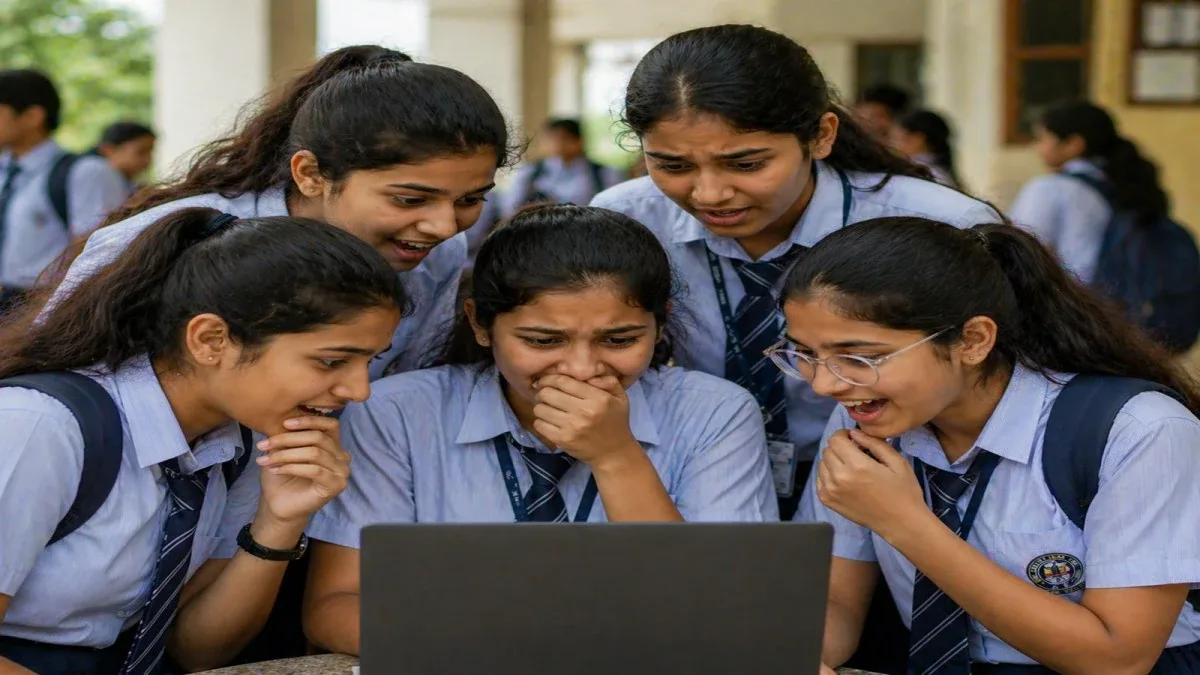
CBSE's On-Screen Marking System: What Really Went Wrong and Why Millions of Students Are Still Waiting for Answers
CBSE On-Screen Marking was supposed to be the future. Cleaner evaluations. No more subjective bias. No more teachers marking physical papers in cramped rooms. The idea was genuinely good. What happened next is the kind of institutional failure that makes parents reach for the phone at midnight and students lose sleep over marks they earned honestly.
Here is everything you need to know.
What Is the CBSE OSM System and How Did It Work?
On-Screen Marking (OSM) is a digital evaluation method where physical answer sheets written by students during board exams are scanned and uploaded to an online portal. Teachers then evaluate these scanned copies on their screens instead of reviewing original paper scripts. CBSE marketed this as a step toward greater transparency, efficiency, and reduction of human error.
The portal used was OnMark (cbse.onmark.co.in), operated by a third-party vendor. The idea was straightforward: upload sheets, assign to evaluators, mark digitally, store securely. CBSE stated the move was aimed at improving efficiency, transparency, and reducing human error.
On paper, it made sense. In practice, the 2026 rollout exposed how badly underprepared the entire system was.
Read More: The Iran-US Peace Deal Is Almost Here — But Israel's War in Lebanon Could Still Unravel Everything
Why CBSE's OSM Rollout Became a National Crisis
In May 2026, CBSE announced Class 12 results that sent shockwaves through over 17 lakh households across India. Students received wrong answer sheets. Blurred, illegible scans were marked by evaluators. Pages went missing. Portals crashed. The national pass percentage plunged to 85.20%, the lowest in seven years, down from 88.39% in 2025.
The story that broke the internet came from a student named Vedant Shrivastava. He went viral on social media platform X after receiving the wrong Physics answer sheet through the OSM system. His case was not an outlier. Around 20 cases of answer-sheet mix-up were detected in CBSE's first-time on-screen marking process.
What began with Vedant Shrivastava receiving the wrong Physics answer sheet grew into a national debate on CBSE's On-Screen Marking system. Teenagers like Shrivastava, Nisarga Adhikary, and Sarthak Sidhant used public records and social media to expose answer-sheet mismatches, cybersecurity flaws, and alleged procurement irregularities.
Three students. No institutional power. Enormous impact.
The Vendor Problem: Who Was Given This Responsibility?
This is where the story takes a troubling turn. The OSM contract was awarded to the lowest bidder, and teachers and principals reportedly allege the rollout was too soon and inadequately tested.
The Hyderabad-based Coempt EduTeck emerged as the lowest bidder, quoting approximately Rs 24.75 per answer booklet compared to TCS's approximately Rs 65. The contract was signed just weeks before the nationwide rollout began. A corrigendum issued on September 20, 2025 removed provisions for blacklisting vendors for such lapses from the original tender document. That detail raised serious questions about accountability.
The cybersecurity breach made things worse. Scrutiny intensified after 19-year-old ethical hacker Nisarga Adhikary alleged that CBSE's AWS bucket was not properly configured, allowing enumeration of media files containing 2026 answer sheets and question papers. Over 4.5 lakh students' data was reportedly exposed.
CBSE's Response: Too Little, Too Late?
CBSE revealed that cybersecurity experts from various government agencies and Indian Institutes of Technology (IITs) had been working over the past several days to strengthen the platform and move it to a more secure environment.
The board acknowledged the ethical hackers publicly and even asked others to report vulnerabilities via email. CBSE acknowledged the role played by ethical hackers and concerned citizens who flagged possible flaws in the system.
The re-evaluation portal was delayed to June 1, 2026. For the over four lakh students who applied for scanned copies, the process was itself traumatic: portal crashes, inflated fees, illegible PDFs, and the anxiety of not knowing whether the sheet uploaded was even theirs.
Officials said Coempt will be fined in line with penalty provisions in its tender document, including Rs 1 lakh fines for every 15-minute delay in rectifying issues flagged by CBSE officials.
What Students and Parents Need to Know Right Now
If your child appeared in CBSE Class 12 exams in 2026, here is what matters:
The re-evaluation and answer book verification window is currently active. Students can apply to check their scanned copies, request re-evaluation, and raise discrepancies through the official CBSE portal. Aadhaar authentication has been introduced as a new verification layer. The deadline to apply is June 6, 2026.
If marks have increased after re-evaluation, CBSE has promised full refunds on re-evaluation fees.
The Bigger Question Nobody Is Asking Loudly Enough
India runs one of the largest examination systems in the world. Millions of students, one result, one portal. When that system is handed to the lowest bidder with 66 days of lead time, when blacklisting clauses are quietly removed from contracts, when servers expose answer sheets to anyone who knows how to paginate an AWS bucket, something is structurally wrong.
The CBSE OSM fiasco is the inevitable output of an exam system that prioritises announcements over readiness.
That is not a comfortable thought. But it is an honest one.
Disclaimer: This article is based on information available across the web. Parchar Manch does not take responsibility for its complete accuracy, as the content could not be fully verified.
FAQs
What is CBSE's OSM system in simple words?
OSM stands for On-Screen Marking. It is a system where students' physical answer sheets are scanned and teachers evaluate them digitally on a computer, rather than checking original paper scripts.
What went wrong with CBSE OSM in 2026?
Multiple failures occurred simultaneously: students received wrong scanned answer sheets, evaluators marked blurred or incomplete copies, the re-evaluation portal crashed repeatedly, and cybersecurity researchers found that student data including answer sheets were accessible online due to a misconfigured cloud storage system.
Who exposed the CBSE OSM security flaw?
A 19-year-old ethical hacker named Nisarga Adhikary publicly disclosed that CBSE's cloud storage was misconfigured, making answer sheets and question papers accessible without authorization. Two other Class 12 students, Vedant Shrivastava and Sarthak Sidhant, also independently raised concerns about answer-sheet mismatches and tender irregularities.
Can students still apply for re-evaluation after the OSM controversy?
Yes. CBSE opened the re-evaluation and answer book verification portal on June 1, 2026, with a deadline of June 6, 2026. Students can apply through the official CBSE website. Aadhaar authentication is required during the process.
Will CBSE take action against the vendor responsible?
CBSE has indicated that financial penalties will be imposed on Coempt EduTeck under the contract's penalty clauses. Complete blacklisting, however, was reportedly removed as an option from the original tender document through a corrigendum.
What is NSUI's role in this controversy?
The National Students' Union of India (NSUI) has moved the Delhi High Court seeking an independent inquiry into the CBSE OSM row, arguing that student rights and data privacy were compromised.