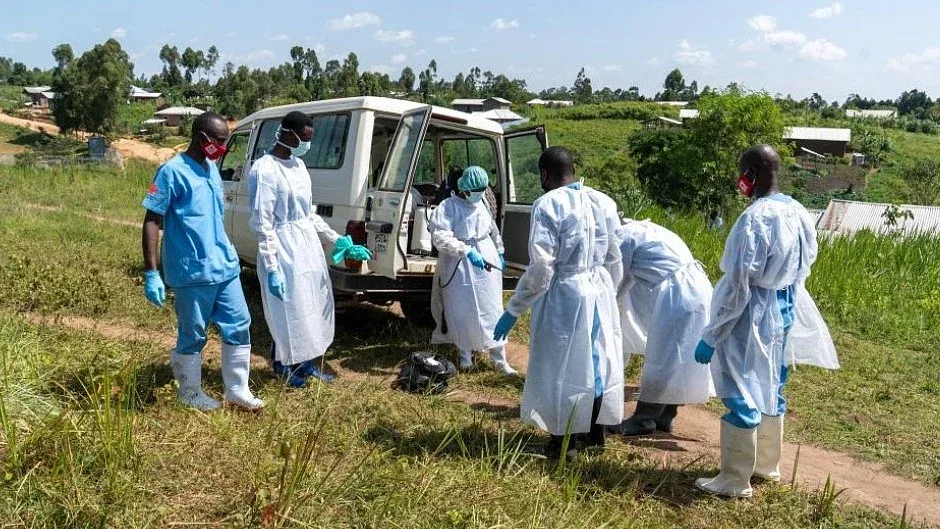
Congo's Ebola Crisis Just Hit 1,000 Cases — and the Bundibugyo Virus Is Unlike Anything Seen Before
The number crossed 1,000 quietly. No press conference, no global alarm sirens. Just a count, ticking upward in eastern Democratic Republic of Congo, where over 1,048 confirmed cases of Ebola have now been recorded alongside 254 deaths and health officials are openly saying they believe the real numbers are far worse.
This is not the Ebola most people remember from 2014. That's important to understand from the start.
What Makes This Ebola Outbreak in DR Congo Different
The strain driving this Ebola outbreak in Democratic Republic of Congo is the Bundibugyo virus a rarer variant with no approved vaccine and no confirmed treatment. The standard diagnostic kits, GeneXpert machines widely deployed across conflict zones, could not even identify it at first. That delayed detection by weeks. Weeks in which the virus spread silently through Ituri province in eastern DRC, moving through displacement camps, crossing into health zones that had never dealt with Ebola before.
There are now over 70 healthcare workers infected. Seventeen medics have already died. When the people meant to treat a disease start falling to it, containment becomes a different problem entirely.
Read More: Why Yoga Day 2026 Feels Different This Time — And Why the World Is Paying Attention
Why This Ebola Crisis Is So Hard to Stop
Eastern DRC is not a peaceful region. Armed conflict has displaced millions. People are living in camps, crowded together, distrustful of outsiders and in some cases, distrustful of the outbreak itself. UN News reported that some residents question whether Ebola is even real. That is not ignorance. That is what happens when communities have been burned by years of misinformation, foreign intervention, and broken promises.
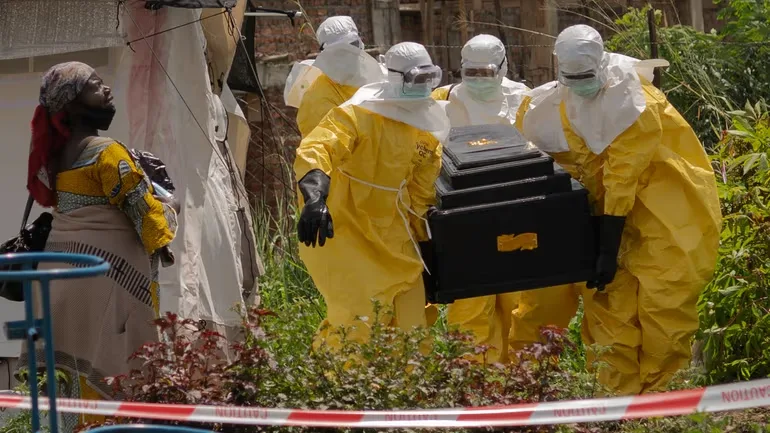
Community trust is not a soft issue here. It is the single biggest obstacle to containment. Doctors Without Borders warned one month into the outbreak that dangerous gaps persisted. Bloomberg reported that Ebola patients were fleeing treatment centres not because they wanted to spread illness, but because they were hungry. The food situation inside some centres was simply not adequate.
This is what a public health crisis looks like when it collides with a humanitarian one.
The Scale of the Risk — Especially for Children
UNICEF has flagged that nearly 3 million children and adolescents in eastern DRC now face rising risks from this outbreak. More than 130 children have already been orphaned. A toddler died in a newly affected displacement camp, marking the virus's spread into yet another community.
The Ebola virus transmission route here is the same as it has always been — direct contact with the bodily fluids of an infected person, or with the body of someone who has died from the disease. Ebola is not airborne. But in overcrowded camps with limited sanitation, where infection control is nearly impossible and burial practices vary, the conditions are about as favorable for spread as they can be.
No Vaccine, No Treatment, and Shrinking Funding
This is the part that deserves more attention than it's getting. Because the Bundibugyo variant is rare, no approved Ebola vaccine exists for it. CEPI and Gavi have together committed over $100 million toward vaccine research and development — but that money is for the future, not for the people sick right now.
Meanwhile, the response on the ground has been hampered by funding cuts. Reports indicate that reductions to USAID have directly impacted the outbreak response capacity. WHO has publicly stated it is "racing to catch up." Africa CDC warned this could become the worst Ebola outbreak on record.
The response is, in plain terms, insufficient for the speed at which this virus is moving.
What Is Being Done
DRC authorities announced free healthcare for all illnesses in Ituri as part of the emergency response. A Chinese medical team has arrived. UN agencies are scaling up. But health workers describe an outbreak that is outpacing their ability to track it — meaning the confirmed case count of 1,048 is almost certainly an undercount.
Responders say the true scale, one month in, remains unknown.
Closing Thoughts
A thousand cases of Bundibugyo Ebola in a war-torn region with no vaccine, no approved treatment, and a fractured health system is not just a number. It is a stress test of everything that global health infrastructure is supposed to be built for. And right now, the infrastructure is losing.
The outbreak will not stay contained to Ituri indefinitely. UNHCR has already warned that displaced populations crossing borders carry the risk with them. Uganda is already on alert.
The question is not whether the world is watching. It clearly is. The question is whether watching will be enough.
Read More: Ram Temple Donation Controversy: What the SIT Probe Is Uncovering About Ayodhya's Missing Funds
Disclaimer: This article is based on information available across the web. Parchar Manch does not take responsibility for its complete accuracy, as the content could not be fully verified.
FAQs
What is the Bundibugyo Ebola virus?
It is a strain of the Ebola virus family, distinct from the more commonly known Zaire strain. It was first identified in Uganda in 2007 and has a different genetic profile. No approved vaccine or specific treatment currently exists for it.
How does Ebola spread?
Ebola spreads through direct contact with the blood, bodily fluids, or organs of an infected person or animal. It is not transmitted through the air. Close contact during caregiving or unsafe burial practices are the most common transmission routes.
Is the DR Congo Ebola outbreak a global threat?
While the risk to any individual outside the region remains low, the outbreak has a global health significance because of the scale, the lack of a vaccine, and the potential for spread through displaced populations crossing borders. UNHCR has flagged international risk.
Why are cases likely undercounted?
The Bundibugyo strain was not detectable by standard GeneXpert diagnostic kits early in the outbreak, causing delays. Additionally, conflict zones limit the reach of health workers, and community distrust means many sick people do not seek formal care.
What is being done to develop a vaccine?
CEPI and Gavi have committed over $100 million toward Bundibugyo vaccine research. However, vaccine development takes time, and no approved product is currently available for deployment in this outbreak.
How can the international community help?
Funding is the most immediate need. The response has been affected by cuts to international health aid. Contributions to WHO, UNICEF, and MSF operations in DRC directly support treatment, tracing, and community engagement on the ground.