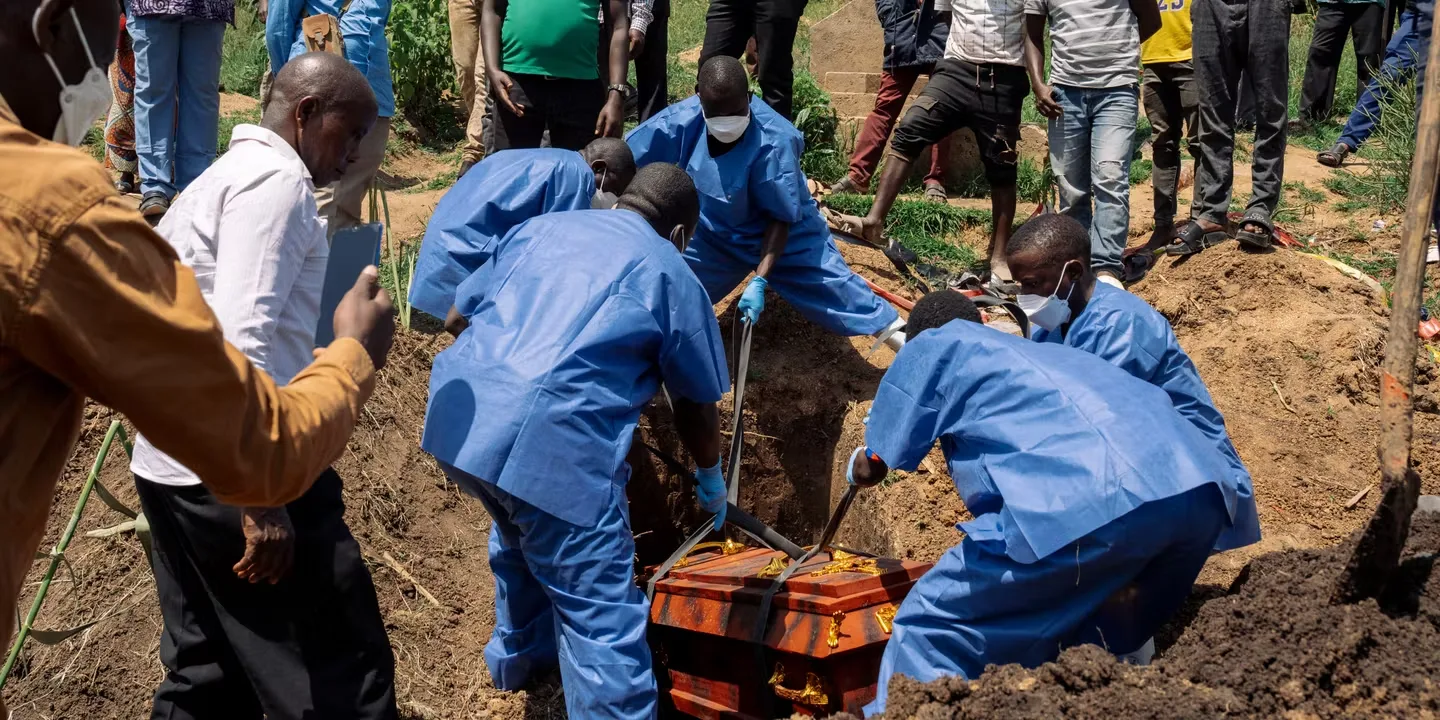
Congo Ebola Outbreak: Why This One Is Spreading Faster Than Any Before It
Here is a number that should stop you for a second. Just over a thousand confirmed cases in forty days. Compare that to the 2018 outbreak in the same region, which took roughly 235 days to reach the same mark. That is the pace of the current Congo Ebola outbreak, and it is why health officials keep repeating one uncomfortable phrase, we cannot say it is stabilising yet.
This is not a distant statistic. It is happening right now, in real communities, in eastern Democratic Republic of the Congo, and the Congo Ebola outbreak has already crossed into a second country.
Why the Congo Ebola Outbreak Actually Matters
Numbers alone do not capture what is happening on the ground. As of early July, DRC has recorded more than 1,700 confirmed cases and over 600 deaths, with hundreds more people currently hospitalised in isolation. Uganda has confirmed 20 cases and two deaths, some linked to travel from DRC and some from local transmission inside Kampala. Two more cases have been exported entirely outside Africa, one to Germany, one to France, both linked to travel from the affected region.
That is what makes this different from a routine local health crisis. The Bundibugyo virus driving this outbreak has already shown it can travel, and health authorities everywhere are watching closely because of it.
Read More: NASA Swift Telescope Rescue Mission: The Wild Plan to Grab a Falling Observatory Before It Burns Up
What Is Actually Happening, Explained Simply
Think of Ebola outbreaks like wildfires. Some stay small and get contained quickly. Others catch wind and spread across new ground before anyone can build a firebreak. This one caught wind. The World Health Organization declared a WHO public health emergency back in May, which is the WHO's highest level of alarm, reserved for situations that could cross borders and need coordinated global response.
Part of the problem is the virus itself. This is not the more familiar Zaire strain that most existing Ebola vaccines and treatments were built for. The Bundibugyo virus is rarer, harder to diagnose quickly, and until recently had no dedicated treatment or vaccine at all. That gap has left responders working with limited tools against a virus moving unusually fast.
Read More: Vera C. Rubin Observatory 10-Year Survey Just Started, and It's Basically Filming the Universe Live
How the Response Is Unfolding, Step by Step
- Detection and spread. The outbreak began quietly in April, traced to a nurse who died at a medical center in Bunia, before being officially declared in mid May once the scale became clear.
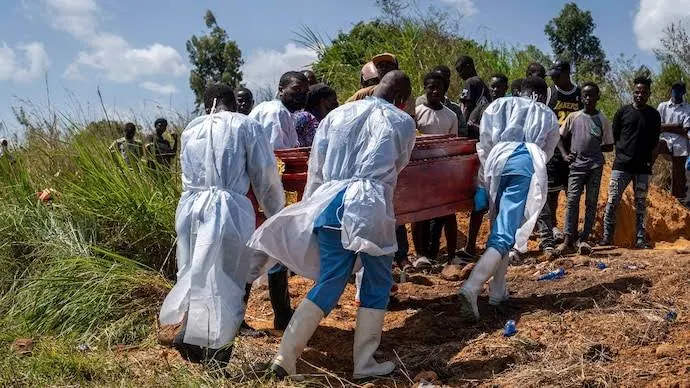
- Geographic expansion. What started in Ituri province has now reached North Kivu, South Kivu, and more recently Tshopo and Haut Uele, alongside confirmed spread into Uganda's capital.
- International emergency declaration. WHO's PHEIC declaration in May triggered coordinated funding, staffing, and cross border monitoring across the Ebola outbreak DRC Uganda region.
- Ground response. More than 1,400 staff from Doctors Without Borders alone are now running treatment centers and isolation units across Ituri, North Kivu, South Kivu, and parts of Uganda.
- Treatment trials. Since early July, the first patients have been enrolled in Ebola treatment trials testing drugs against Bundibugyo specifically, since existing options were never designed for this exact strain.
Real World Examples of What This Means
Consider a health worker in Bunia treating patients daily without a vaccine designed for the virus they are fighting. That is the reality driving the urgency behind new Ebola treatment trials like MBP-134 and remdesivir, tools that showed promise against other Ebola strains and are now being tested here for the first time. Or consider a family in Kampala being asked to quarantine for 21 days after possible exposure, with no guaranteed treatment to offer them beyond observation, until obeldesivir trials potentially change that equation.
Read More: Chandrayaan-3 Landing Site Meteorite Match Just Rewrote a Small Piece of Moon History
Mistakes People Keep Making While Following This Story
A common mistake is assuming outbreak numbers reflect the full picture of the Congo Ebola outbreak. They likely do not. Health officials themselves have acknowledged the true scale has not yet been established, given the ongoing armed conflict in the region that complicates contact tracing and makes some areas difficult to reach. Another mistake is assuming the risk is purely local. While the likelihood of infection in Europe or the United States remains very low according to health agencies, the confirmed exported cases in Germany and France show that travel links tied to the Ebola outbreak DRC Uganda situation matter and cannot be dismissed entirely.
Read More: 2026 FIFA World Cup Round of 16 Bracket Is Set, and the Matchups Are Brutal
Pro Tips for Following This Story Responsibly
If you want to track the Congo Ebola outbreak responsibly rather than anxiously, follow official sources like WHO situation reports, the CDC, or ReliefWeb updates rather than social media rumors, since outbreak information changes weekly and misinformation spreads almost as fast as the virus itself in affected communities. Anyone with recent travel to Ituri, North Kivu, or South Kivu provinces should monitor for symptoms for 21 days and seek medical attention immediately if fever or other warning signs appear, rather than waiting to see if symptoms pass on their own.
Closing Thoughts
There is something sobering about a virus this old still catching health systems off guard, decades after the first Ebola outbreak was identified. The Congo Ebola outbreak has combined conflict, mistrust, and a rare viral strain into something genuinely difficult to contain. But there is also something quietly hopeful in watching clinical trials move forward in real time, alongside the response rather than after it, because that is exactly the lesson earlier outbreaks left behind.
FAQs
What is causing the current Congo Ebola outbreak?
The Congo Ebola outbreak is caused by the Bundibugyo virus, a rare strain of Ebola with no previously approved vaccine or treatment, first identified in the current outbreak in April 2026.
How many people have been affected so far?
As of early July, DRC has reported over 1,700 confirmed cases and more than 600 deaths, while Uganda has confirmed 20 cases and two deaths.
Has the Ebola outbreak DRC Uganda situation spread beyond Africa?
Yes. Two imported cases linked to the Ebola outbreak DRC Uganda situation have been confirmed outside the continent, one medically evacuated to Germany and one reported in France, though overall risk to Europe remains low.
Why did WHO declare a public health emergency?
The WHO public health emergency declaration in May 2026 reflected concerns about the outbreak's unusually fast spread, its cross border reach into Uganda, and the lack of approved treatments for the Bundibugyo strain. This WHO public health emergency status remains active as the response continues.
Are there any treatments being tested right now?
Yes. Multiple Ebola treatment trials began in early July testing drugs including remdesivir, MBP-134, and obeldesivir specifically against the Bundibugyo virus.
What should travelers returning from affected areas do?
Anyone recently in Ituri, North Kivu, or South Kivu provinces should monitor for symptoms for 21 days and contact a healthcare provider immediately if fever or other Ebola symptoms develop. If this outbreak is affecting you personally, whether through direct exposure concerns or anxiety about the news, reaching out to a healthcare provider or local health authority for guidance is a reasonable next step.