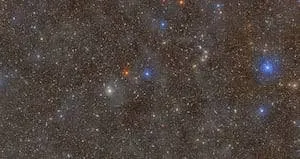
Vera C. Rubin Observatory 10-Year Survey Just Started, and It's Basically Filming the Universe Live
Somewhere on a mountaintop in Chile, a camera the size of a small car just started doing something no telescope has ever attempted quite this way. Every 30 seconds, it snaps a photo. Then it swivels. Then it snaps another. It's going to keep doing that, night after night, for the next decade. That's the Vera C. Rubin Observatory 10-year survey, officially called the Legacy Survey of Space and Time, and honestly, calling it ambitious feels like an understatement.
Why This Actually Matters
Here's the part that should make anyone curious sit up. In its very first year, this survey is expected to capture more astronomical objects than every other optical telescope in human history combined. Not over a decade, in year one. That's the kind of scale that changes how science gets done, not just what we already know about the universe, but how quickly new discoveries get made and shared. For everyday people, this matters because a huge chunk of Rubin's data becomes public, meaning researchers everywhere, not just at major institutions, get access to genuinely groundbreaking cosmic information.
What the Legacy Survey of Space and Time Really Is
Let's simplify the concept. Most telescopes work like a photographer with a single, patient subject, staring intently at one spot in the sky for a long exposure. Rubin works completely differently. Think of it more like a security camera system for the entire southern sky, sweeping continuously rather than fixating on one target.
Using its 3,200 megapixel camera, roughly 65 times sharper than a modern smartphone camera, Rubin captures a patch of sky 45 times the size of the full Moon in a single 30 second exposure. Over the next 10 years, it'll revisit every point in its field of view around 800 times, essentially building a time lapse movie of the cosmos, tracking how galaxies, stars, and smaller objects change and move.
How the 10-Year Rubin Observatory Survey Actually Works, Step by Step
- The setup. Perched atop the 8,800 foot Cerro Pachón mountain in Chile, the $800 million observatory combines an 8.4 meter mirror with the largest digital camera ever built for astronomy.
- The nightly routine. The telescope takes about 1,000 images each night, cycling through six different color filters to build a detailed multicolor map of the sky.
- The data pipeline. Each night generates somewhere between 10 and 20 terabytes of data, an amount comparable to hundreds of full length 4K movies.
- The alert system. Whenever something changes, an asteroid streaking by, a star exploding, a distant object brightening, Rubin issues an alert within about a minute, and researchers expect roughly 7 million such alerts every single night.
- The long game. Combining thousands of repeated observations over 10 years lets astronomers see fainter, more distant objects than any single image could reveal, gradually sharpening the entire picture.
- The final dataset. By the survey's end, scientists expect a catalogue containing billions of objects and trillions of individual measurements.
Read More: Twenty Rebel Trinamool Congress MPs to Merge with NCPI? The Political Buzz Raising Big Questions
Real-World Discoveries Already Happening
This isn't theoretical potential, it's already producing results. During its early optimization phase, before the official survey even began, Rubin discovered more than 11,000 previously unknown asteroids, including near-Earth objects and distant trans-Neptunian bodies. One research team even found an ultrafast rotating asteroid completing a full spin in under two minutes, the fastest ever recorded for an object of its size.
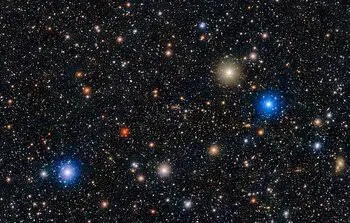
Rubin also joined the search for an unusual gravitational wave signal in late 2025, hunting for a possible optical counterpart, though the mystery object involved remains unidentified. Scientists are also hopeful the survey might finally spot direct evidence of Planet Nine, a hypothesized distant planet that's only been inferred so far from its gravitational effects on other objects.
Mistakes People Keep Making While Following This Story
A common misconception is expecting instant, dramatic breakthroughs right from day one. Astronomers involved have been upfront that the earliest data won't be as useful for detecting extremely faint objects, since Rubin's power comes from stacking repeated observations over years, not single snapshots. Another mistake is assuming this survey only benefits professional astronomers. In reality, the data releases are designed to be broadly accessible, meaning students, hobbyists, and independent researchers can meaningfully engage with genuine cutting edge data.
Pro Tips for Following Rubin's Discoveries
If you want to track this survey intelligently over the coming years, pay attention to the alert stream announcements rather than just headline discoveries, since that's where the freshest and most unexpected findings tend to surface first. Also keep an eye on dark matter and dark energy research specifically, since Rubin's core scientific mission centers on studying how light from distant galaxies gets subtly distorted, offering one of the clearest windows yet into these still mysterious cosmic forces.
Closing Thought
There's a quiet kind of audacity in deciding to just film the universe changing in real time for a full decade, patiently, methodically, without knowing exactly what you'll find. Rubin's chief scientist has said the survey might be remembered a century from now not for confirming what we already suspected, but for revealing something entirely unexpected. That uncertainty, oddly enough, is the most exciting part of the whole project.
Read More: Madhur Virli Rape Joke Controversy: Why India's Stand-Up Comedy Scene Is in Crisis Again
Disclaimer: This article is based on information available across the web. Parchar Manch does not take responsibility for its complete accuracy, as the content could not be fully verified.
FAQs
What is the Legacy Survey of Space and Time?
It's a 10-year astronomical survey conducted by the Vera C. Rubin Observatory, designed to repeatedly photograph the entire southern sky and track changes over time.
Where is the Vera C. Rubin Observatory located?
It sits atop Cerro Pachón, an 8,800 foot mountain in northern Chile, chosen for its dark, clear skies.
How much data does Rubin collect each night?
Roughly 10 to 20 terabytes per night, along with as many as 7 million alerts flagging changes in the sky.
What is Rubin hoping to discover?
Key goals include mapping the solar system, studying dark matter and dark energy, and potentially detecting entirely new, unexpected cosmic phenomena
Can the public access Rubin Observatory's data?
Yes, much of the survey's data is made publicly available, allowing researchers and enthusiasts worldwide to explore it.