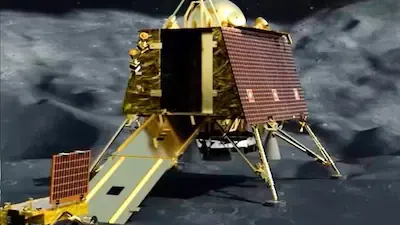
Chandrayaan-3 Landing Site Meteorite Match Just Rewrote a Small Piece of Moon History
Here's a strange thought to sit with for a second. A rock that fell out of the sky in Antarctica back in 1981, decades before anyone had even sent a rover to the Moon's south pole, has now turned out to be chemically related to soil sitting right where India's Chandrayaan-3 mission touched down. That's the heart of this Chandrayaan-3 landing site meteorite discovery, and honestly, the kind of connection that makes you pause and reread the sentence twice.
Why This Actually Matters
You might be wondering why a rock comparison from millions of kilometers and forty odd years apart deserves attention. Fair, but here's the thing. Every time scientists connect surface data from an actual mission to a meteorite found on Earth, it validates our entire method of studying the Moon from a distance. It means the samples we occasionally get, whether from Apollo, or meteorite falls, or now Chandrayaan-3, actually tell a consistent, trustworthy story about how the lunar crust formed. For India specifically, this adds real scientific weight to Chandrayaan-3's legacy, beyond just being a landing milestone.
What This Meteorite Connection Really Is
Let's simplify it. Think of the Moon's crust like a layered cake baked over billions of years, made of different rock types depending on depth and formation history. Scientists at the Physical Research Laboratory (PRL) in Ahmedabad compared soil data gathered by Chandrayaan-3's Pragyan rover at Shiv Shakti Station, near the lunar south pole, against data from 66 known lunar meteorites found scattered across Earth, in places like Oman, Libya, and Antarctica.
One meteorite stood out from the rest. It's called ALHA 81005, discovered in Antarctica's Allan Hills region back in 1981, and it holds a special place in space science as the very first meteorite ever conclusively proven to have come from the Moon. When researchers lined up its chemical composition with the Chandrayaan-3 soil readings, the match was closer than with any other meteorite in the comparison.
Read More: Power Shifts 2026: A Clear Look at India’s Changing Political Scene
How the Chandrayaan-3 Meteorite Match Was Confirmed, Step by Step
- The instrument. Chandrayaan-3's Pragyan rover carried an Alpha Particle X-ray Spectrometer, or APXS, which analyses the elemental makeup of lunar soil directly on the surface.
- The data collection. After landing in August 2023, the rover recorded compositional readings of the regolith at Shiv Shakti Station.
- The comparison pool. Researchers gathered geochemical data from 66 feldspathic lunar meteorites recovered from six different regions on Earth.
- The matching process. Elements like aluminium oxide, iron oxide, and magnesium oxide were compared across all samples to find the closest chemical fingerprint.
- The result. ALHA 81005 emerged as the nearest match, sharing similar magnesium numbers and occupying a rare compositional zone between two known lunar rock types, ferroan anorthosite and Mg-suite rocks.
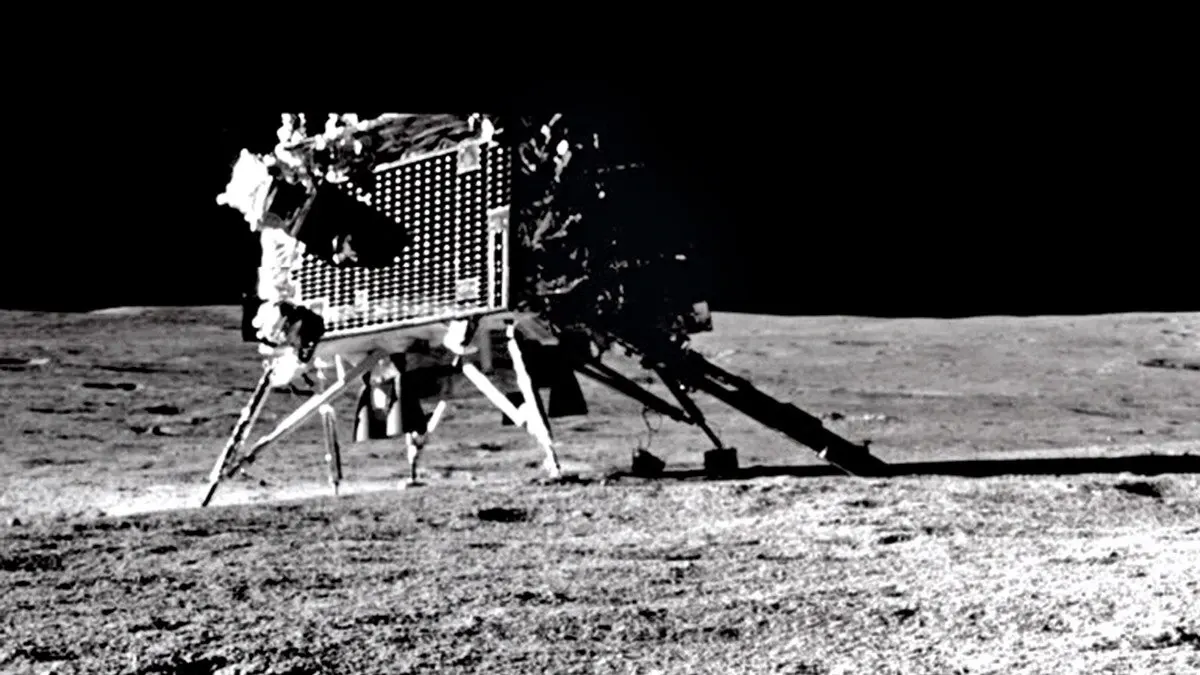
- The publication. The findings were detailed in a paper titled Chandrayaan-3 APXS measurements reveal lunar highland compositional diversity and meteorite connections, published in npj Space Exploration.
Real-World Meaning Behind the Numbers
It's worth being precise here, since headlines can overstate this kind of thing. The study doesn't claim ALHA 81005 physically came from Shiv Shakti Station. Instead, it shows both sites represent a similar type of magnesium-rich lunar material, meaning this composition might be more widespread across the Moon's highlands than previously assumed. Also worth noting, the Chandrayaan-3 soil wasn't pure and simple either. It appears to be a mixture of surface material and deeper crust fragments, suggesting local mixing processes over time.
Mistakes People Keep Making While Reading This Story
A frequent misreading of headlines like this is assuming scientists found the meteorite's exact source crater. That's not what happened, and it's an easy trap to fall into with space news that gets simplified for quick consumption. Another mistake is treating this as a minor coincidence rather than genuine confirmation. A four decade old meteorite matching real time rover data is a meaningful cross validation of both datasets, not just a curious footnote.
Pro Tips for Following Lunar Research Like This
If you want to actually track developments in this space, pay attention to which lunar highland rock classifications keep coming up, specifically ferroan anorthosite and Mg-suite types. These categories show up repeatedly across meteorite studies and mission data, and understanding them gives you a much clearer read on future lunar announcements. Also, keep an eye on future missions to the south polar region, since that's clearly becoming a compositional hotspot worth revisiting.
Closing Thoughts
There's something quietly satisfying about a meteorite that fell to Earth decades before Chandrayaan-3 even existed turning out to hold a chemical echo of that very landing site. Science doesn't always move in straight lines. Sometimes it just waits, patiently, for the right piece of evidence to catch up and confirm what was already sitting in a freezer in Antarctica the whole time.
Disclaimer: This article is based on information available across the web. Parchar Manch does not take responsibility for its complete accuracy, as the content could not be fully verified.
FAQs
What is ALHA 81005?
It's a lunar meteorite discovered in Antarctica in 1981, widely recognised as the first meteorite ever confirmed to have originated from the Moon.
. What did the new study find?
Researchers found that soil at Chandrayaan-3's landing site, Shiv Shakti Station, has a geochemical composition closely matching ALHA 81005.
Does this mean the meteorite came from the Chandrayaan-3 landing site?
No, the study clarifies that both simply share a similar magnesium-rich lunar composition, not a direct origin link.
Who conducted this research?
Scientists from the Physical Research Laboratory in Ahmedabad conducted the study, published in npj Space Exploration.
What instrument collected the lunar soil data?
Chandrayaan-3's Pragyan rover used its Alpha Particle X-ray Spectrometer to analyse the soil composition.