Delhi Metro Closes 16 Stations Amid CJP Protests: Full List And What Commuters Should Know
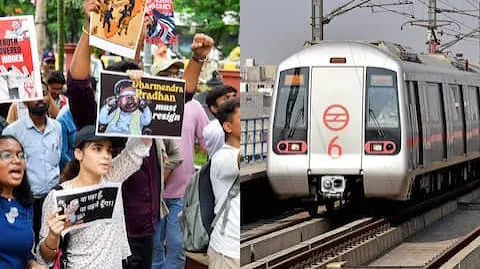
You're standing on the platform, train's not stopping, and the announcement barely explains why. That's been the actual experience for thousands of Delhi commuters this week, as Delhi Metro closes 16 stations amid CJP protests, turning an ordinary Wednesday commute into a genuine logistical headache across the city's busiest corridor.
If you're trying to figure out which stations are shut, why, and what to actually do about it, here's everything laid out clearly.
Why This Actually Matters
Because this isn't some minor inconvenience tucked away in a corner of the city. The closed stretch runs straight through central Delhi, the exact corridor office-goers, students, and daily commuters rely on to get in and out of government offices, Connaught Place, and the broader Central Secretariat area. When 16 stations shut at once, it doesn't just delay a few people. It reroutes entire commuting patterns for a city of over 30 million.
What Actually Happened
On Wednesday, July 22, the Delhi Metro Rail Corporation (DMRC) suspended operations at 16 metro stations, acting on the advice of security agencies as the Cockroach Janta Party (CJP) protest at Jantar Mantar intensified alongside the ongoing Monsoon Session of Parliament. This wasn't a sudden jump from nothing, either. Just two days earlier, on Monday, only five stations, Janpath, Rajiv Chowk, Patel Chowk, Central Secretariat and Seva Teerth, had been closed as an initial precaution. By Wednesday, as the crowd at Jantar Mantar swelled and security agencies widened their footprint, that number more than tripled.
The full list of closed stations reads like a map of central Delhi's core: Lok Kalyan Marg, Rajiv Chowk, Patel Chowk, Ramakrishna Ashram Marg, Barakhamba Road, Supreme Court, Seva Teerth, Janpath, Mandi House, Central Secretariat, ITO, Delhi Gate, Indraprastha, Khan Market, Jor Bagh, and Shivaji Stadium on the Airport Express Line. As of Thursday morning, reports confirmed the closures were still in effect, described as remaining shut "till further instructions."
How The Closures Actually Work
Here's the part that trips people up, so it's worth explaining properly. A metro station closure doesn't always mean the same thing everywhere.
- At most of the 16 stations, trains simply don't stop, meaning if you're already on board, you'll pass straight through without the doors opening.
- Interchange facility remains available at three key stations, Rajiv Chowk, Mandi House, and Central Secretariat, so if you need to switch lines, you can still do that even though general entry and exit is restricted.
- Entry and exit gates at the affected stations are locked, which is different from earlier, smaller-scale closures during past protests, where sometimes only specific gates shut while others stayed open.
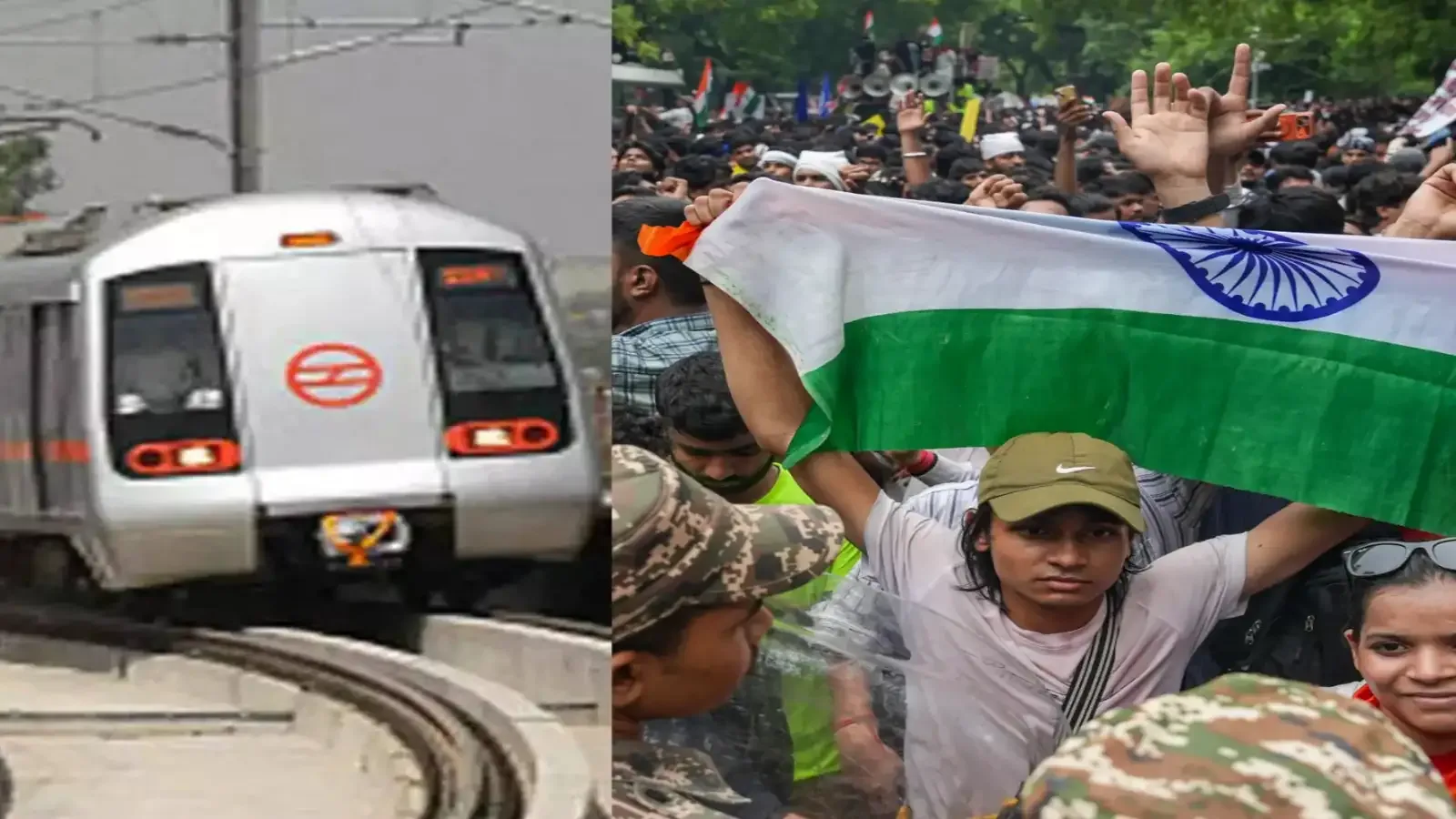
- The restrictions apply until DMRC issues further instructions, there's no fixed reopening time announced, which is exactly why checking official updates before you leave matters more than usual right now.
Real-World Example: How This Compares To Past Closures
This isn't the first time Delhi's metro network has bent around a protest. During the 2020 Hathras case demonstrations, DMRC shut entry and exit gates at just three stations for about an hour, then reopened them once the immediate crowd thinned. During the 2024 farmers' protest, roughly 20 stations saw gate closures at the peak of tension, alongside train suspensions at Tilak Bridge railway station.
What makes this week's closures notable is the scale paired with the duration. Sixteen full station closures, sustained across multiple days, sitting right through an active parliamentary session, is a heavier and longer disruption than most of the comparable precedents.
Mistakes People Keep Making During Situations Like This
The most common one: assuming your regular station is fine just because it wasn't on yesterday's list. As Monday's five-station closure ballooned to sixteen by Wednesday, the list has been actively expanding, not fixed. Checking DMRC's official X account or app before leaving home, rather than relying on what you remember from a day or two ago, actually matters here.
Another mistake, treating "station closed" and "line closed" as the same thing. The trains are still running on these lines, they're simply not stopping at the affected stations. If your destination happens to be one of the open interchange points, you can often still get remarkably close to where you need to be.
Pro Tips That Actually Help Right Now
If your usual route runs through Central Secretariat, Rajiv Chowk, or Mandi House, lean on those interchange points rather than avoiding the metro entirely, since they remain functional for line changes even during the shutdown. If your workplace sits near Khan Market, Jor Bagh, or ITO, building in extra walking time from the nearest open station, or switching temporarily to app-based cabs or buses, will likely save more frustration than waiting out an unpredictable reopening. Delhi Police have also issued traffic advisories urging commuters to avoid the Parliament Street, Jantar Mantar, and Central Vista areas entirely, worth factoring in even if you're not using the metro at all.
Closing Thoughts
There's something quietly telling about how a protest over exam integrity, of all things, ends up reshaping how an entire city moves for a week. The Sansad Chalo march wasn't really about metro stations. But here we are, checking DMRC's X feed before deciding how to get to work. That's usually how these things ripple outward, the original grievance stays exactly where it started, and everyone else just adjusts around it.
FAQs
Which Delhi Metro stations are closed right now?
Lok Kalyan Marg, Rajiv Chowk, Patel Chowk, Ramakrishna Ashram Marg, Barakhamba Road, Supreme Court, Seva Teerth, Janpath, Mandi House, Central Secretariat, ITO, Delhi Gate, Indraprastha, Khan Market, Jor Bagh, and Shivaji Stadium.
Why did Delhi Metro close these 16 stations?
DMRC suspended operations on the advice of security agencies as the CJP protest at Jantar Mantar intensified during the ongoing Monsoon Session of Parliament.
Can I still use the metro to change lines?
Yes. Interchange facility remains available at Rajiv Chowk, Mandi House, and Central Secretariat even though general entry and exit is restricted.
When will the stations reopen?
There's no confirmed timeline. DMRC has said the closures will remain "till further instructions," so checking official updates before traveling is recommended.
Are trains still running on these lines?
Yes, the lines themselves are operational. Trains simply don't stop at the affected stations during the closure.
Is road traffic also affected?
Yes. Delhi Police have issued advisories asking commuters to avoid Parliament Street, Jantar Mantar, and Central Vista due to heavy security deployment and barricading.