Delhi Police Deny Pellet Guns Against Protesters: What The Evidence Actually Shows
A video starts circulating. A man's face, dotted with small perforations, the kind of image that spreads before anyone's checked it twice. Within hours it's everywhere, and within a day, the force at the center of it is calling it fake. That's roughly the shape of the Delhi Police deny pellet guns against protesters story that's been unfolding since Monday's Cockroach Janta Party (CJP) march toward Parliament.
It's worth slowing down on this one. Not because the claim is obviously true or obviously false, but because pellet guns carry a history in India that makes the question matter more than it might for other crowd control disputes.
Why This Actually Matters
Because pellet guns aren't just another word for "non-lethal weapon." They're the same devices that left hundreds of people partially or permanently blind in Jammu and Kashmir back in 2016, during unrest following Burhan Wani's killing. So when a claim like this surfaces, even before it's verified, it lands with weight. People remember what these weapons have done elsewhere. That's exactly why Delhi Police moved so fast to shut the narrative down, and why protesters pushed just as hard to keep it alive.
What Actually Happened
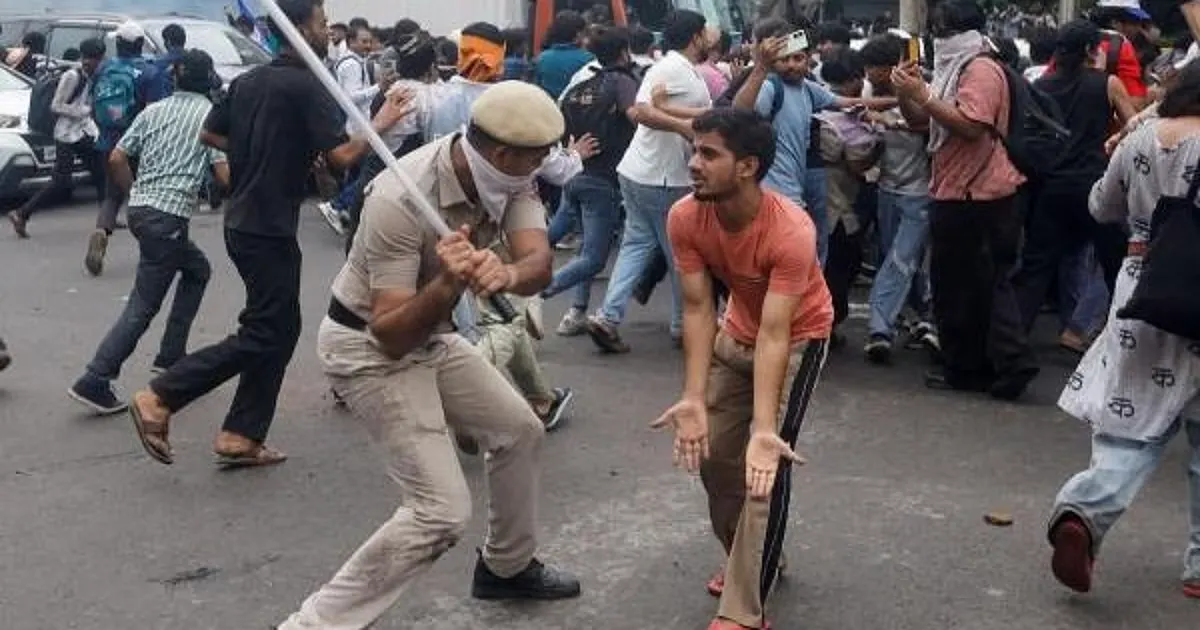
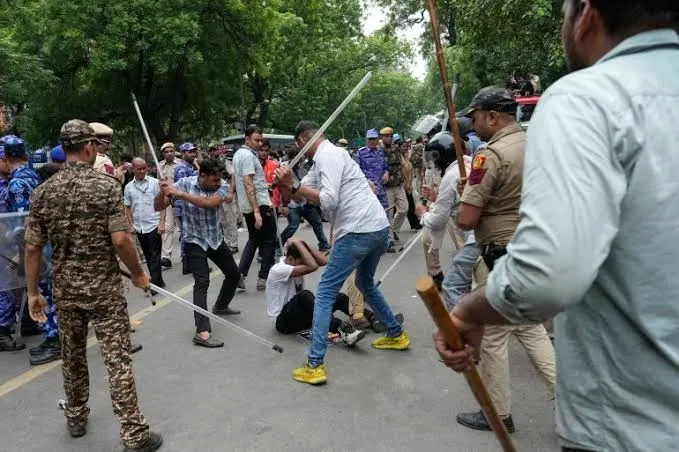
On July 20, thousands joined the CJP's "Sansad Chalo" march, demanding Union Education Minister Dharmendra Pradhan's resignation over the ongoing NEET paper leak controversy. Delhi Police and the Rapid Action Force (RAF) stopped the march before it reached Parliament. What followed was, by most accounts, genuinely chaotic. Lathis came out, tear gas was used, and clashes broke out after police say protesters breached barricades and pelted stones.
Then, on July 21, CJP spokesperson Saurav Das posted a video on X alleging pellet gun use against what he described as peaceful protesters, along with footage of a man whose facial injuries resembled pellet wounds. Delhi Police responded within hours. "Fake News Alert," their official account posted, stating flatly that the force does not possess such weapons and calling the claims completely false and misleading. They went further, warning of legal action against anyone spreading what they termed misinformation, and separately denied a related claim that the RAF used electric stun guns.
By Wednesday, the dispute had escalated all the way to the Supreme Court, where lawyers sought urgent intervention over the broader police crackdown. Chief Justice of India Surya Kant declined to engage with the video evidence directly. "We are not interested in videos. We don't have time to watch," he told counsel, and the bench did not entertain the plea.
How A Claim Like This Actually Gets Contested
If you're trying to follow how a dispute like this plays out in real time, it tends to move through a fairly consistent sequence:
- A viral video surfaces, often with limited context about who filmed it or when.
- The accused party, here, Delhi Police, issues a rapid public denial, usually within hours, sometimes even framing it as a fact-check.
- Injury figures get released from both sides, in this case, Delhi Police reported over 118 personnel injured, including senior officers, while more than 60 protesters were also hurt, with 186 total brought to RML hospital by the next morning.
- Courts get pulled in, sometimes reluctantly, and often decline to make findings based on unverified footage alone.
- The underlying question, what actually happened, remains genuinely contested, because verifying a single video against a chaotic, fast-moving crowd scene is hard to do quickly.
Notice that at no point in this sequence does an independent, neutral verification typically happen fast. That's the uncomfortable part.
Read More: Sonam Wangchuk Distances Himself From 3 Idiots, and the Real Reason Might Surprise You
Real-World Example: Why This Isn't Just A He-Said She-Said
Delhi Police didn't stop at the pellet gun claim. Reports indicate they debunked roughly nine separate fake claims circulating about the protest, ranging from pellet guns to allegations involving nail-studded batons. That pattern, of multiple claims surfacing and multiple denials following, is a useful signal. It suggests either a genuinely coordinated misinformation push, or a police force working hard to control a damaging narrative quickly. Often, honestly, it's some mix of both, and untangling which is which takes longer than a single news cycle allows.
Mistakes People Keep Making With Stories Like This
The most common one is treating a single viral clip as proof, in either direction. A photo of facial injuries doesn't confirm the cause on its own, pellet wounds can resemble other injuries from a chaotic clash. Equally, an official denial isn't automatically the full truth either, institutions have obvious incentive to deny wrongdoing quickly. The honest position, uncomfortable as it is, is that neither side's word alone settles this.
Another mistake: assuming courts declining to intervene means the allegations are baseless. The Supreme Court's reluctance to review video footage reflects institutional caution about relying on unverified clips, not a judgment on what actually happened during the march.
Pro Tips For Reading Protest Coverage Like This
Look for medical documentation over social clips wherever it exists, hospital records, injury classifications from treating doctors, tend to hold up better than footage alone. Also pay attention to whether independent journalists or outlets, rather than either party directly involved, have separately corroborated specific injuries. And be patient. These disputes rarely resolve within the news cycle that produces them; they tend to surface more clearly weeks later, once formal complaints or investigations, if any, actually proceed.
Closing Thoughts
There's something almost predictable about how fast certainty arrives online, and how slow it arrives everywhere else. A claim about pellet guns spreads in hours. Verifying it, if it's even possible at this stage, could take weeks, or never happen cleanly at all. That gap, between how quickly we decide what we believe and how long the truth actually takes, might be the real story here.
FAQs
Did Delhi Police confirm or deny using pellet guns on protesters?
They denied it outright, stating the force does not possess pellet guns and calling viral claims about their use completely false.
What sparked the pellet gun allegation?
A video posted by CJP spokesperson Saurav Das showing a man with facial injuries resembling pellet wounds, shared alongside claims of police firing pellet guns at peaceful protesters.
How many people were injured during the protest?
Delhi Police reported over 118 police personnel injured, including senior officers, while more than 60 protesters also sustained injuries, according to reports.
Did the Supreme Court look into the video evidence?
No. Chief Justice Surya Kant declined to review the videos directly and the bench did not entertain the plea seeking urgent intervention.
Why do pellet gun allegations carry so much weight in India?
Because pellet guns were widely used during 2016 unrest in Jammu and Kashmir, causing hundreds of eye injuries and permanent blindness, making any new allegation politically and emotionally charged.
Were there other fake claims about the protest?
Yes. Reports indicate Delhi Police debunked around nine separate claims circulating on social media, including allegations involving nail-studded batons.