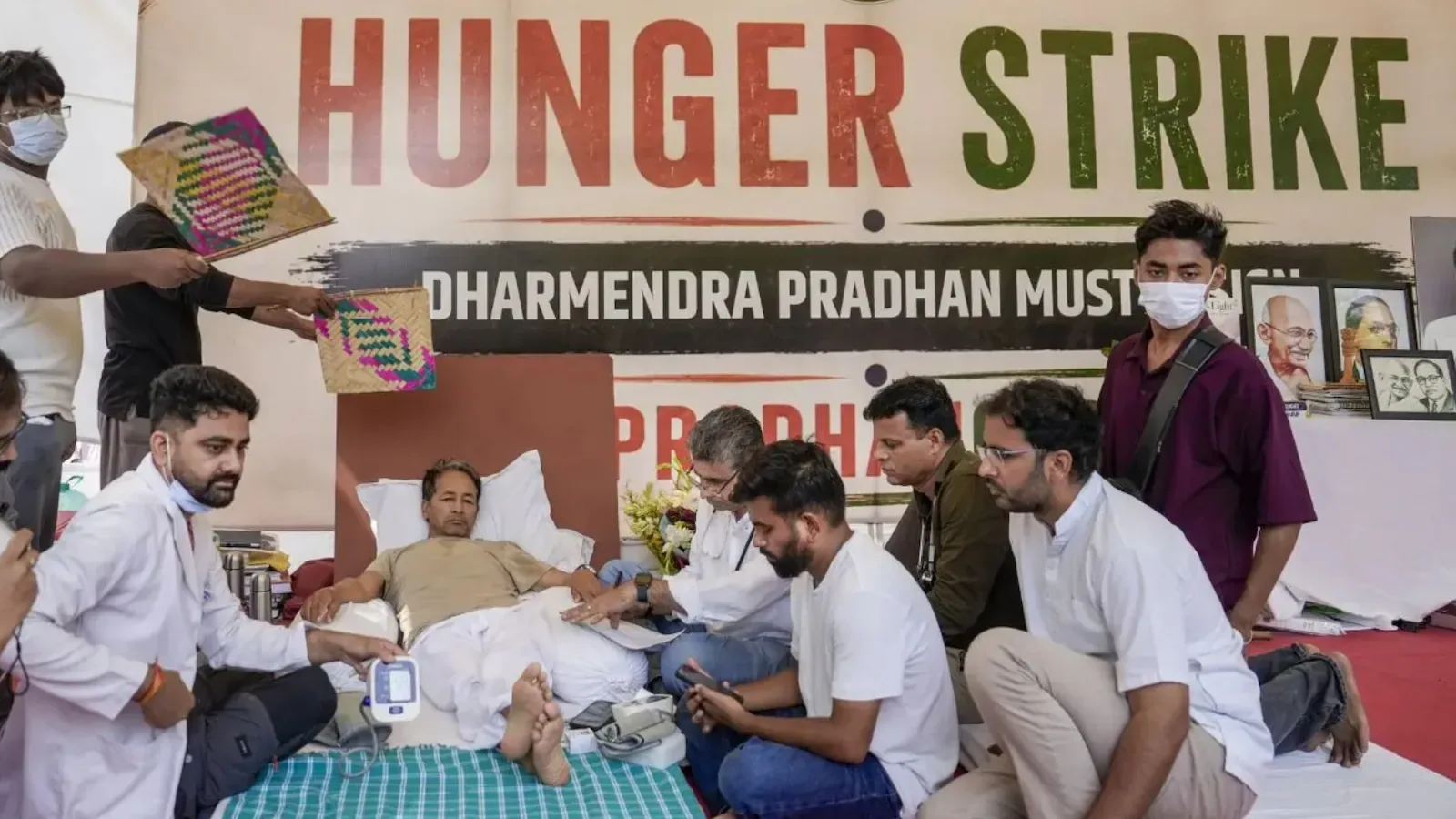
Sonam Wangchuk Hunger Strike Enters Its Third Week at Jantar Mantar, and Delhi Is Watching
There is a man sitting under a tent near Parliament, refusing food, and most of the country only found out about it days after it started. That, in itself, tells you something about how a Sonam Wangchuk hunger strike can stay quiet for a while and then, suddenly, become the story everyone is talking about.
Wangchuk began fasting on June 28, 2026, at Jantar Mantar in New Delhi. As of mid July, he has crossed the seventeenth day without solid food. His body is tired. His voice, in the videos circulating online, sounds thinner than usual. And still, he has not called it off.
Why This Actually Matters
You might be thinking, people go on hunger strikes in India fairly often, so why does this one need your attention. Fair question. Here is the honest answer: this Jantar Mantar protest is not really about one man's health anymore. It has become a flashpoint for something much bigger, which is how young India feels about the state of its exam system, and about accountability in general.
The trigger was a set of exam paper leaks back in May that reportedly affected millions of students preparing for competitive exams. Millions. Think about what that number actually means, students who studied for years, families who saved money for coaching classes, all of it shaken because a paper leaked before it should have. That is the wound this protest is pressing on.
What It Really Is, Explained Simply
At the center of this is a Gen Z led group called the Cockroach Janta Party, or CJP. Its founder has been staging a sit in at Jantar Mantar demanding that Union Education Minister Dharmendra Pradhan resign over the leaks. Wangchuk, the engineer and educator who inspired a character in the film 3 Idiots, joined the fast in solidarity, not as the original demand maker but as a well known voice lending his weight to a younger movement.
Think of it like this: the CJP lit the match, and Wangchuk's participation turned it into something the national media, and now opposition politicians, cannot ignore. That is the practical shape of the Sonam Wangchuk hunger strike right now, an alliance between a veteran activist and a new generation of protesters, both demanding the same resignation, both refusing to eat until it happens.
How the Protest Has Unfolded, Step by Step
- Late May 2026: Exam paper leaks come to light, sparking anger among students and parents across states.

- Formation of pressure: The Cockroach Janta Party, a youth led outfit, begins organizing a sit in at Jantar Mantar demanding Dharmendra Pradhan resignation.
- June 28: Sonam Wangchuk starts his hunger strike in support, choosing Jantar Mantar, the officially designated protest site near Parliament, as his base.
- Days pass, health declines: By day 17, reports describe his condition as worsening, and a young supporter fasting alongside him fainted and was hospitalized.
- Political attention grows: Opposition leaders, including Akhilesh Yadav, have publicly urged Wangchuk to end the fast, framing his life as too valuable to risk.
- Government response: As of this writing, the education ministry has not announced Pradhan's resignation, and the standoff continues.
Read More: Madhur Virli Rape Joke Controversy: Why India's Stand-Up Comedy Scene Is in Crisis Again
Real World Examples of What This Kind of Protest Can Do
This is not Wangchuk's first fast, not by a long way. In 2024, he sat through a 21 day hunger strike in freezing Ladakh temperatures over Sixth Schedule status and Ladakh statehood. That protest ended with him drinking juice offered by a young girl, a moment that made national headlines, though the underlying demands were never fully met. Later, in 2025, another fast in Leh had to be called off amid arson and violent clashes, a reminder that these protests can spiral in directions nobody planned for.
The pattern that emerges from his history: sustained fasting draws sympathy, media coverage, and political statements, but rarely an immediate government concession. The Delhi hunger strike happening right now may follow the same arc, unless something changes.
Mistakes People Keep Making When Following This Story
A lot of readers assume a hunger strike automatically forces a government's hand. It does not, at least not quickly. People also mix up Wangchuk's various protests, this one about exam paper leaks and education ministry accountability, with his earlier Ladakh statehood campaigns, which is understandable given how often he has taken this route, but they are separate causes with separate demands.
Another common error, honestly, is underestimating how physically dangerous prolonged fasting becomes past the two week mark. Doctors monitoring such protests often warn about irreversible organ strain, something news coverage sometimes glosses over in favor of the political drama.
Pro Tips for Following the Sonam Wangchuk Hunger Strike Responsibly
If you want to actually stay informed rather than just scroll past headlines, follow verified accounts of journalists present at Jantar Mantar rather than relying on secondhand social posts. Watch for official statements from the education ministry, since any shift in Pradhan's position will likely be announced there first. And pay attention to the health bulletins around Wangchuk, medical updates tend to shape the next phase of the protest more than political statements do.
Closing Thoughts
There is something quietly unsettling about watching a public figure slowly weaken in front of cameras because a government minister has not resigned. Whatever side you land on politically, the Sonam Wangchuk hunger strike has forced a conversation about exam integrity, and about how much a democracy expects its citizens to sacrifice just to be heard. Whether it ends with a resignation, a compromise, or simply exhaustion, this moment at Jantar Mantar is not likely to be forgotten soon.
Disclaimer: This article is based on information available across the web. Parchar Manch does not take responsibility for its complete accuracy, as the content could not be fully verified.
FAQs
Why is Sonam Wangchuk on a hunger strike in 2026?
He is fasting in solidarity with the Cockroach Janta Party's demand that Education Minister Dharmendra Pradhan resign over exam paper leaks that affected millions of students in May 2026.
When did the current hunger strike start?
Wangchuk began fasting on June 28, 2026, at Jantar Mantar in New Delhi.
Is this connected to his earlier Ladakh protests?
No. This fast is about education ministry accountability, while his earlier hunger strikes centered on Ladakh statehood and Sixth Schedule protections.
What is the Cockroach Janta Party?
It is a Gen Z led protest group whose founder began the original sit in at Jantar Mantar demanding Pradhan's resignation, before Wangchuk joined in support.
How is Wangchuk's health right now?
As of day 17, reports describe his condition as worsening, prompting opposition leaders to publicly urge him to end the fast.