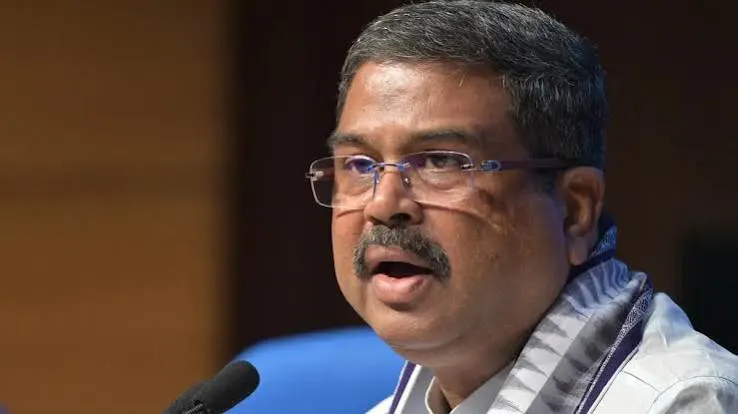
Dharmendra Pradhan Resignation: How a Youth Movement Called "Cockroach" Brought Down India's Education Minister
Here's the part that still feels strange to say out loud. A protest movement that started, more or less, as an online joke, ended up forcing the resignation of a sitting Union Cabinet minister under a Prime Minister who has spent over a decade not budging for street pressure. That's the short version of the Dharmendra Pradhan resignation, announced on July 25, 2026, and the longer version is worth sitting with, because it says something about where India's youth anger has been building for a while now.
Let me walk through what happened, why it happened, and what it might mean going forward.
Why This Actually Matters
If you're not from India or haven't been following this closely, the name Dharmendra Pradhan might not mean much yet. He should. Pradhan has been a Union minister continuously since 2014, holding portfolios ranging from petroleum and natural gas to steel, before taking charge of the Ministry of Education in 2021. He was, by most accounts, seen as a loyal, senior BJP figure, someone occasionally floated as a future party president. His resignation isn't a minor reshuffle. It's being described as a rare concession from Prime Minister Narendra Modi's government, and one of the most visible wins for public dissent that this administration has faced in years.
That matters beyond India's borders too, honestly, because it's a reminder that even governments seen as fairly resistant to street pressure can bend when the anger is sustained, organized, and genuinely cross-class. Students, corporate employees, families, all showing up together tends to change the political math.
What Actually Triggered This
The core issue traces back to allegations of leaks in some of India's biggest competitive entrance exams, particularly NEET-UG, the test that decides medical college admissions for over two million applicants a year. When students discovered, or believed, that answer keys had been leaked and sold ahead of the exam, the anger wasn't abstract. It meant years of preparation potentially undone by someone else's shortcut, and in some cases, entire exams had to be retaken.
Think of it like a marathon where a chunk of runners find out afterward that some competitors got driven halfway. You wouldn't just be annoyed. You'd feel the entire race was pointless.
That anger crystallized around a group called the Cockroach Janta Party, or CJP, a youth-led movement that, as multiple reports note, began somewhat informally online but grew into a genuine political force. Over a month, protesters camped at New Delhi's Jantar Mantar, joined by sit-ins and hunger strikes, and the demonstrations spread to cities like Kolkata. This wasn't only about one exam anymore. It expanded into a broader grievance about unemployment, government accountability, and whether young Indians actually have a fair shot at opportunity.
How the Pressure Actually Built, Step by Step
It helps to see the sequence, because it explains why this ended the way it did.
- Allegations surfaced about NEET-UG paper leaks, prompting anger among students and families directly affected.
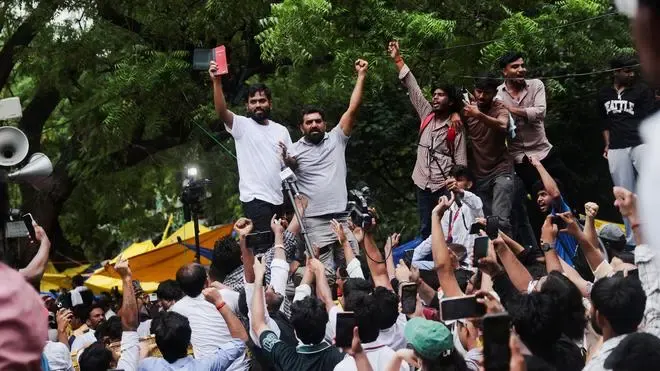
- The CJP organized sustained protests, growing from an online movement into physical demonstrations lasting weeks.
- Police responses, including baton charges and tear gas earlier in the week Pradhan resigned, reportedly injured students and drew wider public sympathy toward the protesters rather than dampening the movement.
- Parliament's own panel flagged serious irregularities and pushed for a concrete, time-bound reform roadmap for the National Testing Agency, adding institutional weight to what had started as street pressure.
- Facing no sign of the protests easing, and with police tactics arguably making things worse, Pradhan announced his resignation on X on a Saturday, just as police were again trying to clear demonstrators.
Real-World Reactions That Show the Scale of This
The reaction afterward tells you how significant this felt on the ground. Celebrations broke out at the protest site, people embraced, waved the Indian flag. CJP founder Abhijeet Dipke welcomed the resignation while noting there was more work to do. Notably, the BJP's own national president framed Pradhan's exit as reflecting integrity rather than defeat, which is the kind of framing you'd expect from a party trying to manage the optics of a real concession. Following the resignation, the government reportedly accepted the CJP's two remaining demands as well, effectively ending the month-long agitation.
Mistakes That Made This Worse Than It Needed to Be
If there's a lesson in here for institutions generally, it's this: heavy-handed responses to youth-led protest tend to backfire when the underlying grievance is seen as legitimate. Reports suggest the police crackdown, rather than dispersing the movement, actually pulled in more sympathy and participants. It's a familiar pattern, not unique to India, where the optics of force against young, largely peaceful demonstrators shift public opinion faster than the original issue did.
What to Watch Next
A quiet but important detail here: this resignation happened alongside, not separate from, a newly appointed task force on examination reform, tasked with recommending structural fixes to prevent future leaks. Whether that task force produces real change, versus another shelved report, will likely determine if this moment becomes a turning point or just a headline that faded.
Closing Thought
There's a version of this story that's just about one minister stepping down. But the more accurate version is about a generation of young Indians deciding that "wait for the next election" wasn't good enough anymore, and building enough sustained pressure that a government known for holding firm actually moved. Whether that energy holds, or dissolves once the immediate crisis passes, is the real question worth watching.
Read More: Sonam Wangchuk Hunger Strike: Why a 59-Year-Old Engineer Is Risking His Life at Jantar Mantar
FAQs
Why did Dharmendra Pradhan resign?
He stepped down as India's Education Minister after weeks of youth-led protests over alleged NEET-UG exam paper leaks and broader anger over education system irregularities.
Who led the protests against Pradhan?
The Cockroach Janta Party, or CJP, a youth-led movement that grew from an online campaign into large, sustained demonstrations in New Delhi and other cities.
What exam leak sparked this crisis?
Allegations centered on leaks affecting NEET-UG, India's national medical entrance exam, which affected millions of student applicants.
Did the government make any other concessions?
Yes. Following Pradhan's resignation, the government reportedly accepted the CJP's remaining demands, and a separate task force was appointed to recommend structural reforms to the exam system.
How did the BJP respond to his resignation?
The party's national leadership publicly backed Pradhan's decision, framing it as a reflection of integrity rather than a political defeat.
Is this considered a major moment for Modi's government?
Reports describe it as a rare concession from a government that has typically not been swayed by protest movements during Modi's three terms in office.