
Sonam Wangchuk Hunger Strike Health Update: Why an Engineer Who Inspired "3 Idiots" Is Risking His Life at Jantar Mantar
Eighteen days without food changes a body in ways most of us will never have to think about. Muscle starts breaking down for fuel. Blood pressure drops. The mind stays sharp, oddly, even as everything else slows. That's roughly where things stand with the Sonam Wangchuk hunger strike, and it's the reason this story has quietly become one of the more serious political flashpoints in India this year.
If the name sounds familiar but you can't place it, here's a hint: Wangchuk is widely believed to have inspired the Aamir Khan character in the Bollywood film "3 Idiots." He's an engineer, an educationist, a climate activist from Ladakh. Now, at 59, he's sitting at Jantar Mantar in New Delhi, refusing food, and his condition is genuinely worsening by the day.
Why This Actually Matters
You might wonder why a man fasting in a park in Delhi should matter to anyone outside India. Fair question. But strip away the geography and this is really a story about accountability, about what happens when millions of young people feel a system has failed them and nobody in power is answering their calls.
The protest traces back to alleged irregularities in the NEET (UG) 2026 medical entrance exam and other examination paper leaks that affected students across the country in May. For families who'd spent years and savings preparing their kids for these exams, a leak isn't just an inconvenience. It's a stolen shot at a future. That anger is what pulled Wangchuk into this fight, in solidarity with a youth-led group called the Cockroach Janata Party, or CJP.
Read More: Ram Rahim Gets Parole Again — 16 Times Out of Jail Since 2017, and the Count Keeps Rising
What's Actually Happening: The Situation Explained Simply
Here's the plain version. Wangchuk began an indefinite hunger strike on June 28, 2026, at Jantar Mantar, a designated protest site near India's Parliament. His central demand is the resignation of Union Education Minister Dharmendra Pradhan over the exam leak scandal. The CJP, led by activist Abhijeet Dipke, is running the broader sit-in alongside him, and the group is also seeking compensation for families of students who lost their lives in the aftermath of the exam irregularities, a detail that gives the protest its emotional weight.
Think of it less like a single-issue demand and more like a pressure valve. Years of frustration over exam fairness, all channeled into one very public, very physical act of protest.
How the Protest Has Escalated, Step by Step
- June 28: Wangchuk starts his fast at Jantar Mantar, joining the CJP's ongoing sit-in.
- First two weeks: The protest gains national attention, but the government stays largely silent on direct dialogue.
- Around day 17 to 18: Health reports confirm Wangchuk has lost roughly 8.5 kilograms, about 19 pounds, and his blood pressure has fallen to around 109/70. Reports describe muscle loss and significant pain.
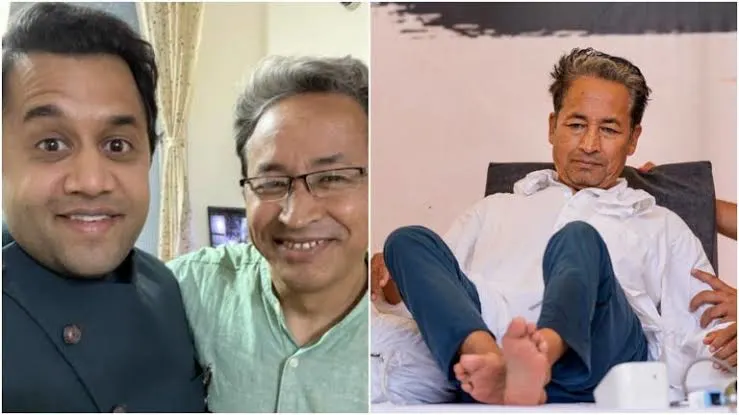
- Legal escalation: A public interest litigation is filed in the Delhi High Court, asking the court to order hospitalisation and, if necessary, force-feeding through liquid nutrition to preserve his life.
- Public response: Opposition leaders, including figures like Arvind Kejriwal and Shashi Tharoor, publicly appeal to Wangchuk to end the fast. Actress Swara Bhaskar visits the site in solidarity.
- July 16: The CJP organises a nationwide one-day mass hunger strike in solidarity with Wangchuk and student protesters.
- July 20 planned: A march to Parliament, timed to coincide with the opening of the Monsoon Session, aims to keep pressure on the government.
Read More: Power Shifts 2026: A Clear Look at India’s Changing Political Scene
Real-World Example: What 8.5 Kilograms Actually Means
To put the weight loss in perspective, losing that much body mass in under three weeks, largely through fasting, isn't gradual dieting. It's the body cannibalising muscle tissue once fat reserves start running thin, which is consistent with the muscle loss and pain being reported around Wangchuk's condition. That's why the Delhi High Court petition specifically flags the situation as potentially life-threatening and asks for urgent medical intervention within days, not weeks.
Mistakes People Keep Making When Following This Story
A common misread is treating this as purely a Wangchuk story. It isn't. He's the most visible face of it, but the underlying grievance belongs to millions of exam-taking students and their families. Reducing the hunger strike India narrative to one man's health obscures the actual policy failure that triggered it.
Another mistake: assuming a hunger strike this serious will automatically force government action. History doesn't guarantee that. Dialogue depends on political will, and right now that remains an open question.
Read More: Trump's Iran Deal: The "Final Determination" That Nobody Has Made Yet
Pro Tips for Understanding Protests Like This
If you're trying to follow this responsibly, track two things separately: the health updates, which are coming from CJP and independent medical assessments, and the political demands, which are about examination reform and ministerial accountability. Conflating the two can make the story feel simpler than it is. Also worth watching: how the Delhi High Court rules on the force-feeding petition, since that decision will shape what happens next regardless of what the government decides politically.
Closing Thoughts
There's something quietly unsettling about watching a health crisis unfold in real time while the political response stays largely procedural. Wangchuk has reportedly said, in essence, that questions about ending his fast should be redirected to the government's refusal to talk. Whether that principle holds up against a failing body is the tension sitting underneath this entire story right now.
Read More: DK Shivakumar Is Finally Becoming Karnataka Chief Minister: The Wait, The Deal, and What Comes Next
Disclaimer: This article is based on information available across the web. Parchar Manch does not take responsibility for its complete accuracy, as the content could not be fully verified.
FAQs
Why is Sonam Wangchuk on a hunger strike?
He is protesting alongside the Cockroach Janata Party to demand the resignation of Education Minister Dharmendra Pradhan over alleged irregularities in the NEET (UG) 2026 exam and other paper leaks.
How long has the hunger strike lasted?
Wangchuk began fasting on June 28, 2026, at Jantar Mantar in New Delhi, making it more than two and a half weeks as of mid-July.
How serious is his current health condition?
Reports indicate he has lost around 8.5 kilograms, his blood pressure has dropped significantly, and he is experiencing muscle loss and severe pain, prompting a Delhi High Court petition for urgent medical intervention.
What is the Cockroach Janata Party?
It is a youth-led political and protest movement founded by Abhijeet Dipke, organising the broader demonstration at Jantar Mantar alongside Wangchuk.
What happens next in this protest?
A nationwide one-day solidarity hunger strike was held on July 16, and a larger march to Parliament is planned for July 20, coinciding with the opening of the Monsoon Session.
Is there a legal case related to his health?
Yes. A public interest litigation is before the Delhi High Court seeking his hospitalisation and possible force-feeding with liquid nutrition to protect his life.