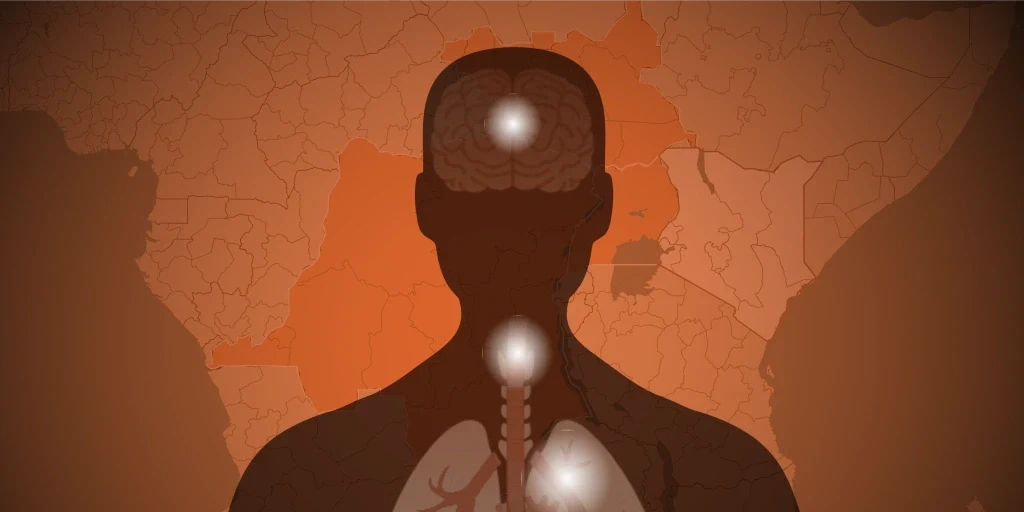
Ebola Is Back and Spreading Fast: Everything You Need to Know About the 2026 Outbreak
Something alarming is unfolding in central Africa right now. A disease that most people associate with past emergencies has returned, and this time it has crossed borders, triggered the world's highest-level health alert, and outpaced containment efforts faster than health authorities expected. The Ebola outbreak 2026 is not a distant news headline. It is a real, rapidly evolving public health crisis that the world is watching closely.
Here is what is actually happening, explained clearly.
Why the World Is on High Alert: The Ebola Bundibugyo Outbreak Explained
On May 16, 2026, the WHO Director-General declared the Ebola disease caused by Bundibugyo virus in the Democratic Republic of the Congo and Uganda a Public Health Emergency of International Concern (PHEIC). That designation, known as a PHEIC, is the highest-level alarm the World Health Organization can raise. It has only been used a handful of times in modern history.
This is only the eighth time a PHEIC has been declared since the framework's modern adoption in 2005.
That tells you something. This is not routine.
Read More: INDIA Bloc's High-Stakes Delhi Meeting: Fault Lines, Five Decisions, and the Long Road to 2029
Where the Outbreak Began and How Quickly It Spread
On May 5, 2026, WHO was alerted to a high-mortality outbreak of unknown illness in Mongbwalu Health Zone, Ituri Province in the Democratic Republic of the Congo, including deaths among health workers. Laboratory analysis confirmed Bundibugyo virus disease in eight samples on May 15.
Within days, the numbers climbed sharply. As of June 8, 2026, the DRC Ministry of Health reported a total of 598 confirmed cases, including 115 confirmed related deaths, and 297 individuals hospitalised in isolation. Ituri remains the most affected province, with 563 confirmed cases from 17 health zones, while North Kivu has reported 32 confirmed cases from seven health zones.
Uganda was drawn in almost immediately. International spread was documented early, with two confirmed cases reported in Kampala, Uganda on May 15 and 16, following travel from the Democratic Republic of the Congo. Both confirmed cases were admitted to intensive care units in Kampala. Uganda has since reported a total of 19 confirmed cases, including two deaths.
The outbreak also reached outside Africa. A medical doctor from the United States who was exposed while caring for patients in the DRC tested positive on May 17 and was transported to Germany for treatment.
What Is Bundibugyo Virus and Why Is It Particularly Dangerous Right Now
Most people have heard of Ebola virus. Fewer know that "Ebola" is actually a family of related viruses, not a single pathogen. The Bundibugyo virus, or BVD, is one of four known species that cause disease in humans.
BVD is a severe and fatal viral zoonotic disease. The incubation period ranges from two to 21 days. Early symptoms may be non-specific, including fever, headache, muscle pain, sore throat, and fatigue. The disease may progress to organ dysfunction, gastrointestinal symptoms, and haemorrhage in some cases.
What makes this particular strain especially concerning right now is the vaccine gap. Unlike Ebola virus disease, there is no licensed vaccine or specific therapeutics against Bundibugyo virus, though early supportive care is lifesaving. The vaccines that exist, developed after the catastrophic 2014 to 2016 West Africa outbreak, target a different strain entirely.
In the previous Bundibugyo virus outbreaks in 2007 in Uganda and 2012 in DRC, case fatality rates ranged from 30 to 50 percent. That is a sobering figure. It means between three and five out of every ten confirmed cases died in those earlier outbreaks.
Read More: India's Current Account Surplus Hit $7.1 Billion in Q4 FY26: What the Numbers Are Really Saying
How Ebola Spreads: The Basics Everyone Should Know
Ebola does not spread through air, water, or food. That is worth saying clearly, because misinformation tends to travel faster than the virus itself.
Ebola virus disease transmission occurs through direct contact with the blood, bodily fluids, or organs of an infected person or animal. Healthcare workers are at especially high risk because of their close contact with patients. Burial practices that involve touching the deceased have historically driven transmission in affected communities.
This is also why community trust matters as much as any medical intervention. Efforts to contain the outbreak are being hampered, especially in the troubled east of the DRC, by local communities' distrust of outside authorities, which is significantly increasing the risk of disease transmission.
The Global Response: What Is Being Done
On June 5, the Africa Centres for Disease Control and Prevention and WHO, together with partners, launched a joint Ebola continental preparedness and response plan. Rapid response teams have been deployed. Laboratory confirmation systems, contact tracing, isolation facilities, and cross-border coordination are all being scaled up simultaneously.
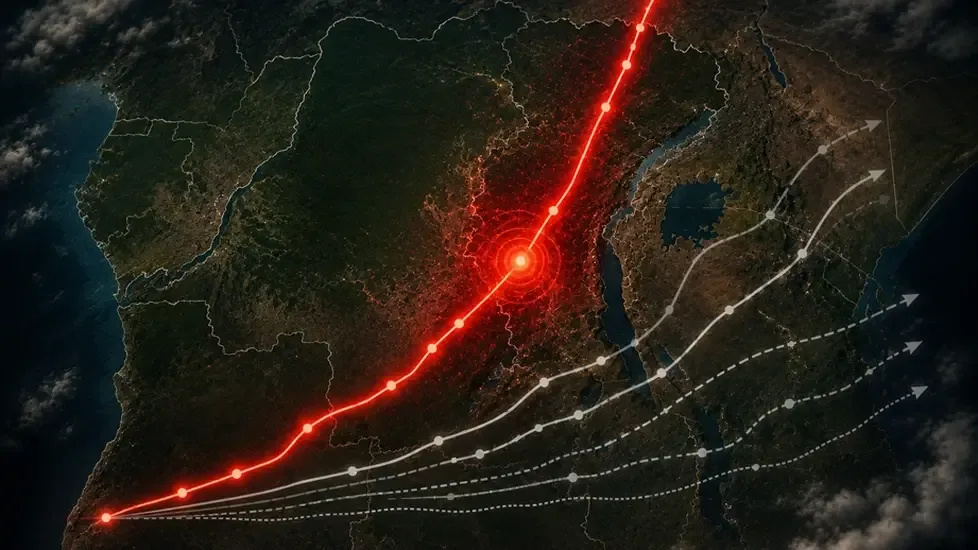
WHO advises against any restriction of travel to, or trade with, the Democratic Republic of the Congo or Uganda based on currently available information. Border closures, experts note, tend to push movement to informal crossings and actually worsen outbreak control.
The WHO Director-General travelled to the outbreak epicentre as case numbers surpassed 1,000 suspected cases in DRC alone, signalling the gravity with which global health authorities are treating this situation.
Read More: NLC India OFS, Vodafone Idea Rally, Airtel Relief: Three Market Stories That Defined June 9, 2026
What History Tells Us About Controlling Ebola
The DRC has more experience with Ebola than any other country on Earth. This is DRC's 17th separate Ebola outbreak, and it came only five months after the previous outbreak ended. The country's health system has built real expertise. Past outbreaks have been contained, sometimes in just weeks, when the response is fast and coordinated.
The 2025 outbreak in Kasai Province, for instance, was declared over within weeks after swift containment. DRC declared the end of the Ebola outbreak in Kasai Province after no new cases were reported in the 42 days following the last patient's discharge from a treatment centre on October 19, 2025.
Speed, community engagement, and healthcare worker protection are what turn the tide. Every outbreak has shown that.
Closing Thoughts
The 2026 Ebola outbreak is a reminder that the world is still navigating the gap between knowing how to control dangerous diseases and actually being ready when they arrive. The Bundibugyo strain has no licensed vaccine. The outbreak is in a conflict-affected region. And case numbers are still climbing.
Panic is not the answer. Attention is.
Disclaimer: This article is based on information available across the web. Parchar Manch does not take responsibility for its complete accuracy, as the content could not be fully verified.
FAQs
Is the 2026 Ebola outbreak a global pandemic?
No. WHO has declared it a Public Health Emergency of International Concern, which is a serious alert, but the global risk remains assessed as low. The outbreak is concentrated in DRC and Uganda.
Can Ebola spread through casual contact or air?
No. Ebola spreads only through direct contact with the blood or bodily fluids of an infected person or animal. It cannot be transmitted through air, water, or food.
Is there a vaccine for the Bundibugyo strain of Ebola?
No licensed vaccine currently exists for the Bundibugyo virus. Existing Ebola vaccines target a different strain. WHO has convened expert groups to assess candidate vaccines and therapeutics.
What are the symptoms of Ebola to watch for?
Early symptoms include fever, headache, muscle pain, sore throat, and fatigue. In serious cases, the disease progresses to organ dysfunction and haemorrhage. Anyone with these symptoms after travel to affected areas should seek medical attention immediately.
Should travellers avoid DRC and Uganda?
WHO currently advises against travel restrictions to DRC or Uganda. Travellers should monitor official health advisories and take standard hygiene precautions.