INDIA Bloc's High-Stakes Delhi Meeting: Fault Lines, Five Decisions, and the Long Road to 2029
An opposition alliance holds a meeting and everyone looks for who is missing. That is the telling detail. Not the agenda, not the press conference quotes, but the empty chairs.
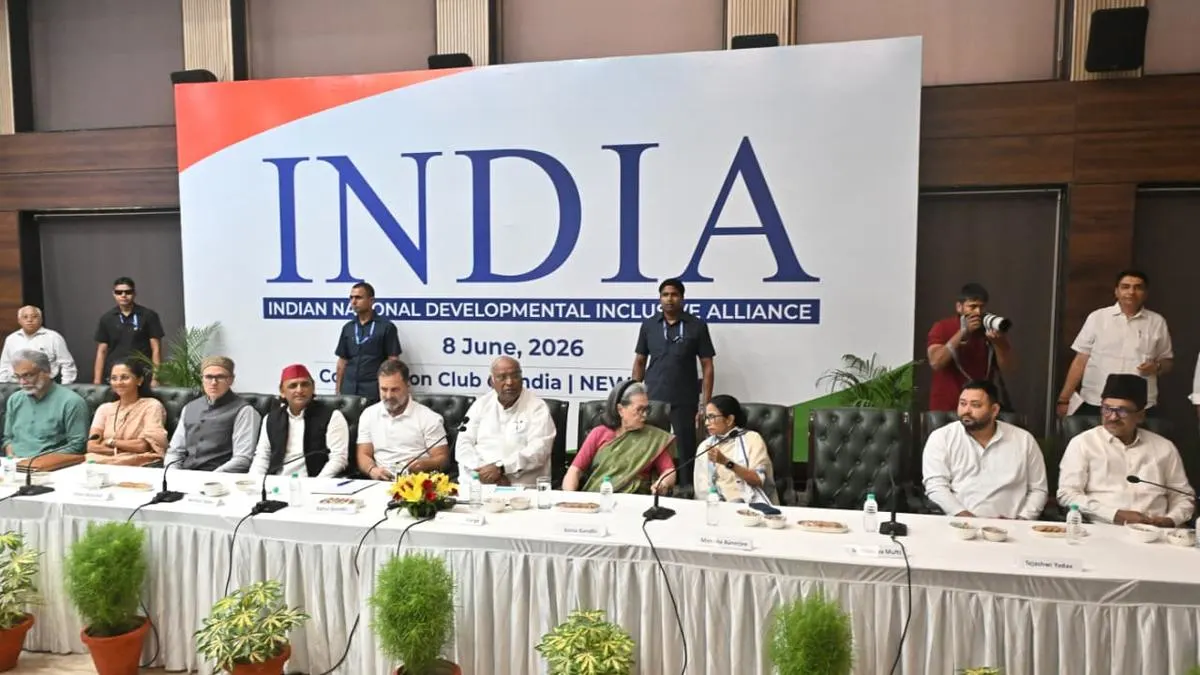
On June 8, 2026, leaders from 23 opposition parties convened at the Constitution Club in New Delhi for a key meeting of the Indian National Developmental Inclusive Alliance (INDIA) bloc. The gathering was significant. So was who chose not to show up.
The INDIA Bloc Delhi Meeting: Why This Moment Is a Real Test
Monday's meeting came at a delicate moment for the opposition grouping. Internal differences had been simmering after Trinamool Congress and DMK suffered defeats in the recent Assembly elections in West Bengal and Tamil Nadu respectively, raising questions about the bloc's cohesion ahead of future electoral contests.
The INDIA bloc was formed in 2023 with one overarching goal , to present a united front against the BJP. It worked well enough in the 2024 Lok Sabha elections, where the BJP lost its outright majority and the opposition performed stronger than most polls predicted. But governing from opposition is a different game than winning seats, and the two years since have exposed real stresses inside the alliance.
Read More: West Bengal Post-Poll Violence Explained: What Is Happening on the Ground and Why It Refuses to Stop
Who Stayed Away , and What That Signals
The Aam Aadmi Party and the DMK did not participate. AAP had distanced itself from the bloc immediately after the 2024 Lok Sabha elections. The DMK's absence followed Congress's decision to end its alliance with the party after the Tamil Nadu Assembly elections.
That second absence is the one that stings more. Opposition leaders expressed oblique criticism against the Congress for deserting the DMK following the Tamil Nadu assembly elections and choosing to align with the Tamilaga Vettri Kazhagam instead. Leaders including Akhilesh Yadav, Supriya Sule and Tejashwi Yadav were among those who said Congress had not dealt with the DMK properly.
This is the kind of quiet disapproval that does not come out in press statements but shapes everything behind closed doors. Congress, as the bloc's anchor party, is being told by its own allies that its state-level decisions are damaging the national alliance. That message landed clearly. There was consensus among the leaders that all parties would make efforts to bring both the DMK and the AAP back into the bloc.
The Five Decisions , What the INDIA Alliance Actually Agreed On
Congress president Mallikarjun Kharge addressed media after the meeting and laid out five specific outcomes.
The alliance decided to write to the Chief Justice of India over the Special Intensive Revision (SIR) of electoral rolls and alleged "vote loot." Opposition parties unanimously demanded the immediate resignation of Union Education Minister Dharmendra Pradhan over the NEET-CBSE examination controversy.
The opposition also demanded that the Union government convene an all-party meeting to discuss the precarious economic situation, covering unemployment, price rise, and farmers' concerns. The alliance agreed to meet every two months, with the next meeting scheduled in Hyderabad in August.
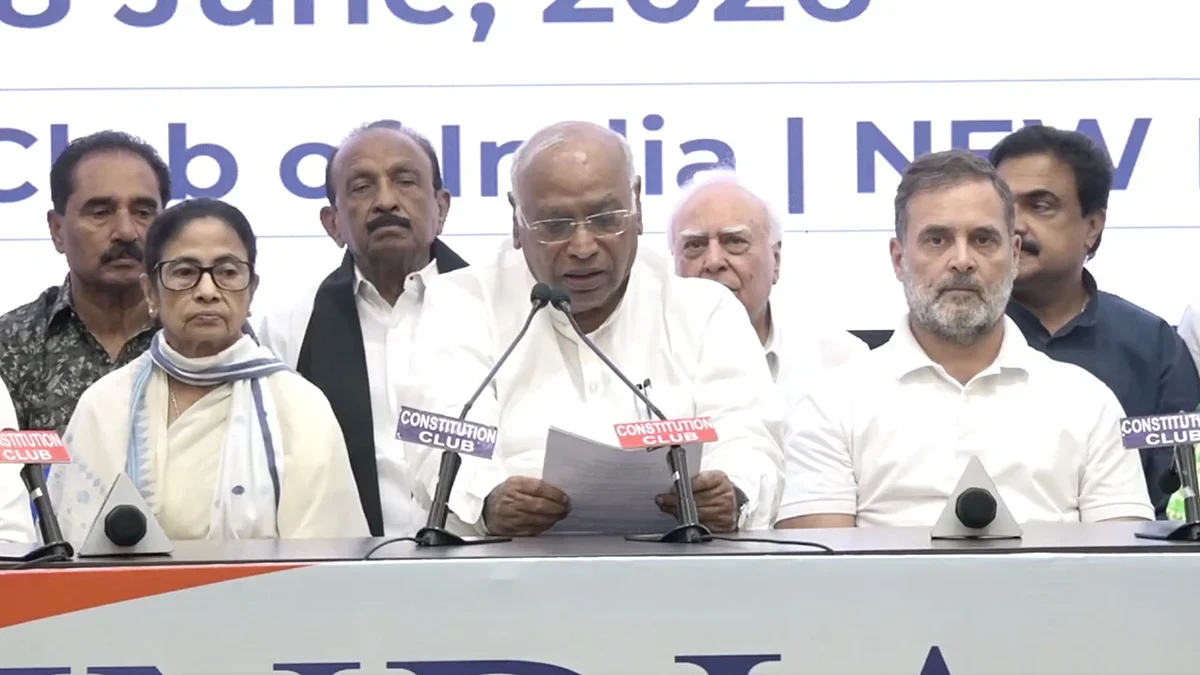
The fifth decision was to maintain parliamentary coordination during the upcoming Monsoon Session of Parliament , signaling that the bloc intends to function as a unified force inside the House even when the coalition outside is under strain.
Read More: Why China’s Wang Yi Is Skipping the BRICS Delhi Meet — And What It Signals for Global Diplomacy
The NEET-CBSE Crisis: Why Pradhan's Resignation Is the Loudest Demand
The NEET examination controversy has given the opposition a genuinely powerful issue. Millions of students and their families have been affected by what many describe as systemic failures in examination conduct and integrity. Demanding Dharmendra Pradhan's resignation is not just a political attack. It resonates with a real constituency of anxious students, frustrated parents and worried educators who feel that the examination system let them down.
The current education crisis was discussed in the aftermath of the NEET-UG and CBSE examination fiascos along with the protest held by the CJP in Delhi demanding Pradhan's resignation. The CJP , the Cockroach Janta Party , is an online movement that has gained genuine traction among disaffected youth, and the bloc discussed how to connect with that energy.
What the INDIA Bloc's Internal Tensions Really Mean
The meeting is taking place against the backdrop of concerns among some alliance partners over coordination, mutual trust, and political messaging following recent electoral contests and disagreements across states.
The Left parties also brought their own grievances. CPI(M) general secretary MA Baby said his party objected to allegations made by senior Congress leaders during elections in Kerala, particularly against former chief minister Pinarayi Vijayan. He said Congress leaders had accused the CPI(M) of having an understanding with the BJP, allegations he described as baseless and unacceptable.
Alliances that span this many parties, ideologies, and regional interests always carry friction. The question is whether the friction produces heat or light. Right now it is producing both.
The Road Ahead: 2029 Is Closer Than It Seems
The alliance discussed the need to present a united front against the BJP in the 2029 Lok Sabha elections and addressed the recent losses of the Trinamool Congress and DMK in their respective states.
Three years sounds far away. It is not. State elections in multiple key states will happen before 2029, and how the bloc performs in those contests will define whether the alliance is a serious electoral force or just a press-conference coalition.
The meeting happened. Twenty-three parties signed on to five decisions. DMK and AAP stayed out. Congress got criticism from its own friends. And everyone agreed to meet again in Hyderabad in August.
That is opposition politics in a diverse democracy. Messy, necessary, and very much alive.
Read More: Long,Term Residential Property Investment Strategy 2026
Disclaimer: This article is based on information available across the web. Parchar Manch does not take responsibility for its complete accuracy, as the content could not be fully verified.
FAQs
What is the INDIA bloc and who leads it?
The INDIA bloc , Indian National Developmental Inclusive Alliance , is a coalition of opposition parties formed in 2023 to challenge the BJP. Congress, led by Mallikarjun Kharge, is the anchor party, with Rahul Gandhi as Leader of Opposition in the Lok Sabha.
Why did DMK and AAP skip the June 8, 2026 meeting?
AAP has distanced itself from the bloc since 2024. DMK's absence followed Congress choosing to align with the Tamilaga Vettri Kazhagam (TVK) instead of DMK after the Tamil Nadu assembly elections, which the DMK lost.
What are the five decisions taken at the June 8 INDIA bloc meeting?
The five decisions are: writing to the Chief Justice of India on the SIR electoral roll exercise; demanding Education Minister Dharmendra Pradhan's resignation over NEET-CBSE; demanding an all-party meeting on the economic situation; holding bi-monthly alliance meetings; and maintaining parliamentary coordination in the Monsoon Session.
What is the Special Intensive Revision (SIR) controversy?
SIR refers to a special exercise to revise electoral rolls. The INDIA bloc has alleged this process is being used to manipulate voter lists, which they describe as "vote loot," and plan to raise the matter with the Chief Justice of India.
Is the INDIA bloc likely to survive until the 2029 elections?
The alliance faces genuine internal tensions, but with 22-23 parties still participating and a shared opposition to the BJP, it has incentive to hold together. Whether DMK and AAP return will be a key test of the bloc's long-term viability.