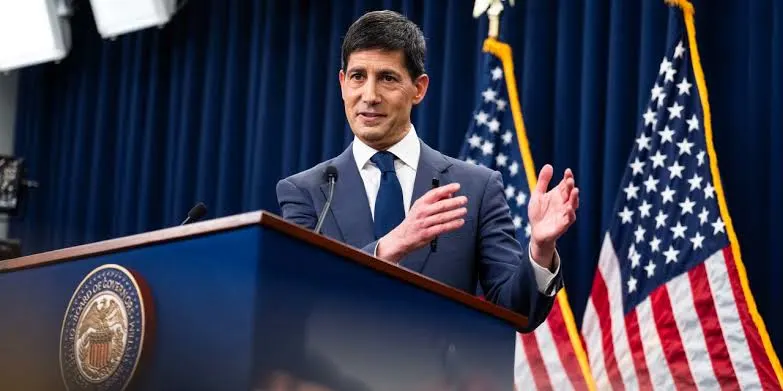
Federal Reserve Minutes Reveal a Genuine Split on Interest Rates, and Kevin Warsh Calls It a Family Fight
Rarely does a government document use the phrase family fight to describe itself, but that is exactly how new Federal Reserve Chairman Kevin Warsh framed the debate behind closed doors. The Federal Reserve minutes released this week confirm what many suspected quietly for weeks. Officials are genuinely divided over where interest rates go next, and this time the disagreement is not a minor footnote, it is the headline.
If you have a mortgage, a savings account, or even just a vague sense that borrowing costs affect your life somehow, this split matters more than the usual central bank jargon suggests.
Why This Actually Matters
Here is the honest version. Every time the Federal Reserve minutes show real disagreement instead of quiet consensus, it becomes harder for markets, businesses, and everyday borrowers to predict what comes next. That uncertainty has a way of trickling into mortgage rates, credit card interest, and even how confident companies feel about hiring.
This particular split matters even more because it is the first real test of Warsh's leadership style. Markets want to know whether the Fed under new command will lean toward fighting inflation harder, even at the cost of slower growth, or hold steady and hope price pressures fade on their own. Right now, honestly, nobody outside the room fully knows.
Read More: Japanese Yen Falls to Weakest Level Against Dollar Since 1986, Here's What That Actually Means
What the Fed Rate Split Really Means, Explained Simply
Picture the Federal Open Market Committee like nineteen people voting on where a thermostat should sit for the whole country's economy. Nobody disagrees the room feels a little too warm right now, since inflation remains above the Fed's 2 percent target. But some in the room think the warmth will fade naturally as energy prices cool and tariff effects wear off, so they want to leave the thermostat alone or even ease it slightly. Others feel the heat is sticking around longer than expected and argue for turning it up, meaning a rate hike, to force inflation back down faster.
That is essentially the Federal Reserve minutes picture from the June 16 and 17 meeting. Officials kept the federal funds rate unchanged at a range of 3.5 to 3.75 percent, unanimously, even while privately split on what should happen through the rest of 2026.
How This Fed Rate Debate Is Unfolding, Step by Step
- The FOMC met June 16 and 17, its first meeting under Chairman Kevin Warsh, and voted unanimously to hold rates steady.
- The committee's dot plot, which anonymously maps out each official's rate expectations, showed nine of eighteen officials projecting at least one rate hike in 2026, with six of those expecting two or more.
- Another nine officials projected no change or even a cut, creating an almost even split down the middle.
- The median projection now points toward a federal funds rate near 3.8 percent by year end, up from an earlier 3.4 percent estimate.
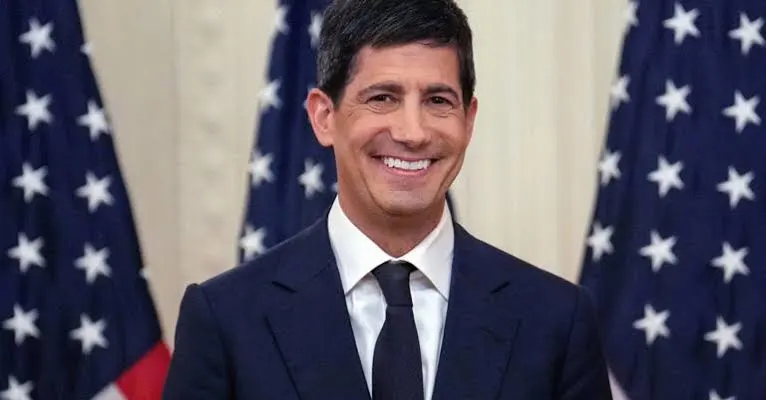
- Minutes released July 8 revealed that many participants leaned toward holding rates steady or slightly below current levels, while many others argued rates should end the year above where they sit now.
- The next FOMC meeting is scheduled for July 28 and 29, though that particular session will not include a fresh Summary of Economic Projections.
Reading through the sequence, it becomes clear this is not a committee stalling for time. It is a committee that genuinely does not agree yet.
Read More: HDFC Bank Appoints Rajiv Kumar as Part-Time Chairman, Ending a Months-Long Governance Search
Real World Numbers Behind the Interest Rate Debate
Inflation projections tell part of the story. The Fed's June economic projections put headline PCE inflation at 3.6 percent for 2026, well above the 2 percent target, with core inflation, which strips out food and energy, projected at 3.3 percent. Unemployment is expected to hold fairly steady near 4.3 percent through the year.
History adds useful context too. Going back to 1990, the Fed has rarely made just one isolated rate move. It cut three times in the back half of 2025, cut three times again in 2024, hiked eleven times between 2022 and 2023, and cut five times between 2019 and 2020. That pattern is part of why some economists, including former St. Louis Fed President Jim Bullard, have publicly questioned whether officials could truly stop at a single hike this year, even if that is currently the median expectation.
Mistakes People Keep Making While Reading Fed Minutes
A common one. People treat the dot plot like a firm promise rather than a snapshot of opinions at one moment in time. These projections shift meeting to meeting, and Warsh himself has pushed to make Fed communication shorter and less predictive, which means future minutes may offer even fewer clues than before.
Another mistake is assuming a rate hike is now guaranteed simply because nine officials leaned that direction. Nine out of eighteen is a split, not a majority mandate, and the committee's most likely outlook still shows many expecting rates to end the year at or slightly below current levels.
Pro Tips for Following the Fed's Next Move
Watch incoming inflation data closely over the next few weeks, since officials have explicitly said future decisions will depend on it rather than any fixed plan. Pay attention to how Warsh talks about communication style too, since shorter statements and thinner minutes could make it harder to read the committee's mood in real time going forward. And if you are managing loans, mortgages, or savings decisions, avoid overreacting to a single meeting's minutes, since the Fed's own history shows opinions inside these rooms often shift before any action actually happens.
Closing Thoughts
There is something oddly reassuring about hearing a room full of economists openly disagree instead of pretending consensus where none exists. The Federal Reserve minutes this time round did not resolve anything, and maybe that is the honest answer itself. Markets will keep guessing until the data forces the committee's hand one way or the other.
This article is for information only and is not financial advice. Please consult a registered financial advisor before making decisions based on interest rate expectations.
Read More: Awarapan 2 Teaser Out: Emraan Hashmi Returns As Shivam Pandit After 19 Long Years
Disclaimer: This article is based on information available across the web. Parchar Manch does not take responsibility for its complete accuracy, as the content could not be fully verified.
FAQs
What did the Federal Reserve minutes reveal this week?
They showed officials genuinely split on the future path of interest rates, despite a unanimous vote to hold the current rate steady.
What is the current federal funds rate?
The target range remains at 3.5 to 3.75 percent, where it has stayed for all of 2026 so far.
Will the Fed raise interest rates later in 2026?
It is uncertain. Nine of eighteen officials projected at least one hike, while another nine expected no change or a cut, so the committee remains divided.
Who is Kevin Warsh?
He is the new Federal Reserve Chairman, whose first meeting in June led to shorter policy communication and what he himself called a family fight over rate direction.
When is the next Fed meeting?
The next FOMC meeting is scheduled for July 28 and 29, though it will not include new economic projections.
How does this affect ordinary borrowers?
Uncertainty over future rates can influence mortgage rates, credit card interest, and loan costs, though no immediate change has been made to the current rate.